
Transcript
SEAN WILENTZ (PROFESSOR OF AMERICAN HISTORY, PRINCETON UNIVERSITY): One of the measures of a great president, if you’re talking about John F. Kennedy or any other president, is their ability to grow in office.
TEXT ON SCREEN: PRESIDENTIAL LESSONS AT 250
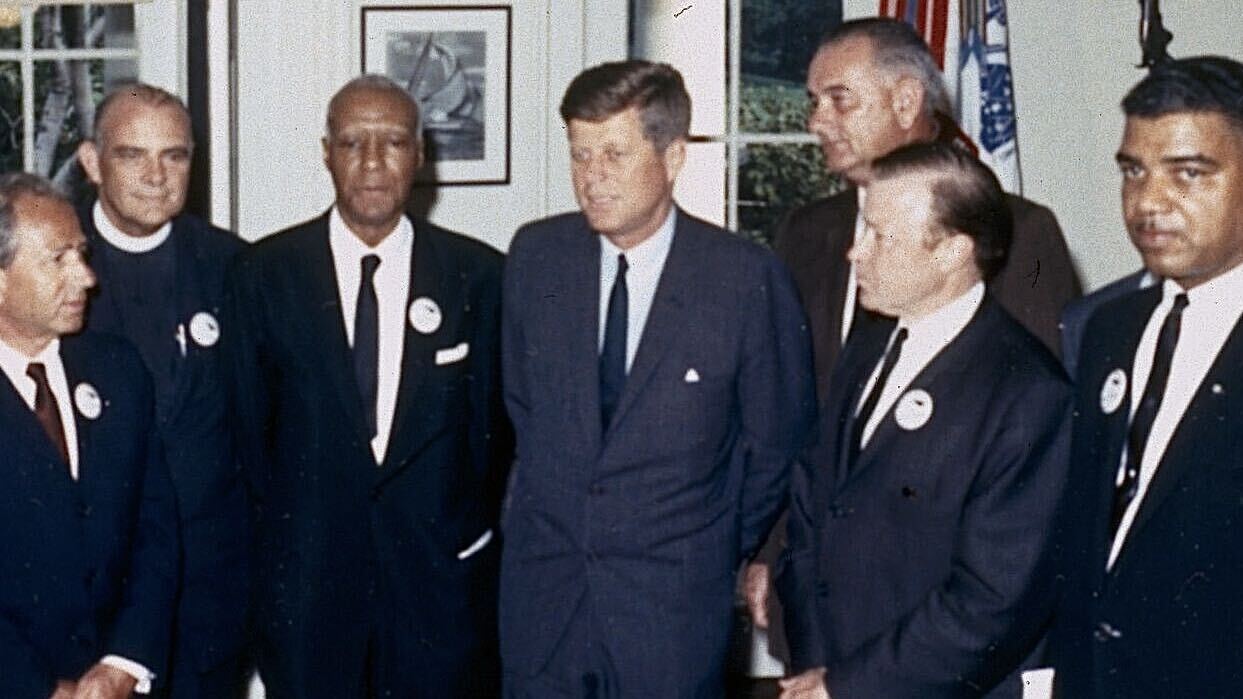
Kennedy was president when the country faced a genuine moral crisis around civil rights.
ARCHIVAL (6-11-63):
PRESIDENT JOHN F. KENNEDY: The rights of every man are diminished when the rights of one man are threatened.
SEAN WILENTZ: Now, it took him a long time to do it, and people will not, you know, people maybe won’t forgive him for how long it took him. But on June 11, 1963, after Birmingham, he said that every American had to examine his or her conscience.
ARCHIVAL (6-11-63):
PRESIDENT JOHN F. KENNEDY: The heart of the question is whether all Americans are to be afforded equal rights and equal opportunities.
SEAN WILENTZ: Before he came into the White House, he was not anywhere near as sympathetic to the civil rights movement as he was when he became president. But then he really showed not only his growth, but his determination. The greatness of a president is whether they can stand up to the great moral questions of their era.
(END)
John F. Kennedy: Growing Into the Civil Rights Movement
What makes a great president?
Historian Sean Wilentz, a professor at Princeton, says it’s an ability to grow in office and confront the moral questions of their era. One example is John F. Kennedy’s gradually evolving support for civil rights.
Explore more leadership lessons from American presidents and first ladies through In Pursuit: Lessons of American Leadership, a new documentary special, based on In Pursuit by More Perfect.
- Producer: Sandra McDaniel
- Editor: Heru Muharrar
Lesson Plans & Skills
How John F. Kennedy’s Approach to Civil Rights Changed
Students will examine President John F. Kennedy’s responses to the civil rights movement and argue whether his approach changed and why.
Aligned Skills
Students develop an argument examining Kennedy's motivations to act in response to civil rights events.
Students evaluate Kennedy’s actions by analyzing key primary sources from civil rights events.
Why did Kennedy shift from caution to seeking a civil rights law? Students identify the factors that led Kennedy to seek Civil Rights legislation.
More skills to explore with this video
Generated by the Retro Report AI Assistant The AI searches through Retro Report's archive of documentaries and educational content to generate skill suggestions. These skills have been reviewed by our education team before publishing.
Some respect Kennedy’s evolution on Civil Rights; others criticize his hesitation to act. Have students compare these contrasting views and judge his record.
Covered in the lesson plan How John F. Kennedy’s Approach to Civil Rights Changed above
What led Kennedy to change his approach? Guide students to develop open questions the film raises about presidential leadership on moral issues.
No suggested activities
No suggested activities
Covered in the lesson plan How John F. Kennedy’s Approach to Civil Rights Changed above
How much credit does Kennedy deserve? Have students engage in a respectful dialogue, using evidence from the film and student activities.
No suggested activities
Covered in the lesson plan How John F. Kennedy’s Approach to Civil Rights Changed above
No suggested activities
No suggested activities
No suggested activities
