
Transcript
DAVID BROOKS (POLITICAL COMMENTATOR): We’ve had presidencies that were transformational and not transformational. Reagan was a transformational president.
TEXT ON SCREEN: PRESIDENTIAL LESSONS AT 250
DAVID BROOKS: When Reagan looked at policy, he looked at it through a moral lens. He was not just about power rivalries.
ARCHIVAL (RONALD REAGAN PRESIDENTIAL LIBRARY, 6-12-87):
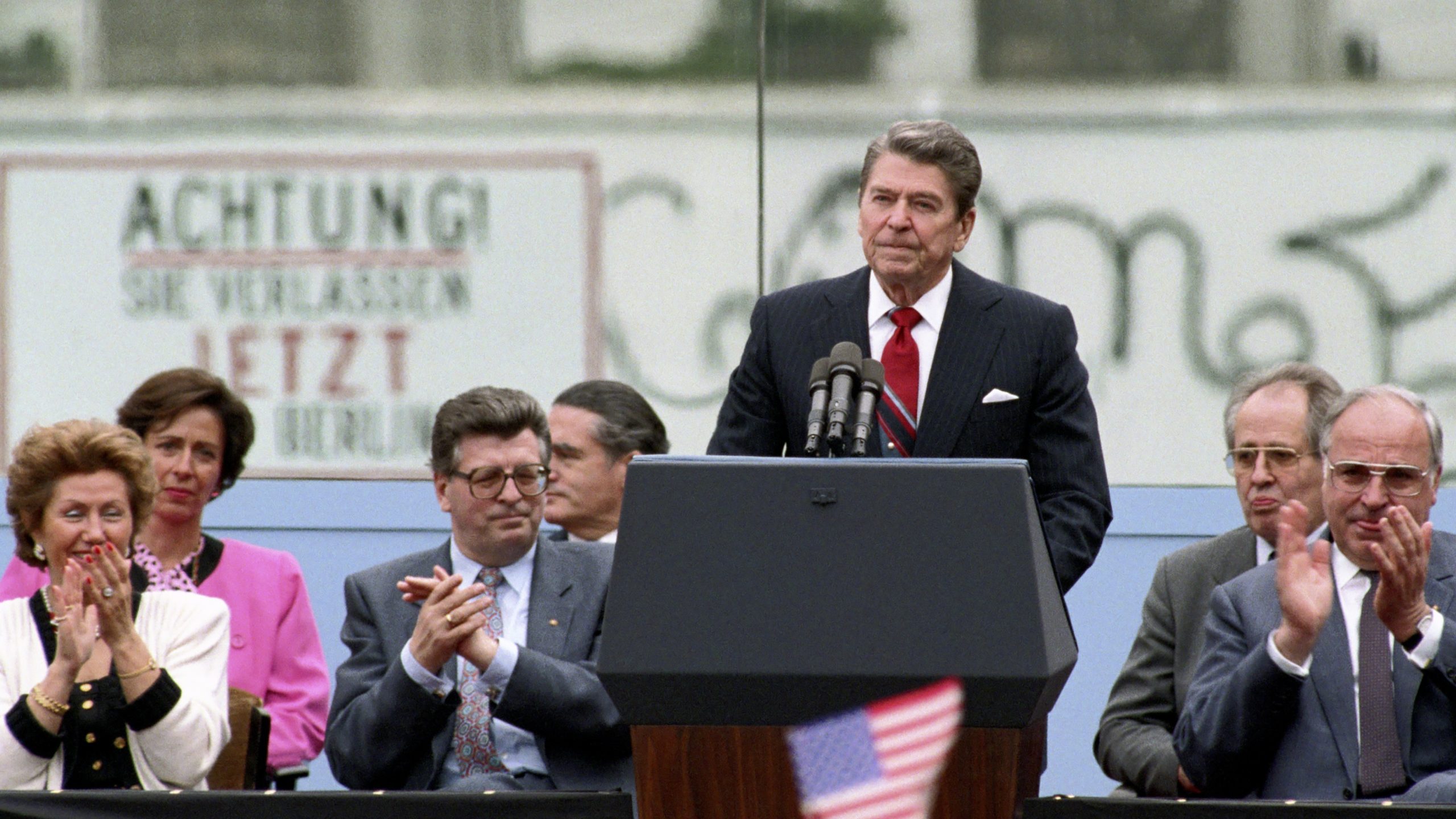
PRESIDENT RONALD REAGAN: We welcome change and openness, for we believe that freedom and security go together.
DAVID BROOKS: When Republican establishment was passive toward the Soviet Union, Reagan said no, we’re going to try to bring this empire down.
He really believed it was a struggle between good civilization that respected human dignity and an evil empire. He had the courage to say – Gorbachev is a guy we can do business with.
Reagan had the moral clarity to say – You know, we can outlast these guys.
ARCHIVAL (6-12-87):
PRESIDENT RONALD REAGAN: Mr. Gorbachev, tear down this wall.
DAVID BROOKS: He did believe in the American project, that America had a unique mission in the world, which was to spread democracy and freedom and human dignity.
(END)
Ronald Reagan: Conviction and Adaptability in the Cold War
President Reagan often applied a moral lens to foreign policy, David Brooks says, particularly in the way Reagan navigated relations with the Soviet Union.
Explore more leadership lessons from American presidents and first ladies through In Pursuit: Lessons of American Leadership, a new documentary special, based on In Pursuit by More Perfect.
- Producer: Sandra McDaniel
- Editor: Heru muharrar
 Grades
8-12


 1 Lesson Plan

