
Transcript
SHARON MCMAHON (AUTHOR AND PODCASTER): All presidents are standing on the shoulders of those who came before them.
LONNIE G. BUNCH III (SECRETARY, SMITHSONIAN INSTITUTION): Every president is shaped by who went before.
LINDSAY CHERVINSKY (EXECUTIVE DIRECTOR, GEORGE WASHINGTON PRESIDENTIAL LIBRARY): The presidency is a really strange office. The Constitution says actually relatively little about what it’s supposed to be. So for so many presidents, when they’re looking for a model, the only person that they can really look to are the people that came before.
DAVID BROOKS (POLITICAL COMMENTATOR): You can tell a lot about a president by whose pictures are on the walls of the Oval Office. It’s like they have the dead whispering to them. When Harry Truman took over from F.D.R., he took down all the stuff that F.D.R. had on the wall and put up Andrew Jackson. He had Andrew Jackson here and a portrait of F.D.R. here, and it was as if they were like – right shoulder, left shoulder, who am I going to talk to today?
SEAN WILENTZ (PROFESSOR OF AMERICAN HISTORY, PRINCETON UNIVERSITY): When Reagan came in, he immediately wanted to put up a portrait of Calvin Coolidge. Calvin Coolidge in many ways was kind of the pre-Reagan Reagan-ite.
MARK K. UPDEGROVE (CHAIRMAN & CEO, LBJ FOUNDATION): When L.B.J. became an accidental president, he looked not so much to John F. Kennedy’s leadership, but to Franklin Roosevelt’s.
COLLEEN SHOGAN (IN PURSUIT): The presidency runs and operates upon tradition and respect, and no matter who sits in the Oval Office, I think they certainly look back on the paths that others had followed to learn from both successes and failures.
DAVID BROOKS: Most presidents, I think they talk to the dead. Otherwise the job would be too overwhelming because there are only, right now, a few, 40, who’ve had this unique vantage point, and I think if you haven’t been president, you don’t know.
TEXT ON SCREEN:
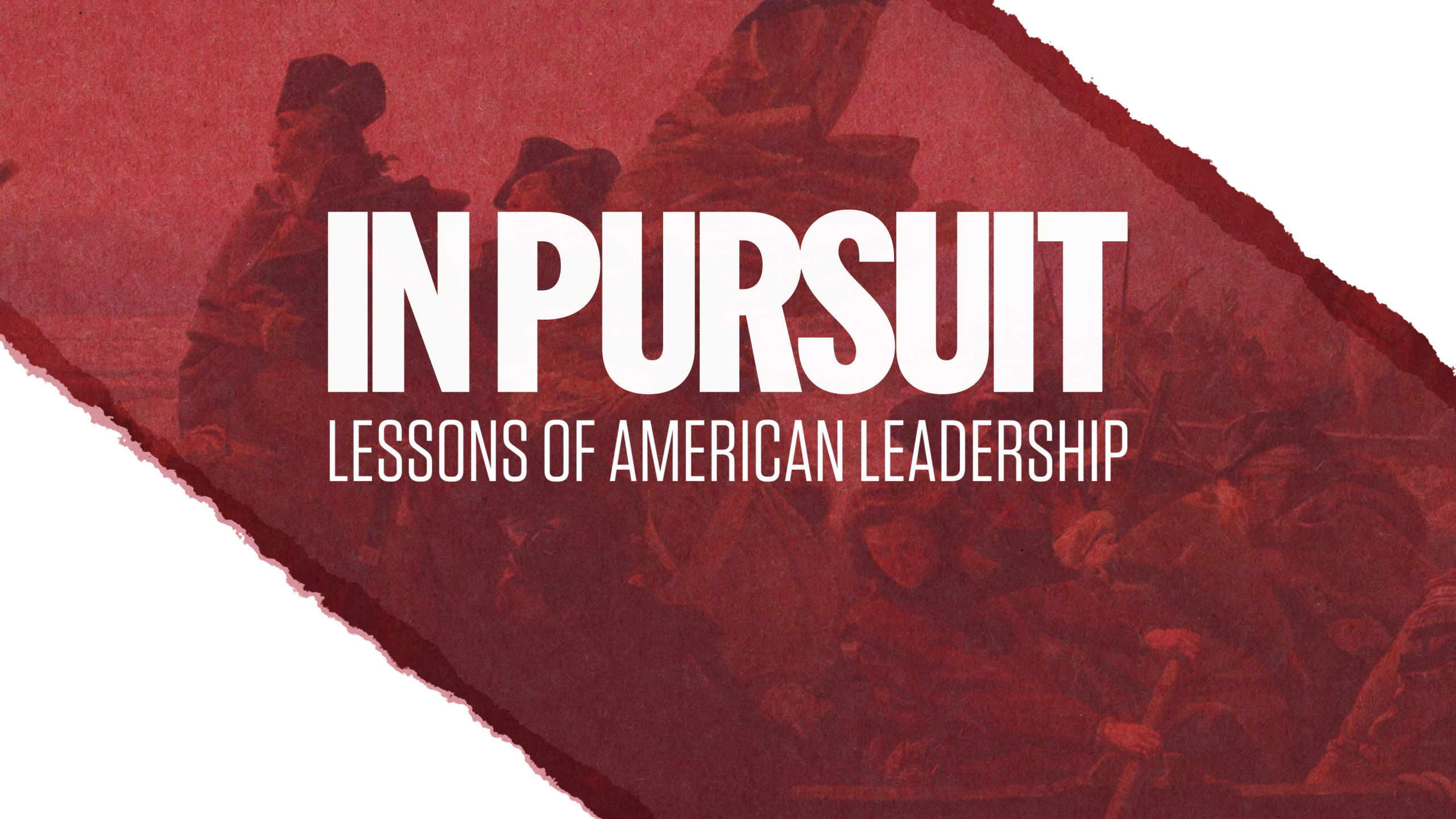
IN PURSUIT
Lessons of American Leadership
a Retro Report film
Based on In Pursuit by More Perfect
COLLEEN SHOGAN: When the United States was created, in 1776, there had never been a large representative or Republican democracy – this was a wholly new experiment.
JOHN BRIDGELAND (CO-CHAIR, IN PURSUIT, FOUNDER, MORE PERFECT): In a time with kings and queens in Europe, a sultan in Constantinople, a shogun in Japan, an empress in Russia, a group of imperfect men in Philadelphia came together to create a very different system.
COLLEEN SHOGAN: And there was this idea, I think, amongst our founders that there was going to be a little bit of trial and error. Today we’re 250 years into our democratic experiment. At In Pursuit, we have gathered a group of historians and journalists, other prominent thought leaders, and several former presidents to write short essays about the most important lessons that we can learn from our presidents and first ladies, the idea being to debrief the great American experiment.
MARK K. UPDEGROVE: Each president, each first lady is an American story that is reflective of who we are as a nation. They’re not the most diverse group of Americans – hopefully that will change – but we can learn from them timeless lessons about leadership.
JOHN BRIDGELAND: Presidents are put in the position of making really difficult and consequential decisions that illuminate their character.
LINDSAY CHERVINSKY: Studying the presidency can help us understand our current moment because so much of what we have experienced in previous generations is shaping what we are seeing now.
MARK K. UPDEGROVE: I think you can take the best and worst of these men and women and see a sort of North Star that guided us at the time, and that should continue to guide us collectively as we consider our next 250 years.
TEXT ON SCREEN:
GEORGE WASHINGTON
FOR A LEADER, HUMILITY IS THE ULTIMATE STRENGTH
by President George W. Bush
VOICE OF GEORGE W. BUSH (43RD PRESIDENT OF THE UNITED STATES): Few qualities have inspired me more than Washington’s humility. I have studied the corrupting nature of power, and how retaining power for power’s sake has infected politics for generations. Our first president could have remained all-powerful, but twice he chose not to. In so doing, he set a standard for all presidents to live up to.
MARK K. UPDEGROVE: In President Bush’s essay on George Washington, he wrote about Washington’s humility. That is the character trait that most marks Washington’s leadership.
VOICE OF GEORGE W. BUSH: After leading the United States to victory over Great Britain in the Revolutionary War, George Washington was at the height of his power. Some suggested he should become the king. Instead, George Washington resigned his military commission in 1783.
MARK K. UPDEGROVE: George Washington chose to go back to his farm. He didn’t exactly take up the plow; in fact, the enslaved people of Mount Vernon do that. But he did step down for power willingly, and as the King of England said, if he does that, he may be the greatest man who ever lived.
VOICE OF GEORGE W. BUSH: In 1787, Washington was called back to public life, where he presided over the Constitutional Convention in Philadelphia.
COLLEEN SHOGAN: Those that were drafting the Constitution were very confident that George Washington was going to be elected and would serve as the first president of the United States. And when you look at the Constitution, Article One, which outlines the legislative branch in Congress, is very long. But Article Two, which details the executive branch, it’s much, much shorter. The presidency was left deliberately vague, and a lot of historians posit that one of the reasons for this was because there was a great trust in George Washington – that he would fill out some of the precedents that were left unstated in Article Two, and future presidents would then imitate what George Washington actually did.
VOICE OF GEORGE W. BUSH: After two terms in office, with a distrust of long-seated rulers still fresh on America’s soul, Washington chose not to run again for president.
SHARON MCMAHON: George Washington intentionally walks away from power, which was something that people hadn’t even considered that a president would do. That he would just voluntarily leave was such a unique idea. People hadn’t even considered that George Washington would leave after two terms.
MARK K. UPDEGROVE: George Washington was the only president in the history of our country who was bigger than the nation itself. He’s the only president who ever will be bigger than the United States of America. He could easily have created the presidency in his own image and made himself a monarch, but because of his humility, he believed that the nation was bigger than him. By doing what he did, he made us who we are.
It doesn’t surprise me that George W. Bush decided to write about George Washington. You can see in his leadership that he was aiming for humility himself, and I think he learned humility at the knee of his father. George Herbert Walker Bush is sort of a naturally humble man, almost the antithesis of what we expect in a politician. Only the second father and son to be president in the history of our country, and maybe the last, and I think just knowing that there was somebody alive who had shouldered the burdens of the presidency before him was a very important part of George W Bush’s presidency.
TEXT ON SCREEN:
GEORGE W. BUSH
LEADERS MUST MAKE DECISIONS BASED ON PRINCIPLE AND TAKE RESPONSIBILITY FOR WHAT FOLLOWS
by Mark K. Updegrove
MARK K. UPDEGROVE: George W. Bush was in the presidency during 9/11, the worst terrorist attack ever waged on our soil, and it not only changed the trajectory of George W. Bush’s presidency, it changed the life of our nation, and the world, to a large extent. On September 14th, President Bush goes to New York, and he goes to Ground Zero.
ARCHIVAL (9-14-01):
PRESIDENT GEORGE W. BUSH: This nation stands with the good people of New York City and New Jersey and Connecticut as we mourn the loss of thousands of our citizens.
CROWD: George we can’t hear you.
PRESIDENT GEORGE W. BUSH: I can hear you. I can hear you. The rest of the world hears you, and the people – and the people who knocked these buildings down will hear all of us soon.
MARK K. UPDEGROVE: But the moment that the public did not see is when he went to the Javits Center and met with the families of the fallen and missing. President Bush went from person to person and family to family to hear about their loved ones, and at the end of that, the mother of one of the victims pressed into the hand of the 43rd president, her son’s badge, which George W. Bush carried in the pocket of his jacket, whatever jacket he was wearing on that day, for the balance of his presidency.
SEAN WILENTZ: The role of a president in those moments of crisis is to lead the country. George Bush at 9/11, he really showed leadership in that moment. We can talk about the policy; that’s a different matter, but in the moment, he not only showed up at Ground Zero but he actually made a speech saying we are not going to blame Muslim Americans for this. He went out of his way to undo the kind of very simplistic hatred that might have arisen coming out of that horrible event. Leaders can do that.
MARK K. UPDEGROVE: And yet, President Bush made many mistakes during the course of his presidency. His biggest mistake, I think, was the war in Iraq. We believed that Iraq had weapons of mass destruction. Ultimately it was found that they did not have those weapons, and I think our credibility as a nation, President Bush’s credibility, took a blow. At the end of the George W. Bush presidency, he was enormously controversial. President Bush said that history will be the judge of my presidency, and I think that’s right. Distance and perspective are needed to get a clear-eyed, dispassionate view on a president’s legacy.
LINDSAY CHERVINSKY: Presidential legacies take a really long time to unfold. It takes time for Americans, and for historians in particular, to allow some of the partisan passions, or our initial ideas, to fade. And it takes years to know actually the full story of a president’s record.
LONNIE G. BUNCH III: The presidency is an amazing institution. And it’s an institution that has evolved over time and some people have been good enough, and many have not. There is not a sort of job description that says you need to know how to work with Congress, you need to find sectional compromises. So you had a lot of people who brought their own instincts and sometimes those instincts were wrong.
When you look at the presidents before the coming of the Civil War, almost no one had an answer, and maybe there wasn’t an answer, and maybe the Civil War was the answer. Part of being president is: how do you handle the country at times of great difficulty? A great president really rises to the occasion.
TEXT ON SCREEN:
ABRAHAM LINCOLN
INDIVIDUAL LIBERTY IS SERVED BY PURSUIT OF THE COMMON GOOD
by President Barack Obama
VOICE OF BARACK OBAMA (44TH PRESIDENT OF THE UNITED STATES): What is it that makes Lincoln such a seminal figure in our story? How is it that this man, born in the backwoods of Kentucky, with little formal education, homely and awkward, a man given to depression and wracked by self-doubt, might come to represent so much of who we are as a people, and so much of what we aspire to be.
DOUGLAS BRINKLEY (PROFESSOR OF HISTORY, RICE UNIVERSITY): President Obama really loved Lincoln and read so much about him. Obama thought of Lincoln’s Gettysburg Address and Emancipation Proclamation as foundational documents, almost like the Bill of Rights or the Declaration of Independence or Constitution.
VOICE OF BARACK OBAMA: Lincoln was not a perfect man, nor a perfect president. By modern standards, his condemnation of slavery might be considered tentative; his Emancipation Proclamation more a military document than a clarion call for justice. And yet despite these imperfections, when it came time to confront the greatest moral challenge this nation has ever faced, Lincoln did not flinch.
SEAN WILENTZ: Abraham Lincoln was facing the greatest crisis this country has ever faced: the Civil War. The greatness of a president is whether they can stand up to the great moral questions of their era, and, in the 1850s, we had presidents who did not. It was only when Lincoln, you know, was elected in 1860 that we had a president who was willing to stand up and to say, you know, that the great struggle we are facing now, are you who think that slavery is right, and we who think that slavery is wrong. This was facing up to the moral question before him.
STANLEY MCCHRYSTAL (RETIRED U.S. ARMY GENERAL): President Lincoln is this incredibly important person who is navigating the nation through this challenge, and it’s interesting because during the Civil War, Abraham Lincoln had done some things which were clearly right up against the edge of the rule of law, but he did it for the sole purpose of getting the nation back to where he thought it needed to be under the Constitution.
LINDSAY CHERVINSKY: Abraham Lincoln is a central powerful figure during the Civil War. And this is part of a pattern where, when there is a national crisis, there is a rise of executive authority because it is easier to have one person gather Americans behind them and come up with solutions that are more creative than perhaps Congress might be able to, so the federal government and the executive branch expands pretty dramatically.
MARK K. UPDEGROVE: Abraham Lincoln navigated through the worst, most existential crisis we will ever face as a nation, and I think presidents look to Lincoln in their darkest hour because they realize no matter how dark that chapter of the country’s life might be, it’s no darker than what Lincoln faced during the toughest days of the Civil War.
ARCHIVAL (2-10-07):
PRESIDENT BARACK OBAMA: In the shadow of the old state capitol, where Lincoln once called on a house divided to stand together, where common hopes and common dreams still live, I stand before you today to announce my candidacy for President of the United States of America.
DOUGLAS BRINKLEY: When Barack Obama launched his career for president, he did it at the 1858 spot where Lincoln gave his famous house divided speech. I think he understood that there is no Barack Obama without Abraham Lincoln, a historic first Black president, and he wouldn’t have been able to do that if Abraham Lincoln didn’t work with abolitionists and work during the Civil War to do away with slavery.
STANLEY MCCHRYSTAL: I really had the opportunity to work closely with two presidents: President George W. Bush and then President Barack Obama, and they were very different personality types, but there was a commonality in how they were affected by war. In both cases, I saw responsible people seeking the right answer. They asked probing questions. They listened to the response. Both of them ultimately were in wars that were frustrating. They were unpopular. There was no clear answer. And they had to look soldiers in the eye and they had to say, I will support you on the battlefield because I, as the commander in chief, sent you there. I had great faith in the office and in those men because I felt that they meant what they said. And so I thought that it was important to look at a president who had gone through a test of their leadership in the times when it gets very complicated.
TEXT ON SCREEN:
ULYSSES S. GRANT
LOYALTY TO PRINCIPLE IS HARDER AND MORE VITAL THAN TO POWER
by General Stanley McChrystal
STANLEY MCCHRYSTAL: The post-Civil War United States was a pretty difficult era. The South had just fought a war to keep African Americans in slavery, and now their defeat meant that African Americans potentially were going to get a seat at the table. After President Lincoln is killed, President Johnson tried to bring the South back into the Union, but in a way that disadvantaged African Americans, so it put him at odds with Secretary Stanton, the Secretary of War – and in 1867, President Johnson decides Secretary Stanton is fired. Johnson had not consulted with Congress. It was a question on whether he had the authority in that case to do that. And he told Ulysses Grant, then General of the U.S. Army, you take over as Secretary of War. Well, that was very uncomfortable for General Grant. Ulysses S. Grant always believed that there was a greater idea in play here, the idea that the war was designed to keep the United States as one because secession was wrong. And he believed that African American slaves should be freed. For him, it was about what was right and what was legal.
So instead of fighting President Johnson directly, he goes in and he does the duties of Secretary Stanton, but only what he’s directed to do. He stays as narrowly focused as he can, and as soon as Congress comes in and reinstates Stanton, he immediately turns back over the position to him because at the end of the day, General Grant had just fought a war to protect the rule of law in America, and he thought that that was sacred.
COLLEEN SHOGAN: Ulysses S. Grant is motivated by the same values that motivated Lincoln, and at particular points in time we can see these aspects of character that have proven really pivotal in American history, and when those attributes of character are missing, they affect the trajectory of history.
LINDSAY CHERVINSKY: As a nation, we’re actually not very old. 250 years isn’t that long. That is especially true with the presidency because so much of that office was crafted by Washington’s actions, and then when they were repeated by people like John Adams and Thomas Jefferson, they became norms and customs, and sort of serve as a scaffolding of the presidency. And so if we’re going to understand what we’re seeing in this moment, we have to understand how those norms and customs were built up over time.
TEXT ON SCREEN:
WILLIAM H. TAFT
MAINTAIN YOUR DIGNITY AND PRINCIPLES THROUGH DEFEAT
by Chief Justice John G. Roberts, Jr.
JOHN G. ROBERTS, JR. (CHIEF JUSTICE OF THE UNITED STATES): William Howard Taft’s legacy is an unusual one, because he was also the Chief Justice in addition to having been president. I like to think that I bring a pretty unique perspective to studying Taft, since I know a little bit about what his job at the court was like.
From the very beginning, Taft wanted to be a judge. At a very young age, he argued the government’s cases before the Supreme Court. He loved everything about the Supreme Court. But when Teddy Roosevelt offered him a job on the Supreme Court, he was at the time the governor general of the Philippines, and he said, I just can’t leave with all this work undone. And then, at the end of Teddy Roosevelt’s second term, Taft was Roosevelt’s favorite to succeed him.
Taft’s wife, Nellie, an extraordinary woman, she was very much in favor of going to the White House, and I really think he sort of set aside his real ambition of becoming chief justice to please her, but also because, believe it or not, it seemed to be a sure thing. And it was: Taft defeated William Jennings Bryan easily.
When he was in office, he thought very carefully about what authority he had under the Constitution. Before he took any significant step, he wanted to know: Where is that in the Constitution? Where is my authority to do that? He would hold little conferences with judges to try to sort out what the legal consequences were, and if he weren’t certain about it, he wouldn’t do it. He would leave that to the other branches of government. He wanted to be confident that he had authority under the Constitution before doing what he thought needed to be done.
Taft had a concept of what judges were and what they should do, and he had a concept of what presidents were and what they should do. Everybody had their own lane. It was a remarkable contrast with his predecessor and, up to the very end, best friend, Teddy Roosevelt. And, you know, Teddy Roosevelt had said he wasn’t going to run for president again. And yet, Taft, getting close to the end of his first term, all of a sudden faces Roosevelt as his competition. Taft was betrayed by his best friend and the effect of that was that Taft, during that election, carried exactly two states, the worst showing that’s ever been made by an incumbent president. You could have seen him just sort of walking off the stage, never to be heard from again, filled with self-doubt or pity, but not at all. He very much held his head high, and he was there, ready to go when his country called upon him again to be chief justice of the United States, the job he’d always wanted. And I think he created our modern understanding of the Supreme Court as a co-equal branch of government, which is what the framers of the Constitution intended.
LONNIE G. BUNCH III: The presidency has shaped the country in profound ways. All these people whose names we don’t know were some of the most popular people and the most important people of their time, and they all had a vision of what America could be, whether it was – let’s be a strongly industrial nation; whether it’s a nation that would protect the agrarian lifestyle. What’s fascinating about looking at the history of the presidency is that it tells us a great deal about who America was at that moment, and so you can really chart an evolution of our dreams, of our hopes, of our fears through the lens of the American presidency.
TEXT ON SCREEN:
FRANKLIN D. ROOSEVELT
OPTIMISM IS THE RARE RESOURCE THAT GROWS AS YOU DISPENSE IT
by Geoffrey C. Ward and Ken Burns
ARCHIVAL (7-2-32):
PRESIDENT FRANKLIN DELANO ROOSEVELT: I pledge myself to a New Deal for the American people. Give me your help not to win votes alone, but to win in this crusade to restore America to its own people.
KEN BURNS (DOCUMENTARY FILMMAKER): Franklin Delano Roosevelt is certainly the most consequential president in American history since Abraham Lincoln. F.D.R. helps lift the country out of the Depression and then gets us through the Second World War with a kind of fundamental optimism.
ARCHIVAL (7-2-32):
PRESIDENT FRANKLIN DELANO ROOSEVELT: Let me assert my firm belief that the only thing we have to fear is fear itself.
KEN BURNS: F.D.R. is a funny phenomenon in American politics. He grows up pampered by his very well-to-do parents. He’s the fifth cousin of Theodore Roosevelt, one of the most celebrated presidents. But he’s struck at age 39 with infantile paralysis. So in the midst of the Great Depression, he cannot stand unaided, period. Which, I’m not sure, gives him humility, which you want – all the great leaders, Washington and Lincoln, had it – but it gave him a kind of empathy. Someone said that the best New Deal program was his smile. It took someone like Franklin Roosevelt to sort of change what the entire dynamics of the presidency is going to be.
The federal government had largely been absent in people’s lives, but Roosevelt created a very muscular government that’s giving young people who had jobless rates that were just through the roof a sort of alphabet soup of different programs that would put people back to work.
ARCHIVAL (1937):
NEWSREEL ANNOUNCER: Unskilled laborers, the forgotten men of past generations, now work steadily at decent wages.
KEN BURNS: Planting a billion trees, a thousand landing strips, bridges, airports. The executive hasn’t been this activist since his fifth cousin, Teddy Roosevelt, and it’s never going to change. You’re not going to put the genie back in the bottle.
LINDSAY CHERVINSKY: Franklin D. Roosevelt greatly expanded what the federal government and the executive branch does. He and Woodrow Wilson, they both again expanded executive authority in a way that the nation hadn’t seen before, and we’re largely still living in that post-Great Depression, New Deal state. The federal government has not really constricted in size since then.
KEN BURNS: Somebody went up to F.D.R. in the early days and said, you’re either going to be the best president or the worst president. He said, if I don’t succeed, I’ll be the last president. And I think you can make really legitimate arguments about going too far with the government’s assistance, but at certain periods of time in our life we need the government to come in and say, we’re there.
ARCHIVAL (1940):
ELEANOR ROOSEVELT: If we turn away from the needs of others, we align ourselves with those forces which are bringing about this suffering, and which we must eventually try to defeat.
KEN BURNS: And it doesn’t hurt that F.D.R. is married to a woman who has the greatest conscience, maybe at that moment in the United States.
TEXT ON SCREEN:
ELEANOR ROOSEVELT
“COURAGE IS MORE EXHILARATING THAN FEAR AND IN THE LONG RUN IT IS EASIER”
by Hillary Rodham Clinton
ARCHIVAL (2010):
HILLARY RODHAM CLINTON: Although December 10th is the day we commemorate the adoption of the Universal Declaration of Human Rights, Eleanor Roosevelt and the other drafters understood that human rights means much more than just political freedom. She wanted to honor the inherent dignity and value of the human being, which, to her, meant equal rights for every man, woman and child. Freedom from want and fear. The opportunity for every person to develop his or her full God-given potential.
ANITA MCBRIDE (CO-AUTHOR, “REMEMBER THE FIRST LADIES”): Eleanor Roosevelt was an incredibly impactful first lady, a trailblazer by every explanation of the word. She was always focused on human rights and on civil rights. That’s fundamental to who she was, and Eleanor was a very independent woman. She had a life, she had a career before she came to Washington.
ARCHIVAL (AUDIO, 1940):
ELEANOR ROOSEVELT: Good day, ladies and gentlemen. I am very glad to have this opportunity to talk to my friends among the women in America during the next few weeks, every Tuesday and Thursday at this same time.
ANITA MCBRIDE: She had a radio broadcast. She had a daily column. She was very involved in politics. She didn’t want to be relegated to the social role of first lady, and she begged her husband to give her an official role, which he did not want to do. But ultimately he saw her value, and so Eleanor Roosevelt became the eyes and ears and legs of her husband.
ARCHIVAL (1934):
NEWSREEL ANNOUNCER: When Mrs. Franklin D. Roosevelt visited Norris Dam, she was keenly interested in the operation of the cableway.
ANITA MCBRIDE: She was traveling the country to see all the New Deal programs in action, and bring this information, of course, back to her husband, and Eleanor is playing a role as a wartime first lady too.
ARCHIVAL (1943):
NEWS REPORT: Mrs. Franklin D. Roosevelt in the field uniform of the American Red Cross visits United States base hospitals in the South Pacific.
ANITA MCBRIDE She also went to London during a time that was very precarious under the Nazi threat.
ARCHIVAL (AUDIO, 1940):
ELEANOR ROOSEVELT: I’m interested of course in the work that the women are doing, because we have not developed that as you have done.
ANITA MCBRIDE: Of course she was very concerned about and tried to guide her husband against the internment of Japanese here in the United States during World War II. I mean, to her, that was a big mistake, and in fact she visited the internment camps, a very courageous woman. She established a model for first lady activism that was tough to follow.
ARCHIVAL (5-6-82):
FIRST LADY ROSALYNN CARTER: Severe mental illness cripples the mind that is at the very heart of the human condition.
ARCHIVAL (1993):
FIRST LADY HILLARY RODHAM CLINTON: It’s time to bring about fundamental change, control our nation’s soaring health care costs, and provide security for American families again.
ARCHIVAL (4-25-07):
FIRST LADY LAURA BUSH: Here in the United States, concerned citizens are spreading the word about our moral obligation to defeat malaria.
JUDY WOODRUFF (SENIOR CORRESPONDENT, PBS NEWSHOUR): The role of first lady – and I know this from covering so many first ladies over the years – is defined by the person who occupies that job. And who knows, one day we may have a first gentleman. But I’ve watched first ladies like Betty Ford, Rosalynn Carter, Nancy Reagan, Hillary Clinton, Michelle Obama. Each one of them has defined it differently.
ARCHIVAL (2-9-10):
FIRST LADY MICHELLE OBAMA: We’re all here today because we care deeply about the health and wellbeing of not just these kids up here, but for all kids like them all across the country.
JUDY WOODRUFF: It is an opportunity for someone with a huge public platform to focus on the things that matter to them and to bring public attention to them, and sometimes to move policy.
LONNIE G. BUNCH III: Some use the presidency, like Eleanor Roosevelt did, to raise issues. Could be education and literacy like Laura Bush. And if first ladies work in a certain way, it opens doors of possibility for other people. I mean, you could make an argument that Eleanor Roosevelt, with the issues she grappled with, her commitment to peace and social justice, opened the ideas for many other women.
ANITA MCBRIDE: We really can no longer look at the arc of American history and not include the stories of these women and their contributions and their legacies, their impact.
MARK K. UPDEGROVE: These women we might not have known before made their own contributions to our country at a time when it was very difficult for women in our society, when women didn’t have the rights that they have today, including the right to vote. But so many of these presidents would not be who they were but for their wives.
LONNIE G. BUNCH III: First ladies, along with the presidency, are symbols of what’s possible in America.
TEXT ON SCREEN:
RONALD REAGAN
IDEAS MATTER MOST WHEN THEY’RE PAIRED WITH MORAL CLARITY
by David Brooks
ARCHIVAL (3-31-76):
PRESIDENT RONALD REAGAN: Good evening. I’m a candidate for the Republican nomination for president, but I hope that you who are Independents and Democrats will let me talk to you also tonight because the problems facing our country are problems that just don’t bear any party label.
DAVID BROOKS: Politicians win the presidency, in my view, when the man meets the moment. Ronald Reagan came into office at a time of intense pessimism and loss of faith, kind of like our period today, and if he had come along maybe a decade later, he would have been wrong for the times.
ARCHIVAL (7-15-79):
PRESIDENT JIMMY CARTER: It is a crisis of confidence.
ARCHIVAL:
MAN (AT A GAS STATION): People talk but they ain’t doin’ nothing. It’s the same old thing every day.
JUDY WOODRUFF: The economy was struggling. There was a huge spike in oil prices, and Jimmy Carter was blamed for that.
DAVID BROOKS: We had a presidency in Jimmy Carter that had failed. We had a president before that that had ended in scandal, so there was this cratering of the American spirit. And Reagan comes along in 1980, at exactly the moment when American culture begins to shift and Americans begin looking for a new alternative. Reagan effectively said our future is going to be more religious. It’s going to be tougher. It’s going to be more free market. We’re going to be the opposite of Europe on a lot of our economic and welfare policies. And that was totally unexpected. And he was just totally optimistic. Yeah of course we’re going to come through this.
ARCHIVAL (1-26-82):
PRESIDENT RONALD REAGAN: I believe that history will remember this as an era of American renewal, remember this administration as an administration of change and remember this Congress as a Congress of destiny.
DAVID BROOKS: You know, I think Reagan is an enigma because it’s often hard to see where his genius lay. He was a guy who believed in ideas but was not intellectual. He was friendly but was friendless. And so it’s weird that he had all these internal contradictions, and you’re never quite sure, well, what made him so great?
ARCHIVAL (6-12-87):
PRESIDENT RONALD REAGAN: Mr. Gorbachev, tear down this wall.
DAVID BROOKS: When people looked at Reagan from abroad, there were bitter fights over placing missiles and things like that in Europe, about the confrontation with the Soviet Union. So they didn’t look at Reagan and think, yeah, he’s my kind of guy, but they couldn’t argue with the fact that he was impeccably American. He did believe in the American project: that America had a unique mission in the world to spread democracy and freedom and human dignity, and he did believe that America was the land of the future, and things could come true.
ARCHIVAL (1984 CAMPAIGN AD):
VOICEOVER: It’s morning again in America, and under the leadership of President Reagan, our country is prouder and stronger and better.
DAVID BROOKS: Like a lot of Midwesterners who grew up in that era, like Walt Disney, Reagan thought people were good, dreams come true, and there’s no place on earth better than a small town in the Midwest in the 1930s. He had this fundamental faith in America, and he had a fundamental faith that Americans could take care of their problems if you gave them a chance, and he believed in happy endings. Reagan was one of the five or six presidents who bent the arc of events, in part because he just was simpleminded enough to do it, and in part because the old order had stopped working for people.
SEAN WILENTZ: Ronald Reagan, a tremendous influence, obviously, in terms of charting the next 30, 40 years of American politics. Things shifted dramatically to the right under Reagan. I mean, he was the anti-New Deal in many ways. Reagan set the tone for a long time thereafter.
DAVID BROOKS: You know, I think we’ve had presidencies that were transformational and not transformational, and what I mean by transformational, they bend the arc of history. And Reagan was a transformational president. The Washington presidency was obviously transformational. Andrew Jackson was transformational: he took a country that was really overly dominated by the East Coast elite and he introduced a populist turn. Theodore Roosevelt was transformational: he took a country that was screwing up industrialization, was allowing massive corruption, concentration of wealth, massive poverty in the urban cores. He began to turn it around with the progressive era.
TEXT ON SCREEN:
THEODORE ROOSEVELT
AN EVER MORE PERFECT UNION REQUIRES AN EVEN WIDER “WE”
by President William Jefferson Clinton
VOICE OF WILLIAM J. CLINTON (42ND PRESIDENT OF THE UNITED STATES): I was elected to a presidency that, due in no small measure to following the lead of Theodore Roosevelt, helped the U.S. adapt and grow to meet the challenges unimaginable to many of Roosevelt’s contemporaries. While consistently striving to enlarge and expand the definition of “We the People.”
SEAN WILENTZ: Teddy Roosevelt was the first of the progressive presidents. He was using the federal government to expand the public good. There were many, many injustices coming out of the heavy Industrial Era. There was child labor and there was no regulation of safe food and drugs. The progressives saw that only, only the federal government could curb those abuses.
VOICE OF WILLIAM J. CLINTON: He saw government as an engine of progress, rather than just a collection of powerful special interests, and he believed, as I do, that in a capitalist system that is constantly evolving with new discoveries in a world that’s increasingly interdependent, only our government, with all its faults, has the ability to do what needs to be done.
SEAN WILENTZ: Bill Clinton was quite explicit about how the work that he was doing in Washington had been very much inspired by Theodore Roosevelt.
VOICE OF WILLIAM J. CLINTON: But Roosevelt’s definition of “We the people” did have real limits: limits rooted in racial and gender beliefs that even by the standards of his own time left much to be desired.
COLLEEN SHOGAN: A major challenge of American democracy is who we count as part of “We the people.” Those first words in the Constitution: That has changed extraordinarily over time. We are not the same “we the people” that we started with 250 years ago. And President Clinton sees Teddy Roosevelt as a moment of expansion of this notion of “We the people.”
VOICE OF WILLIAM J. CLINTON: Every generation inherits not only the progress, but also the unfinished business of our ancestors, and every generation must decide whether to widen the circle or let it close.
TEXT ON SCREEN:
WILLIAM J. CLINTON
LEADERS DEMONSTRATE AUTHORITY NOT BY INSISTING THAT THEY MATTER, BUT BY DEFENDING WHAT MATTERS
by Sean Wilentz
ARCHIVAL (1-20-93):
PRESIDENT WILLIAM J. CLINTON: When our founders boldly declared America’s independence to the world and our purposes to the Almighty, they knew that America, to endure, would have to change. Not change for change sake, but change to preserve America’s ideals.
SEAN WILENTZ: Clinton comes along as a liberal in the Deep South, and he was still dealing with a nation that by a landslide had elected Ronald Reagan, and he was going to have to deal with a Congress that was strongly Republican and strongly conservative, especially after the midterm elections of 1994, when the Republicans had huge success, and it seemed like a great counter revolution against Bill Clinton. So he was at a low ebb where he had to really establish his relevance.
ARCHIVAL (4-18-95):
JOURNALIST: President Clinton, Republicans have dominated political debate in this country since they took over Congress in January. Do you worry about making sure that your voice is heard in the coming months?
PRESIDENT WILLIAM J. CLINTON: The Constitution gives me relevance. The power of our ideas gives me relevance. The president is relevant.
SEAN WILENTZ: And it was thought of as kind of pathetic.
ARCHIVAL (OKLAHOMA CITY, 4-19-95):
JOURNALIST: Good evening. Dozens are dead, hundreds are missing after the worst terrorist attack in U.S. history.
SEAN WILENTZ: The very next day there was an explosion at the Alfred Murrah Building in Oklahoma City, which changed everything.
ARCHIVAL (FOX 4 DALLAS-FT. WORTH, AUDIO, 4-19-95):
JOURNALIST: This is being called the deadliest terror attack ever on American soil. It has devastated this community and sent a chill through Americans across the country.
SEAN WILENTZ: There was a great loss of life, a children’s daycare center was blown up. Just a horrific scene, and people are trying to make sense of it – Who could have done such a thing?
ARCHIVAL (ABC NEWS AUDIO, 4-21-95):
JOURNALIST: It was mid-afternoon when we began to learn more about the men who’d been arrested. And with whom they may have been associated.
ARCHIVAL (4-19-95):
PRESIDENT WILLIAM J. CLINTON: It was an act of cowardice, and it was evil.
SEAN WILENTZ: It was a horrible moment for the country. I mean, it was the kind of domestic terrorism on a scale that the country had never seen before, and had not seen in any way, really, since the civil rights movement: the bombing of the church in Birmingham, the loss of the four little girls. That was the last kind of thing like this that people had seen, and this was on an extraordinarily greater scale. I mean the loss of life was much greater, the destruction was much worse.
How is the country going to deal with that? Bill Clinton knew that first he had to comfort the people who were deeply, deeply hurt and deeply, deeply in sorrow. But he also knew in the back of his mind that this was a national political crisis as much as it was an emotional crisis, because the same forces that had led Timothy McVeigh to his terrorism were also threatening not only his administration, but the entire democratic order. But he didn’t do it right away; he waited two weeks, and then gave a speech at Michigan State University.
ARCHIVAL (5-5-95):
PRESIDENT WILLIAM J. CLINTON: There is nothing patriotic about hating your country or pretending that you can love your country but despise your government. There is nothing heroic about turning your back on America or ignoring your own responsibilities. If you want to preserve your own freedom, you must stand up for the freedom of others with whom you disagree, but you also must stand up for the rule of law. You cannot have one without the other.
SEAN WILENTZ: That was really a turning point in his presidency. After that, he was able to build on the goodwill that he had pulled up, not only in consoling people, but in defining what the politics were: that the politics of division are essentially destructive in a democracy like this. And when you purposely go about governing with division, well, then, you end up with, you know, a civil war. Maybe as a Southerner, Bill Clinton understands that better than most.
He was right there in Arkansas in 1957 when the troops had to be called in. So for him, the civil rights movement was absolutely formative to his whole outlook on the presidency. And to the extent that Kennedy was a part of that too, or at least became part of that, I think that that was a lot of what Clinton saw in Kennedy that was inspiring.
ARCHIVAL (6-11-63):
PRESIDENT JOHN FITZGERALD KENNEDY: 100 years of delay have passed since President Lincoln freed the slaves, yet their heirs, their grandsons, are not fully free.
SEAN WILENTZ: Kennedy was president when the country faced a genuine moral crisis around civil rights. Now, it took him a long time to do it, and people will not, you know, people maybe won’t forgive him for how long it took him, but on June 11, 1963, after Birmingham, he said that every American had to examine his or her conscience.
ARCHIVAL (6-11-63):
PRESIDENT JOHN FITZGERALD KENNEDY: The rights of every man are diminished when the rights of one man are threatened.
SEAN WILENTZ: Look, there was still a long way to go from there, and the struggle was going to continue.
ARCHIVAL (8-28-63):
MARTIN LUTHER KING, JR: I have a dream, that one day this nation will rise up, live out the true meaning of its creeds. We hold these truths to be self-evident, that all men are created equal.
ARCHIVAL (3-15-65):
PRESIDENT LYNDON BAINES JOHNSON: It’s all of us who must overcome the crippling legacy of bigotry and injustice, and we shall overcome.
ARCHIVAL (3-7-15):
PRESIDENT BARACK OBAMA: The single most powerful word in our democracy is the word “we.” We the people. We shall overcome. Yes we can. That word is owned by no one, it belongs to everyone. Oh, what a, what a glorious task we are given, to continually try to improve this great nation of ours.
TEXT ON SCREEN:
BARACK OBAMA
HARD THINGS ARE HARD
by Douglas Brinkley
DOUGLAS BRINKLEY: President Barack Obama won an extraordinary election in 2008. He thought he was part of a continuum of presidents. He was a protector of the heirlooms established by Theodore Roosevelt, F.D.R. and Lyndon Johnson. Things like public lands, national parks, Social Security, Medicaid and Medicare.
ARCHIVAL (12-6-11):
PRESIDENT BARACK OBAMA: In 1910, Teddy Roosevelt came here to Osawatomie and he laid out his vision for what he called a new nationalism. Today, we are a richer nation and a stronger democracy because of what he fought for in his last campaign: an eight-hour work day and a minimum wage for women — insurance for the unemployed and for the elderly, and those with disabilities.
DOUGLAS BRINKLEY: Roosevelt set in motion for a president like Obama to then push the Affordable Care Act, to make sure that Americans have access to health care of one kind or another. That’s why it’s important the lineage of presidents because we always think quickly of what is successful, what’s a win, how are you ranking in the polls and sometimes the great things that you did don’t get the proper spotlight on them until 10, 20, 50 years later. Obama’s inheriting all of that history, and I think President Obama understands that presidents are custodians of time, and then the story of history moves on.
ARCHIVAL (11-9-15):
PRESIDENT BARACK OBAMA: None of this unfinished business will be completed in the next 14, 15 months. It’s not going to be completed within my presidency or the next, or the presidency after that. But that’s the thing about America. The task of perfecting our union is never complete.
COLLEEN SHOGAN: In order for historians to really evaluate presidencies, we feel as though there has to be a period of time that has gone by to be able to have an objective lens. So the project ended with President Obama, but our history requires constant participation by citizens, constant re-evaluating of the democratic experiment, because democracy is not a static enterprise.
LINDSAY CHERVINSKY: Each president of the United States is just one chapter in a much broader story. The office is not about one person. It’s the most powerful office in the world, but it is not supposed to be a cult around that one person; that’s a king, and Washington rejected being a king. John Adams rejected being a king, and almost every single president since then has followed that model. And yet we see the rise of executive power continue, and in the current moment, there is a question of, does it make sense to have all of that authority in one person. And those are bipartisan multi-administration questions that I think future generations will have to answer.
LONNIE G. BUNCH III: The president’s job is to make real those amazing ideals of the founding fathers. There are good presidents who have done solid jobs. There are presidents who’ve failed. But the great presidents are ones that sort of help us imagine what is yet to be.
(END)
IN PURSUIT: LESSONS OF AMERICAN LEADERSHIP
History comes alive with leadership lessons from presidents and first ladies for America’s 250th.
What can history teach us about leadership? IN PURSUIT: LESSONS OF AMERICAN LEADERSHIP explores that question through the lives, choices and legacies of the nation’s presidents and first ladies.
Based on More Perfect’s In Pursuit project, the hour brings history to life through documentary storytelling, archival material and contemporary voices. Historians, public figures, writers and other Americans reflect on moments when national leaders faced defining tests of judgment, courage, character and responsibility. Their insights reveal leadership as a series of consequential decisions made amid uncertainty, conflict and change.
The program examines how presidents and first ladies established traditions, responded to crises, tested the limits of their roles and used their influence to shape public life. Their stories offer lessons about the difficult balance between personal conviction and public obligation.
Created in honor of America’s 250th birthday, the program looks backward with purpose, illuminating enduring questions about power, service, accountability and democratic responsibility. At a moment when Americans are debating what they expect from those who lead, the hour offers history as a source of perspective, insight and possibility.
In addition to the broadcast special and digital series, there are free educational resources designed to bring civic learning into classrooms nationwide. The In Pursuit essay series is accompanied by a companion podcast, “In Pursuit with Colleen Shogan,” produced by PRX and available on all major podcast platforms.
- Director: Bonnie Bertram
- Editor: Hannah Vanderlan
- Producer: Matt Spolar
- Producer: Sandra McDaniel
