Transcript
LINDSAY CHERVINSKY (EXECUTIVE DIRECTOR, GEORGE WASHINGTON PRESIDENTIAL LIBRARY): Living through a historic moment can be really challenging. People understand when they’re seeing something dramatic or monumental happening in front of them, but the outcome often depends on what’s going to happen next, and whether it’s today or it’s 1775, humans are really bad future predictors. They can feel the weight of history, but they often feel really anxious because they don’t know how it’s going to turn out.
TITLE: IS THIS A THING?
RAY RAPHAEL (AUTHOR, “A PEOPLE’S HISTORY OF THE AMERICAN REVOLUTION”): I am a people’s historian, and that has two aspects to it: One is I study the history of common people, and the other is I am a common people looking at history, so when I came to the field, late in the game, I could see things with fresh eyes.
In the 1990s, I got a grant to study ordinary people in the history of the American Revolution, and I discovered that, in 1774, nine months before Lexington and Concord, the British had already been vanished from all of Massachusetts, outside of Boston. They had no more authority whatsoever. An entire revolution had taken place where the people got together in their town meetings and said, we will no longer live under this rule.
LINDSAY CHERVINSKY: John Adams was famous for making predictions that sometimes happened and sometimes did not. He predicted July 2nd would be the day that we celebrate. He wasn’t sure Americans had the strength to uphold a republic, and, in 1774, he predicts Americans might be stuck in this purgatory with Great Britain for more years than he would live.
RAY RAPHAEL: He’s saying, I know we had a Tea Party, but that’s just the way life is when you have a mother country on one side of the ocean and the colony on the other. There can be bickering, back and forth, tug of war, kind of like a tennis match, and it’s not going to really amount to that much in the end. But note the date. This is in April of 1774. What happens is, we got to bring the British Barliament into the show here.
LINDSAY CHERVINSKY: The colonies generally operated under what was called benign neglect. They would occasionally report back to the ministry in London, but they largely operated without any sort of oversight. However, there were moments where the British government would impose increased control, and often there would be a flare-up of tension in the colonies. Then the British government might crush them, but then they would adjust behavior, giving the colonists what they wanted later, after they had asserted that authority, so it wasn’t clear the outcome of the Revolution was going to be what it was.
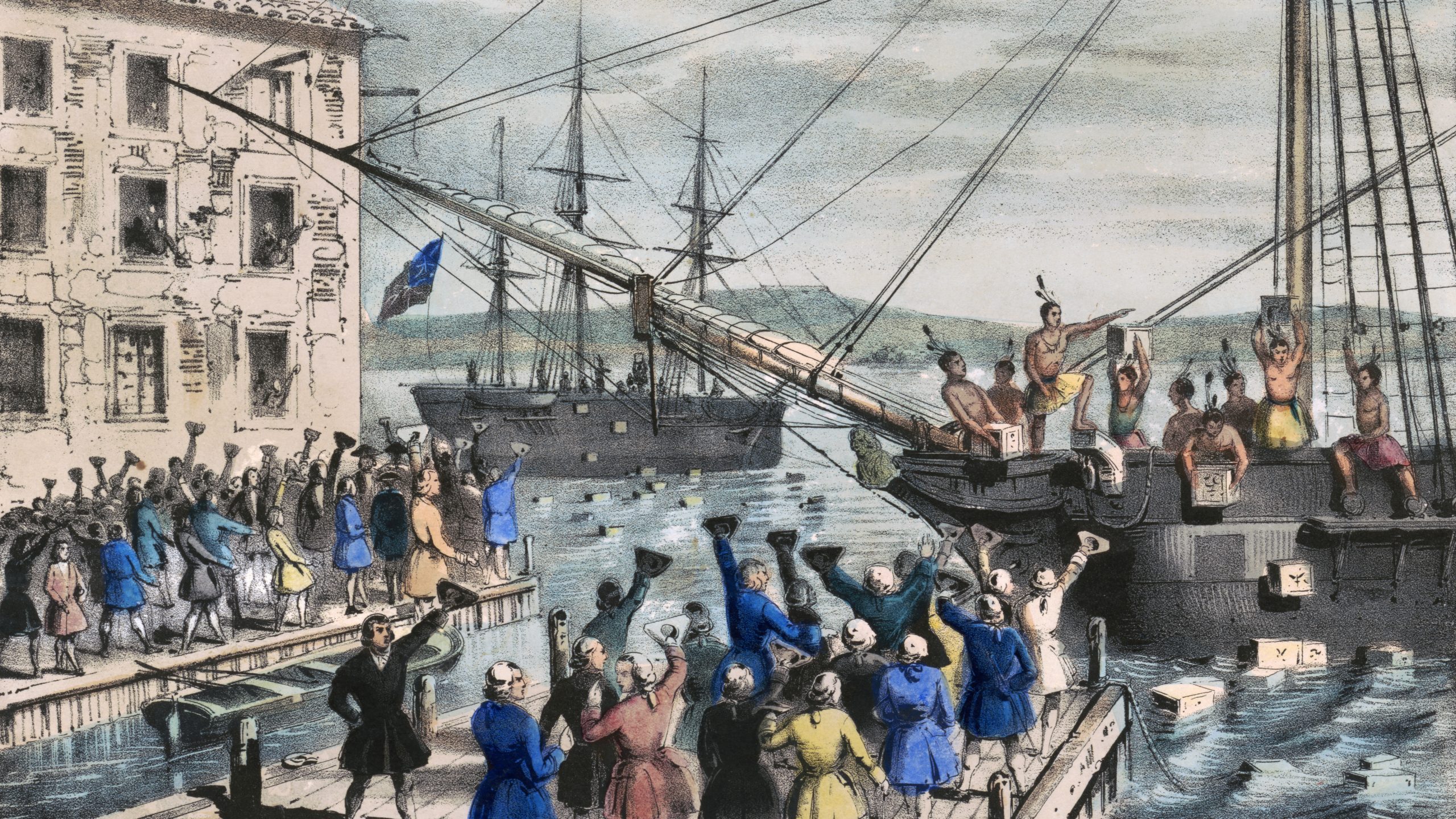
RAY RAPHAEL: The Boston Tea Party is a turning point in the history of our nation. Not so much because they just threw a bunch of tea into the water, but for the extreme reaction it caused in Britain. Parliament there says, we’ve got to bring these bad boys under control, and passes the Coercive Acts, what we call the Intolerable Acts. When we get word about that in 1774, that raises the temperature.
LINDSAY CHERVINSKY: One of my favorite historic facts is, when the delegates at the First Continental Congress gathered, more delegates had been to London than had been to Philadelphia. They saw themselves as part of a British empire, and most Loyalists said, why would we risk leaving the most powerful navy, the largest economy of trade? But they became convinced staying in that system was not helping them, and a more beneficial future would be possible if they supported the Patriot cause to win independence.
RAY RAPHAEL: That winter, within Massachusetts, it’s steamrolling. These people are getting ready for war. Rumor had it the British were going to attack somewhere, the only question is where.
ARCHIVAL:
The time has come.
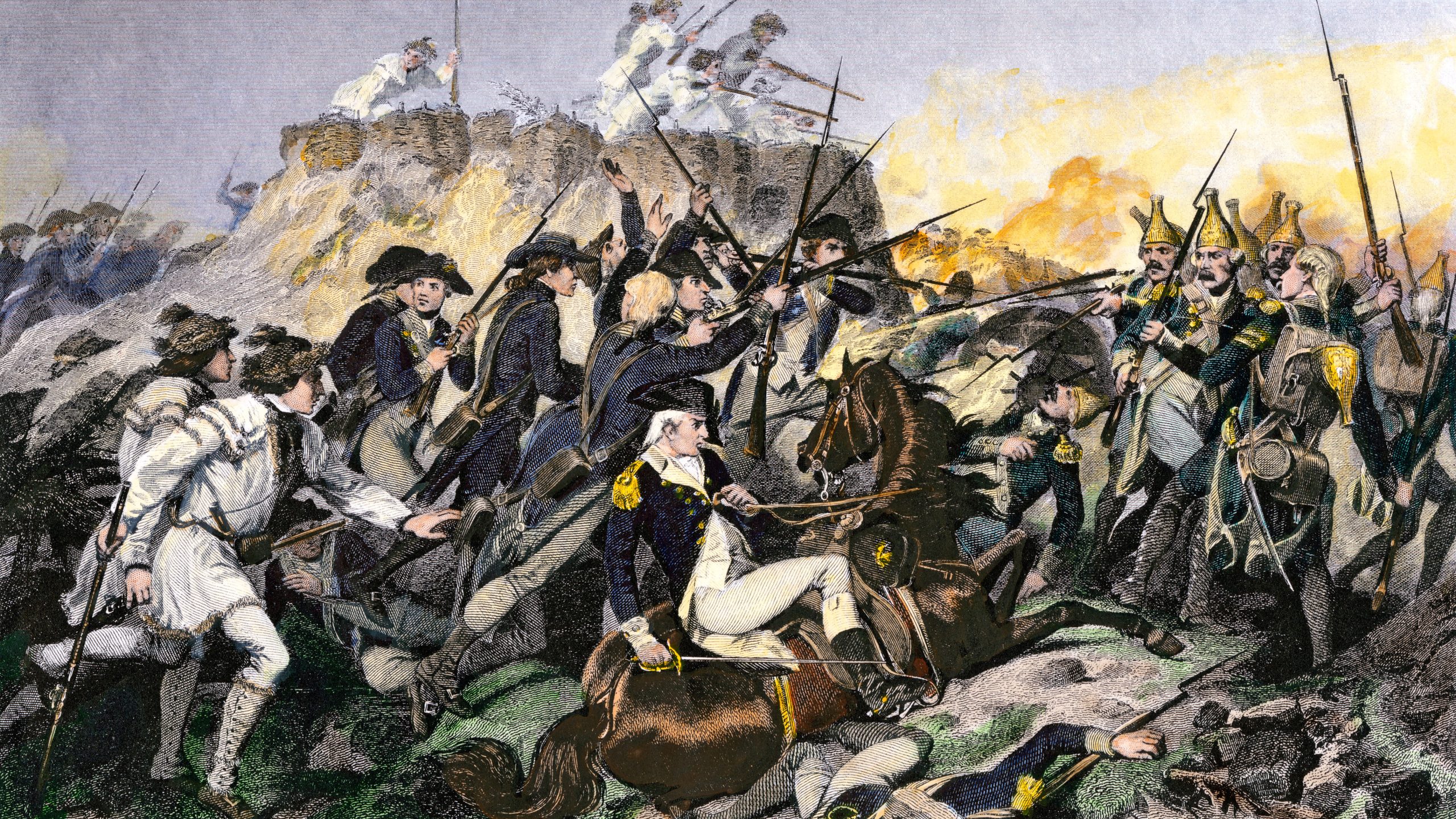
RAY RAPHAEL: And in the spring of 1775, on the night of April 18th, the British do make their move. They’re going to search for arms in Concord, where people have been storing them for several months. Paul Revere comes riding in with news of what’s happening. And then the “shot heard ‘round the world,” hostilities begin, and that rupture John Adams thought was not going to happen during his lifetime has happened a year after writing this letter.
LINDSAY CHERVINSKY: John Adams would become what I describe as the stage manager, or the producer, of the Revolution. He was the one that engineered George Washington’s appointment, Thomas Jefferson’s writing of the Declaration of Independence, and he pushed, cajoled, nudged, harangued various other members to try and get them to support independence. But one of John Adams’s great frustrations for the majority of his adult life was, what is the role between leader and people? He could never be sure if the words that he was saying or writing were actually inspiring a swell of ground support for the revolutionary moment, and often they didn’t. They were very powerful in the halls of Congress, but it required people like Thomas Paine, writing things like “Common Sense,” to actually speak to the common man.
RAY RAPHAEL: History’s happening all around us. That’s just the way history is. But what’s big, what’s life-changing, what’s really going to be significant? It’s an interesting question.
LINDSAY CHERVINSKY: The thing about resistance movements, whether it’s the Revolution, whether it’s civil rights, or any other movement, is they often seem to fail until they don’t, and the moment when they tip from not-yet-successful to success is almost impossible to predict, and might seem obvious in retrospect, but almost never feels obvious to the people actually living it.
(END)
When Is History Happening? From the Boston Tea Party to the Battlefield
Historians explore how protest, uncertainty and resistance led to the Revolutionary War.
In the months leading up to the American Revolution, many colonists still saw themselves as British subjects, and the outcome of resistance was far from clear to the people living through it. In this video, two historians explore the growing conflict that followed the Boston Tea Party, the British government’s crackdown through the Intolerable Acts and the collapse of British authority across much of Massachusetts.
The film traces how ordinary people, local organizing and escalating tensions pushed the colonies toward armed conflict at Lexington and Concord. It examines the role of leaders like John Adams, whose writings reflected both the growing momentum toward independence and uncertainty about how long the conflict with Britain would last.
Through historical analysis and firsthand accounts from the period, the video shows how political movements develop, how revolutions emerge, and why the events we now treat as turning points seldom felt that way to the people living through them.
- Producer / Editor: Matthew Spolar
 Grades
7-9
Grades
6-12
Grades
7-9
Grades
6-12
 2 Lesson Plans