Transcript
Click here for the full video page and educator materials.
WE THE PEOPLE JUDGE: How did the the courts or Congress attempt to limit Lincoln’s power during the Civil War, and were they successful?
ROHINI: Congress was actually in recess. So Lincoln made the decision with the legislative branch completely not being there. However the court ruled that both actions were unconstitutional. . .
ALICE: The Court decided that Congress did not have to baptize with a name.
SKYLAR: It kind of dictates the idea that the court is kind of a reactive body.
ALICE: The executive has the power of the sword. Congress has the power of the purse. Yet the judicial branch has the power of mere judgment.
AVERY: We see this even in Trump versus Hawaii.
WE THE PEOPLE JUDGE: Do you think that presidential power and privilege should extend beyond the term in office?
SKYLAR: When you commit a crime that is not related to your job as president, you should not have immunity.
AVERY (IN INTERVIEW): We were just on fire. We were locked in. We were answering every single question with evidence that we had gathered over, over weeks of hard work.
WE THE PEOPLE JUDGE: I felt like you were like James Madison. You came to the party prepared. Right, excellent.
ALICE (IN INTERVIEW): We killed it. It’s our best performance, like, ever.
VOTE COUNTER: Alright, the scores can go to Jen.
JEN PATJA: 40.
EMILY VOSS: Yes.
JEN PATJA: 42.
EMILY VOSS: Yes.
JEN PATJA: 40.
EMILY VOSS: Yes. 49, 37. Fascinating.
JEN PATJA: Uh, just to be doubly sure. Can we double check everything?
EMILY VOSS: Yes, we can. Who do you want to check first?
JEN PATJA: Publias first. We’re going to go through the whole stack.
EMILY VOSS: Yes. Okay.
CADEN (IN INTERVIEW): Internally, I’m basically repeating two sentences. One, we’ve got this. We’ll do fine. And the other one is, but what if we don’t do fine?
COMPETITION ORGANIZER: We will recognize the first through fifth place teams in reverse order. For fifth and fourth place teams, please stand where you are and be recognized. Fifth place goes to Western Albemarle High School. Fourth place goes to Maggie Walker Governor’s School. [AUDIENCE GASPS]
CADEN (IN INTERVIEW): There’s a collective gasp. The team’s shocked. Mr. U.’s shocked. Everyone from Glen Allen’s shocked. I’m shocked.
COMPETITION ORGANIZER: Please come to the stage. . .
CADEN (IN INTERVIEW): And it’s just like, what just happened?
COMPETITION ORGANIZER: Third place goes to Freeman.
AVERY (IN INTERVIEW): It was very still. You’re trying to compose yourself and it’s kind of robotic in a way.
COMPETITION ORGANIZER: We are excited to announce that Virginia has a wildcard invitation to the national finals, so our second place team also can also attend this wonderful event. Second place goes to Glen Allen High School. Our Virginia state high school We the People champion is. . . Douglas Freeman.
While our competition is over, your civic contributions do not end today. In fact, this is just the beginning. Thank you and good afternoon to you all.
ALICE: Okay, we need to wait for Mr. U. . .
SAM: No it’s not it. We spent all year together. It’s not it.
AVERY (IN INTERVIEW): Constitutional knowledge of the depth that you gain in We The People is not something that you can simply cast aside. It’s not like a consolation prize. It’s nice to know that all the hard work that we put in is still there. And it’s also good to experience disappointment. But this disappointment hasn’t necessarily broken me, or made me swear off constitutional law in any way. I want to do it again.
(END)
Citizen Nation: Finding Lessons in Defeat
See how high school teams in Virginia faced the challenge of competition, learning the importance of resilience and grace in defeat.
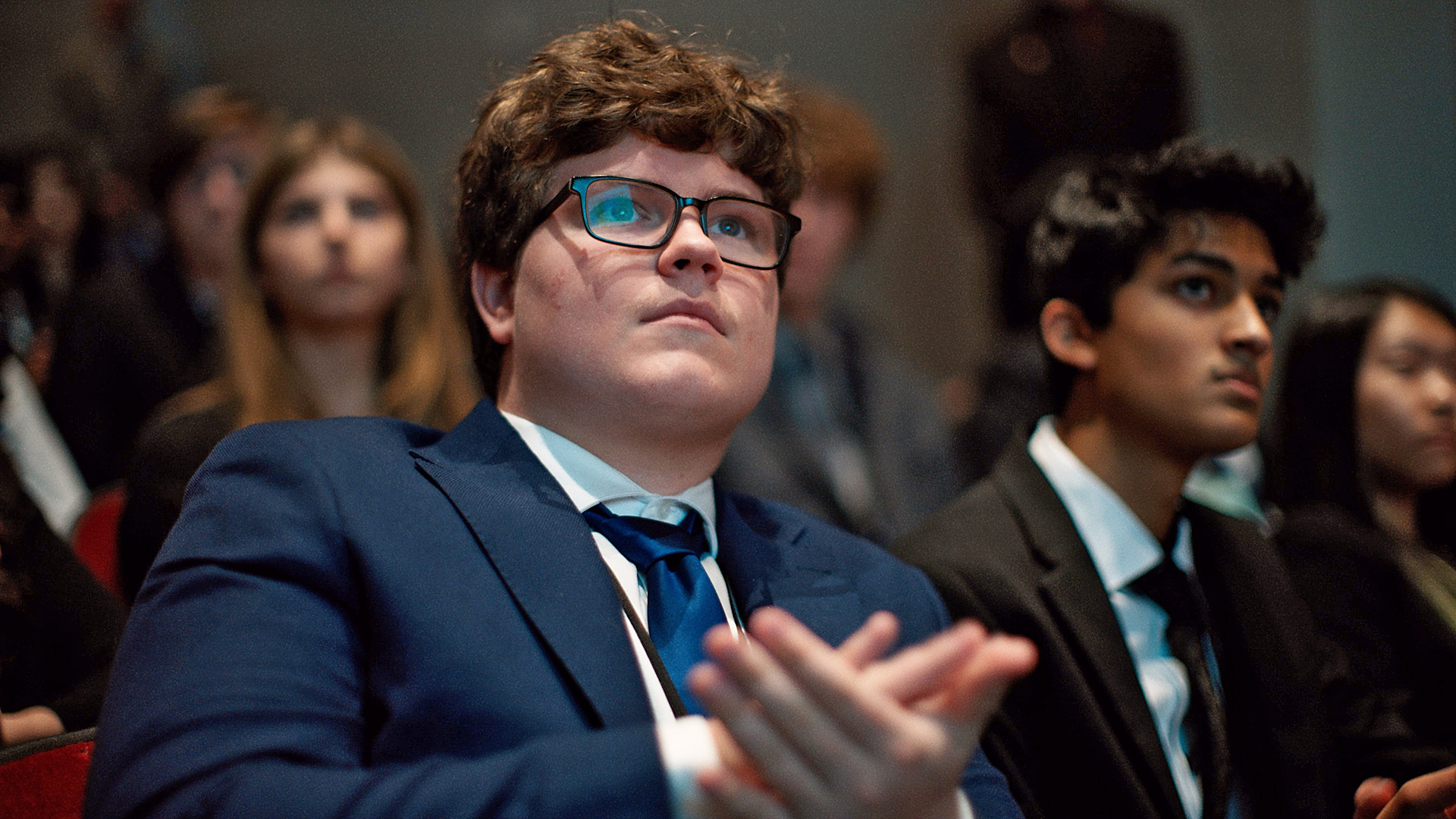
Students from Maggie Walker Governor’s School in Virginia compete for a state civics title. Despite intense preparation, things don’t go as expected. Through it all, students learn that success isn’t only about winning, it’s about growing through the experience. This episode is for high school educators looking to teach students how to embrace success and setbacks while learning from the process.
This is an excerpt from ‘Citizen Nation,’ a four-part coming-of-age story that follows teenagers from across the U.S. with diverse personal and political backgrounds as they come together to compete in the nation’s premier civics competition, We the People. Watch the full hour or watch the series.
The resources were funded in part by the Leonore Annenberg Institute for Civics Award from the Annenberg Public Policy Center at the University of Pennsylvania.
The We the People program is conducted by the Center for Civic Education.
- Series Creator: Bret Sigler
- Director: Singeli Agnew
- Supervising Producer: Veronika Adaskova
- Series and Episode Lead Editor: Anne Checler
- Field Producer: Emily Orr
- Field Producer: Wesley Harris
- Associate Producer: Cole Cahill
- Post Production Supervisor: Cullen Golden
 Grades
7-12
Grades
7-12