

This collection of short videos and accompanying lesson plans is designed to empower students to participate confidently in civic life. In these videos, high school students demonstrate essential skills and strategies for civic engagement, critical thinking and respectful communications that have value far beyond the classroom.
Civics Skills: Strategies for Analyzing Challenging Texts
Learn how to approach a complex topic – in this case, housing discrimination – by sharpening skills in annotation and analysis. The student in this short video breaks down the process step by step, offering tips on how to navigate tricky topics with confidence.
Civics Skills: Evaluate Sources to Build an Argument
Want to improve students’ research game? Sharpen skills with this short video, where a high school student shows how he finds credible sources and supports his argument. Watch as he goes step by step through his research process and shares tips on how to gather solid evidence.
Civics Skills: How to (Respectfully) Disagree
Watch as high school students dive into a discussion about whether certain books should be banned from school libraries. Their conversation isn’t just about the books themselves; it shows how to tackle difficult issues with civility and respect. Students share their views and listen to differing opinions without being disagreeable.
Civics Skills: Sweeten Your Argument
The mission: convince a “judge” that one candy bar represents America. In this courtroom-style debate, student groups present evidence on their candy bar’s history, popularity and cultural impact to support their case. They bring their best arguments but keep it respectful as they try to sway the jury.
Civics Skills: How Students Stood Up for the Right to Protest
In the landmark decision in Tinker v. Des Moines, the Supreme Court ruled that a symbolic protest, where public school students wore armbands, was protected under the First Amendment. Where should schools draw the line between students’ rights and the school’s need to maintain order?
Civics Skills: Engaging Your Community Through Voter Education
What does it mean to be an engaged citizen? High school students are or may soon be eligible to vote for the first time. Some are taking steps to become involved in the community by encouraging neighbors to vote. Here are some ways to inspire others and be a voice in your community.
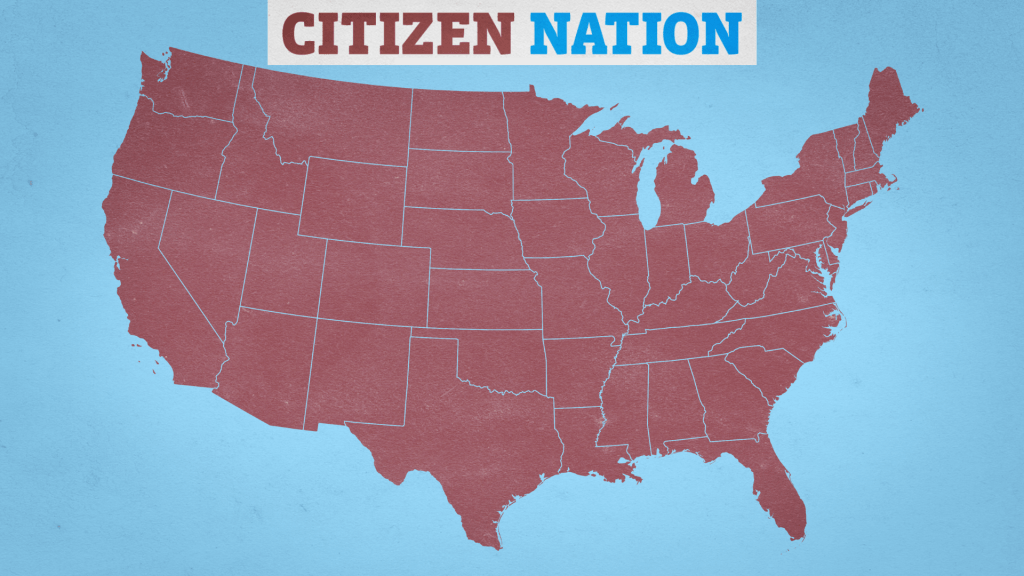
Interactive Map: Meet the Stars of ‘Citizen Nation’
Over the course of 10 months, and across eight states, Retro Report follows high school students and their teachers as they compete in We the People. Learn more about them in this interactive map.
Citizen Nation: Finding Your Political Identity
In this excerpt from “Citizen Nation,” a We the People participant discusses how family, society and his experiences shape his political beliefs. He also reflects on the difficulty of finding common ground in today’s divided nation.
Citizen Nation: Thinking About the Value of Public Service
In this excerpt from “Citizen Nation,” a student learns about public service through the example set by his father, a teacher and state delegate. They reflect on their shared interest in government, history and public service.
Citizen Nation: Exploring Judicial Independence
In this excerpt from “Citizen Nation,” students from Southwest Career Technical Academy in Las Vegas engage in a mock congressional hearing, answering challenging questions on judicial independence and constitutional powers.
Citizen Nation: Citizenship Responsibilities
In this excerpt from “Citizen Nation,” Caden VanValkenburg votes for the first time, in an election in which his father is a candidate. Balancing his new responsibilities as an adult with admiration for his dad’s public service, Caden reflects on his family’s role in the campaign.
Citizen Nation: Preparing for Success
In a charged season of preparation, high school teams push themselves to sharpen their knowledge and skills before a national civics competition. In this excerpt from “Citizen Nation,” students like Rohini, Alice, Avery and Skylar learn that true success lies in mastering their topics and preparing for anything.
Citizen Nation: Finding Lessons in Defeat
In this excerpt from “Citizen Nation,” students from Maggie Walker Governor’s School in Virginia compete for a state civics title. Despite intense preparation, things don’t go as expected. Through it all, students learn that success isn’t only about winning, it’s about growing through the experience.
Citizen Nation: Symbolism in D.C.: It’s All Done With a Purpose
In this excerpt from “Citizen Nation,” students from Wyoming and Wisconsin arrive in Washington D.C. for the We the People national finals. As they explore the nation’s capital, they discover the symbolism of the city and its monuments, and prepare themselves for life after graduation.
Citizen Nation: How the Media Shaped the Narrative of Civil Rights and Disobedience
In this excerpt from “Citizen Nation,” Journeylove Taylor reflects on the power of representation as she prepares for and competes in the national We the People finals, tackling a question about the role of the media in civil rights and civil disobedience.

The resources were funded in part by the Leonore Annenberg Institute for Civics Award from the Annenberg Public Policy Center at the University of Pennsylvania.
