
Transcript
HOWARD KAKITA: Everybody should understand the devastation of an atomic bomb. It’s not like an ordinary bomb.
MASAKO WADA: It’s not only a story of the past. The world is still at risk of nuclear weapons. If nuclear weapons are used, it will not only affect our bodies and lives but also destroy the Earth completely. We want the next generation and the generation after that to understand this.
NARRATION: On the morning of August 6, 1945, four years after the Japanese attacked Pearl Harbor, driving the U.S. to enter World War II, an American B-29 bomber carrying an atomic bomb flew over Hiroshima, Japan, a city of about 250,000 people.
MICHIKO HATTORI (16 YEARS OLD IN 1956): Monday, August 6, was a beautiful sunny day. I left the house in the morning, saying, see you later, to my mother.
HOWARD KAKITA (7 YEARS OLD IN 1945): Around, oh, 8 o’clock or so, there was a warning that a B-29 was coming towards Hiroshima, so my brother and I said, oh, let’s go on top of the roof to see if we could watch the vapor trail.
REIKO YAMADA (11 YEARS OLD IN 1945): When I got to school the teacher told us to take a rest in the shade of a tree because it was really hot that day. The boys pointed to the sky and said there was a B-29, so I looked up. I thought it was beautiful. They were flying high. Right above our heads, they U-turned. At the moment I said it’s so beautiful, I couldn’t see anything.
TEXT ON SCREEN:
Nuclear Bomb Test Footage, 1945
MICHIKO HATTORI: Flash! Boom! It was an extremely loud blast. I saw a flash, a white and purple flash infused with magnesium, spread across the sky like lightning. I immediately closed my eyes and covered my nose and mouth, and fell face down. I said, they got me! I’m dead! Goodbye! It all happened in the blink of an eye.
NARRATION: At the moment of the blast, Michiko Hattori was at a military hospital, where she had recently started training to be a nurse.
MICHIKO HATTORI: I was told to quickly get into the air-raid shelter, and I was brought there. I touched all over my body. Miracles really do exist, don’t they? I wasn’t hurt at all.
HOWARD KAKITA: I was knocked out instantaneously. When I came to, the bathhouse had fallen on me, and things are beginning to burn.
NARRATION: The bomb was like nothing ever seen before, a fireball as hot as the surface of the sun that leveled most of the city and killed at least 70,000 people. It burned shadows into the ground and melted survivors’ skin.
HOWARD KAKITA: We saw this mass of people slowly walking, like a parade of zombies, with skins kind of dripping from their bodies. There were already a number of people on the roadside, begging for water, and I recall some people saying don’t give them water, because if you give them water they will die.
MICHIKO HATTORI: People who knew our place was a military medical station came to us for help. When I saw those people who had escaped, I was absolutely terrified because they looked like ghosts. I was only 16. It was too much for me. One after the other they approached me like ghosts, with their arms dangling. And they said, Please help me. Please do something. But how could we help them? There’s no way to help them. We had no medicine, no water. There was nothing we could do.
NARRATION: Three days later, the U.S. dropped a second bomb on Nagasaki, and six days after that, Japan announced its surrender, leading to the end of World War II.
In the weeks that followed, the survivors began to develop a mysterious sickness, which they would later learn was caused by radiation released by the bomb.
HOWARD KAKITA: During that period, the radiation sickness, ah, set in. We had lost most of our hair, the hair start to fall out.
MICHIKO HATTORI: At that time, I was also suffering from diarrhea. I had diarrhea and vomited. I went through a hard time.
NARRATION: It’s estimated that more than 100,000 people would eventually die from the aftereffects of the bomb, and many more would develop long-term illnesses associated with radiation exposure.
HOWARD KAKITA: My grandfather, he contracted – he got throat cancer, and he died two years after the bombing.
NARRATION: Survivors, known as hibakusha, were shunned.
MASAKO WADA (22 MONTHS AT TIME OF NAGASAKI BOMBING): Because of the discrimination that radiation was contagious, hibakusha had to give up on many things like marriage and employment. They couldn’t say that they came from Hiroshima or Nagasaki. There were a lot of people like that. Because of illness and injuries, the hibakusha couldn’t get up. They couldn’t work or move their bodies.
MICHIKO HATTORI: I couldn’t stand up anymore. Whenever I lay down or sat down, people would call me lazy. I was often blamed for that. I was also told that I was a useless woman.
NARRATION: For nearly a decade, the U.S. and Japanese governments refused to acknowledge the effects of radiation poisoning on survivors, or provide them with help.
REIKO YAMADA: We were not allowed to speak, write or share any part of that horrible situation. Many people who had survived the bombing passed away during that decade.
MASAKO WADA: The hibakusha had no way to understand the cause of their suffering. We were neglected and abandoned.
NARRATION: Then, in 1954 …
ARCHIVAL (1965):
NEWSREEL: The atomic explosion had registered a force exceeding 10 million tons of TNT, 500 times the magnitude of the Hiroshima bomb.
NARRATION: The U.S. tested a new bomb in the Pacific Ocean, and set off an international incident. The bomb was far more powerful than expected, and exposed Japanese fishermen to potentially lethal amounts of radiation.
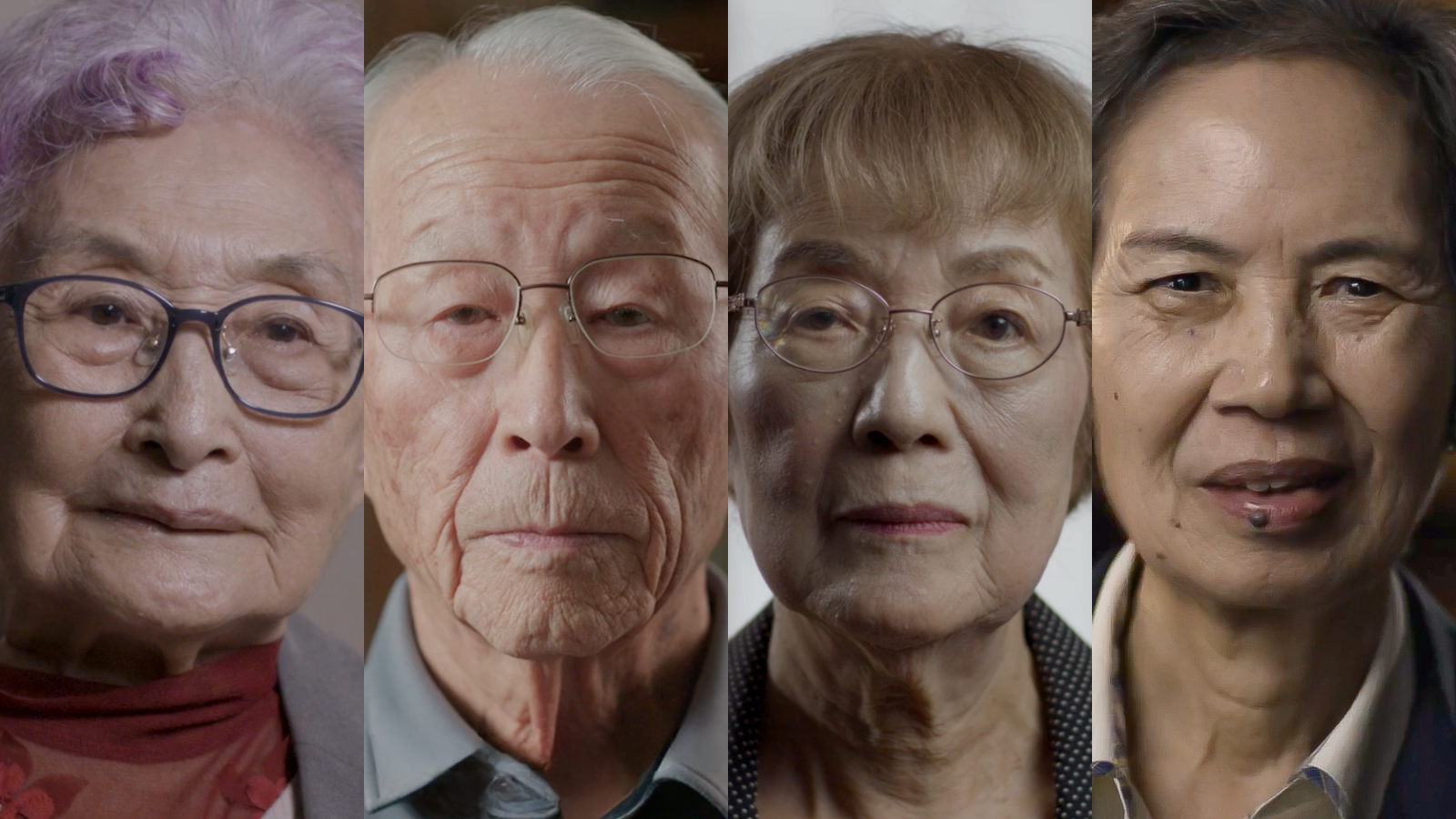
For the first time, hibakusha began to speak out about their experiences, and many would become activists, spending the next 70 years helping build a worldwide movement to ban nuclear weapons. Reiko Yamada, Masako Wada and Michiko Hattori were among them.
MASAKO WADA: We still have two major demands. One is the abolition of nuclear weapons, and the other is national compensation. Neither one has been fulfilled yet.
NARRATION: In recognition of their decades of work, last year the largest organization of survivors won the Nobel Peace Prize for raising awareness about the threat of nuclear weapons, a threat the Nobel committee says is rising again.
MICHIKO HATTORI: Nuclear weapons must be either dismantled or abolished. I have never forgotten the hibakusha’s stories from those times. I will never forget them. I remember their faces. I’m sorry. It brings me to tears.
MASAKO WADA: The time when there will be no hibakusha left is approaching. There may come a day when no one is left to tell the stories. What will happen if no one is left to pass down the stories? No generation should ever go through the suffering we experienced.
TEXT ON SCREEN:
Today, there are more than 12,000 nuclear weapons stockpiled around the world.
The largest are 80 times more powerful than the Hiroshima bomb.
(END)
What Japan’s Atom Bomb Survivors Have Taught Us About the Dangers of Nuclear War
Japanese survivors recall the day the U.S. dropped an atomic bomb on Hiroshima, and warn of future risks.
This video is also available in Japanese.
On Aug. 6, 1945, the U.S. dropped the first atomic weapon on Hiroshima, Japan, instantly killing tens of thousands of people and unleashing suffering that has lasted for generations after World War II ended. Survivors, known in Japanese as hibakusha, recall how the sunny morning turned into devastation. “Flash! Boom! It was an extremely loud blast,” said Michiko Hattori, who was 16 years old at the time. Many of those who survived were left with disfiguring injuries, radiation sickness and severe social stigma.
The bomb’s long-term effects were not acknowledged by the authorities for years. Hibakusha like Masako Wada later became activists, helping to build a worldwide movement. “We still have two major demands,” she said. “One is the abolition of nuclear weapons, and the other is national compensation.”
The risks of nuclear conflict remain high, with more than 12,000 nuclear weapons stockpiled globally, some many times more powerful than the ones dropped on Hiroshima and Nagasaki. As the hibakusha age, preserving their memories has taken on new urgency. “There may come a day when no one is left to tell the stories,” Wada said.
Watch the related webinar which showcases resources and approaches for covering World War II, ethical decision-making and the human costs of conflict.
- Producer: Scott Michels
- Editor: Anne Checler
 Grades
9-12
Grades
9-12
Grades
9-12
Grades
9-12

 4 Lesson Plans


