Transcript
Click here for the full video page and educator materials.
TEXT ON SCREEN: December 3, 1969
ARCHIVAL (CBS, 12-3-69):
NEWS ANCHOR: In the north, B52 bombers wiped out acres of dense jungle in an effort to destroy enemy artillery.
ARCHIVAL (ABC, 8-13-68):
NEWS ANCHOR: And the giant bombers’ giant footprints are all over the landscape.
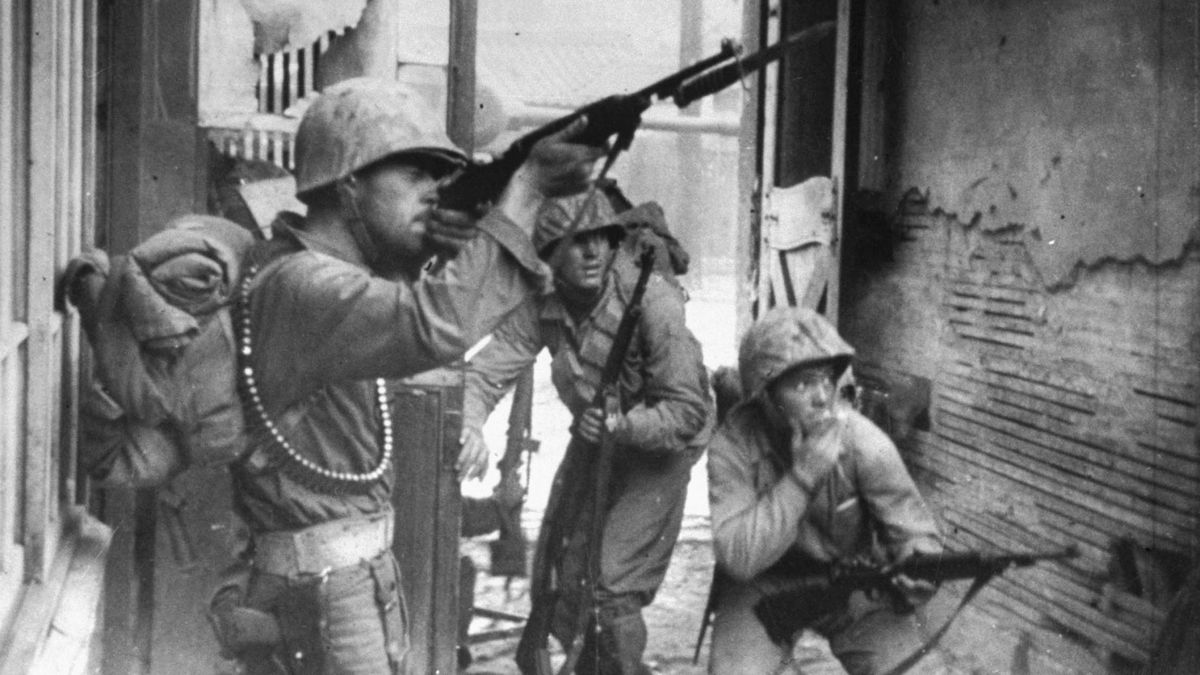
NARRATION: During the Vietnam War, American planes pounded Vietnam, Laos and Cambodia with more bombs than were dropped by the Allies during World War II.
ARCHIVAL (ABC, 8-13-68):
NEWS ANCHOR: If these strikes don’t kill or wound the enemy, at least they shatter their morale.
NARRATION: And land mines littered the ground.
ARCHIVAL (NBC, 2-4-69):
NEWS ANCHOR: Yesterday the Viet Cong planted mines. Then the Americans set some mines of their own.
NARRATION: Now, four decades later, Vietnam has become a case study in how difficult it is to clean up history’s battlefields once peace finally comes.
CHUCK SEARCY (INTERNATIONAL ADVISER, PROJECT RENEW): Countries around the world that are now in conflict, they’ll face the same problem 20, 30 or 40 years from now that Vietnam is facing.
DEFUSING WAR’S PERFECT SOLDIERS
NARRATION: Princess Diana was one of the world’s most well-known celebrities when in 1997 she took her press entourage on an unusual trip, to the war-torn country of Angola.
ARCHIVAL (ITN, 1997):
PAUL HESLOP (TO PRINCESS DIANA): As you can see they’ve been working away here, and they’ve excavated it out and they’ve uncovered a mine.
PAUL HESLOP (DIRECTOR OF PROGRAMS, UNITED NATIONS MINE ACTION SERVICE): Probably the most notable person even involved in the land mine issue was Princess Diana. I hosted her when she visited the minefields in Cuito and Huambo.
ARCHIVAL (BBC, DIARY OF A PRINCESS, 1997):
PAUL HESLOP (TO PRINCESS DIANA): What we’re going to do now is, we’ll place the charge here and you will detonate the mine. You’ll press the button, there’ll be a bang, and you’ll have gotten rid of one of these things.
ARCHIVAL (BBC, DIARY OF A PRINCESS, 1997):
PRINCESS DIANA: Two thousand people every month are killed or maimed by mines around the world. That’s one person every 20 minutes. It is my sincere hope we shall focus world attention on this vital, but until now largely neglected, issue.
ARCHIVAL (ITN, 1997):
PAUL HESLOP (TO PRINCESS DIANA): One. Two. Three.
NARRATION: It was an issue that affected more than a third of the countries across the globe, and in Princess Diana, land mine victims found a passionate advocate.
ARCHIVAL (ITN, 8-9-97):
NEWS REPORT: There is a feeling of gratitude that at least someone, somewhere, royal or otherwise, does care.
NARRATION: Princess Diana advocated for a worldwide ban on land mines, a position that put her at odds with Western powers, which still stockpiled millions of them.
ARCHIVAL (CNN, 1-15-97):
NEWS ANCHOR: Diana’s latest foray into international policy is drawing fire from some of her own countrymen here in Britain.
ARCHIVAL (ASSOCIATED PRESS, 1-15-97):
REPORTER: Ma’am, the government ministers home has said you are a loose cannon by supporting this campaign. Do you have any reaction to that?
PRINCESS DIANA: I’m only trying to highlight a problem that is going on all around the world. That’s all.
PAUL HESLOP: She was seen as an ambassador, and it was so visual, and it was so powerful, and then she died.
ARCHIVAL (ABC, 9-1-97):
NEWS REPORT: They stood for a moment of silence in Oslo today to remember Diana.
BJORN GODAL: We should spare no effort at this conference to achieve the goals she had set for herself.
ARCHIVAL (ABC, 9-1-97):
REPORTER: One French minister suggested that any agreement banning land mines should be called the Princess Diana treaty.
NARRATION: While the United States, Russia, China and even Vietnam, refused to sign the 1997 treaty, saying that land mines might still be needed to protect their soldiers in times of war, the majority of the world’s countries did ratify the ban.
PAUL HESLOP: People stopped producing mines, stopped transferring mines, stopped using mines, and I think one of the consequences of signing the treaty is a lot of people thought, well, that’s fine, that’s good and that’s solved. But land mines, in many senses, are the perfect soldier. They don’t go to sleep. They don’t need to rest. You plant them, and you arm them, and they will last for 20, 30, 40, 50 years.
NARRATION: In Vietnam, many of those perfect soldiers still lie in wait for victims.
As an intelligence officer, Chuck Searcy saw the horrors of the Vietnam War. When he went back more than three decades later, he was shocked to see that these mines were still causing the death toll to rise.
CHUCK SEARCY: This was our responsibility. We had created the problem, and we needed to be accountable for the damage that we had done and the damage that was continuing.
NARRATION: Land mines are only one of the dangers left behind. More than 7 million tons of ordnance, including cluster bombs, were dropped during the Vietnam War.
CHUCK SEARCY: The Pentagon estimates around 10 percent did not detonate as designed.
PAUL HESLOP: Cluster munitions are much more dangerous than anti-personnel mines. They’re scattered indiscriminately over an area, and because of the mechanisms within them, they’re very unstable.
CHUCK SEARCY: Children are part of the most vulnerable population because they’re curious. They may want to pick it up and check it out, and then maybe they want to throw it.
NARRATION: Ho Van Lai was 10 when a cousin picked up a cluster bomb as they played.
LAI OC: I will never forget that day for the rest of my life. People took me to the hospital. I imagined that I would become a useless person. I was supposed to be living in peace, yet I was entangled with the war.
CHUCK SEARCY: Since there’s been peace in Vietnam, more than 100,000 Vietnamese have been killed or injured by bombs and mines. More than 30,000 of those are children.
NARRATION: To Searcy, the Quang Tri province next to the old dividing line between North and South Vietnam became a glaring example of what had been left undone.
CHUCK SEARCY: Quang Tri Province was the most devastated and most contaminated province in the whole country, right on the D.M.Z., the old dividing line between North and South. The evidence of the bombing and the continuing danger of unexploded ordnance was everywhere.
NARRATION: There, in 2001, Searcy helped start Project Renew, a de-mining organization that also rehabilitates the injured and teaches children how to avoid the dangers underfoot.
Despite such strides, metal scavengers can still find plenty of bombs to unearth, making money from the metal casings.
CHUCK SEARCY: They’re willing to take the risk of a loss of limb or loss of life because they might get $50 from selling this scrap metal if the bomb doesn’t explode.
NARRATION: They compete with demining teams like this one. In a typical day, four decades after the end of the Vietnam War, this team can still unearth dozens of ordnances in fields and even under homes. In May, a de-miner with Project Renew was killed while attempting to remove a cluster bomb.
The Vietnamese government estimates that it could take a century to finish cleaning up and destroying the mines and bombs left over from the Vietnam War.
CHUCK SEARCY: The job today is undone. And it will remain undone for a long time to come.
NARRATION: In September, President Barack Obama pledged to double U.S. funding to clear unexploded ordnances left in Laos during the Vietnam War.
ARCHIVAL (9-6-16):
PRESIDENT BARACK OBAMA: Given our history here, I believe that the United States has a moral obligation to help Laos heal.
NARRATION: But Vietnam and Laos are far from alone.
PAUL HESLOP: Ethiopia, Eritrea, North Sudan, South Sudan, Egypt, Libya, Western Sahara, Mauritania, Mali, the Democratic Republic of Congo, Darfur, Mozambique, Angola.
NARRATION: The list of places dealing with unexploded bombs and mines is now more than 70 countries long, and despite a 2008 cluster bomb treaty, which the U.S. and others declined to sign, it continues to grow.
CHUCK SEARCY: Countries around the world that are now in conflict where cluster bombs and other deadly ordnance are being used, they’ll face the same problem 20 or 30, 40 years from now, that Vietnam is facing.
PAUL HESLOP: This is a significant problem and it’s gone on for many years. It’s not – it’s not a flick of the switch and you’ve solved it. The only way there’ll be no unexploded ordnance and rockets is for people to stop firing them at each other.
(END)
Princess Diana Brought Attention to Land Mines, but Their Danger Lingers
In the late 1990s, Princess Diana brought public attention to land mine victims. But since her death, how much progress has been made in the worldwide fight against leftover munitions?
Despite Princess Diana’s public crusade in the late1990’s to ban land mines, they, and other unexploded ordinances, remain an intractable problem around the world, killing and maiming thousands a year – most of them civilians, many children. Perhaps no country illustrates the problem more dramatically than Vietnam.
Decades after the Vietnam War ended, the country is still grappling daily with thousands of unexploded ordinances left behind. They continue to cripple the innocent, hamper agricultural development, and affect foreign policy.
But as Paul Heslop, director of the United Nations Mine Action Service, told Retro Report, finding an effective solution is not easy in a world still often at war. That future is being written today in conflict zones such as Yemen and Syria, one cluster bomb at a time.

- Producer: Olivia Katrandjian
- Producer: Sarah Weiser
- Sr. Producer: Kit R. Roane
- Editor: Jane Wholey
- Editor: Jeff Bernier
 Grades
9-12
Grades
9-12

 4 Lesson Plans