
Lesson plan

Lesson Plan: How Pollution Set the Stage for the First Earth Day

In the mid 20th century, smog choked cities, factories spewed industrial waste and a river in Ohio caught fire. By the late 1960s, a series of environmental crises, including a devastating oil spill off the coast of Santa Barbara, Calif., pushed environmental damage into the national spotlight. This Retro Report video traces how those events led to the creation of the first Earth Day on April 22, 1970, when an estimated 20 million Americans took part in demonstrations, teach-ins and community cleanup efforts. Public pressure eventually led to the Clean Air Act and the creation of the Environmental Protection Agency.
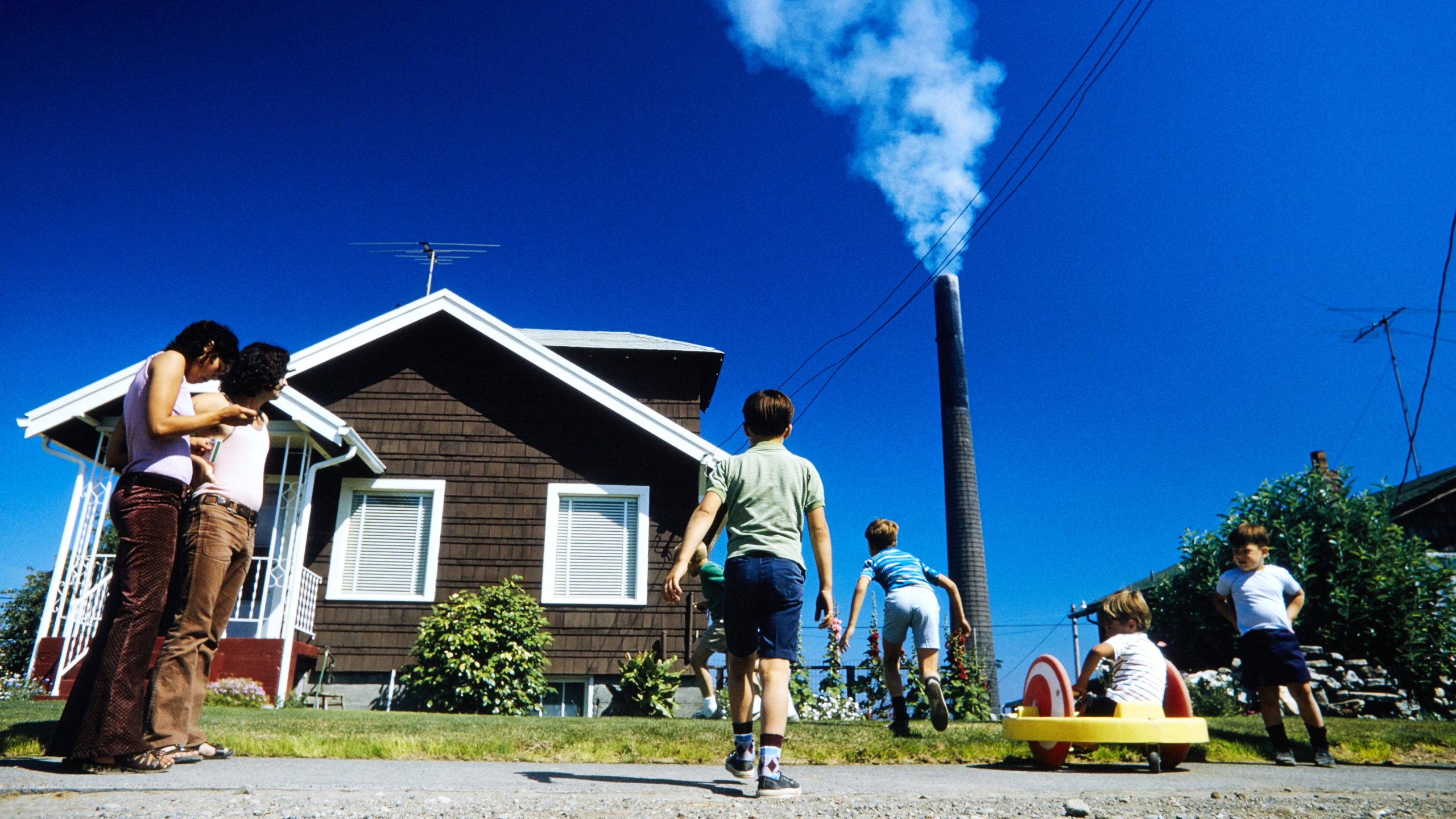
See more

Subjects:

  • Science/ Environmental Science

    • Human Impact on the Environment; Atmospheric Chemistry

  • U.S. History, Civics

    • Landmark federal legislation – Clean Air Act; creation of the EPA

  • Human Geography

    • Human-Environmental Interaction

Grade Level:

Grades 6-12

  • For (younger) students who may need background information on how smog forms from an atmospheric inversion, here is an explanation, with diagram: What Causes Smog? | Caltech Science Exchange

Lesson Duration:

1-2 class periods

  • Day 1: Steps #1-5; Day 2: Steps #6-9

Essential Questions:

  • How do human activities impact Earth’s systems?

  • How has environmental activism highlighted specific problems caused by pollution and what changes in federal policy have resulted from this activism?

  • How are current environmental conditions in the United States connected to the original Earth Day goals?

Lesson Objectives:

Students will:

  • Investigate the origins of Earth Day and identify the motivations and contributions of key organizers of the first Earth Day.

  • Evaluate the immediate and long-term impacts of Earth Day in the United States.

  • Investigate the five primary pollutants that make up the AQI (Air Quality Index).

  • Compare and contrast conditions of the air, water, and land before and after the creation of the EPA (Environmental Protection Agency) and subsequent United States policy decisions.

Materials:

Procedure:

  1. Pass out the student activity handout or provide a digital copy. Activate students’ prior knowledge by having students complete a “Quick Write” of what they already know about Earth Day or what they’d like to know about it.

    1. Have students talk to a partner or within a small group about what they wrote.

    2. Ask for student volunteers to share their experiences participating in Earth Day events or attending an Earth Day celebration with the class.

  2. Next, project the slideshow to the class, briefly showing each of the 6 photographs from the National Archives collection, “Documerica” without discussion.

    1. Have students access the photos on their own, and choose one image to examine.

    2. Students will complete the “Observe-React-Wonder” section. This thinking routine was developed as part of the Artful Thinking & Visible Thinking projects at Project Zero, Harvard Graduate School of Education.

  3. Watch the Retro Report video, “Choking Smog. A River on Fire. How Pollution Set the Stage for the First Earth Day” and have students answer the first five questions while viewing.

  4. When students are done recording their responses, ask questions about the video. Possibilities include: “What was the most surprising fact you heard?” “Which image was the most powerful, in your opinion?” “In the video, there are examples of visible pollution—like smog and burning rivers—that inspired people to take action. Today, many environmental issues are less visible (such as microplastics, CO2 levels, or ‘forever chemicals’ in water). In your opinion, how does the ‘visibility’ of pollution affect people’s habits or advocacy?” Then, have students complete the second part of this section which asks about the roles of key contributors to the success of the first Earth Day and to policy changes inspired by Earth Day.

    1. Denis Hayes, American citizens, President Richard Nixon, William Reilly, Senator Gaylord Nelson

    2. Have students share their thoughts on the potential motivations of each of the key contributors. Ask, “What other examples can you think of, if any, when American citizens used letter-writing, photography, teach-ins, or protest marches to initiate change?”

  5. Next, divide the class into four groups. Students will access the U.S. Environmental Protection Agency (E.P.A.) website to read about the environmental laws passed by Congress in the early 1970s. Assign an environmental law (National Environmental Policy Act, Clean Air Act, Clean Water Act, Endangered Species Act) to each group. Groups will read about their assigned law, and take notes on the following questions. Afterwards, each group will present their findings to the total class. As groups present, students from the other groups will fill in their tables.

    1. What does this law protect? (air, water, land?)

    2. Who does this law protect? (people, animals, both?)

    3. How does this law provide protection?

    4. How is this law enforced?

  6. Explain to students that a major air pollution source from the 1950s to 1970s was lead emissions. Lead exposure can cause a wide range of health problems, especially in children. Lead in the air comes from the processing of metals, manufacturing, smelting, and the burning of leaded aviation and automobile fuels. After the E.P.A. removed lead from gasoline in cars, levels dropped from 1980 to 2014 by 98%. (Source: E.P.A. Basic Information about Lead Air Pollution)

    1. Ask students if they are familiar with the “unleaded” label on gas station pumps. After the Clean Air Act, the  E.P.A. regulated the percentage of lead allowed in automobile gasoline, dropping the levels until it was phased out completely.

    2. Tell students that one way scientists can trace levels of lead in humans is through hair analysis. Scientists recently tested human hair samples from 1916 to 2024, and the results were published in Scientific American magazine.

    3. Have students read the lead concentration graph in the “Analyze” section, and answer the questions about the graph.

    4. Optional (depending on class time): Have students read the Scientific American article “A Century of Hair Clippings Show Lead Exposure Rates Have Plummeted.”

  7. Introduce the Air Quality Index, a data set resource available to citizens that provides daily reports of primary atmospheric pollutants. Explain that the index is an important health indicator, especially for people with asthma or other respiratory concerns.

    1. Optional: Have a student volunteer check the current A.Q.I. for your location on their phone’s weather app. It will be listed under “Air Quality”  and a click on that number will expand to include the primary pollutant, where it is coming from, and details/levels for all pollutants.

    2. Note about the A.Q.I.: Five “primary pollutants” are monitored and measured for this index. Lead (Pb) is categorized as an “additional pollutant”. Some air quality reports will include lead (as dust) if it is relevant to a particular location on a particular day. Therefore, some websites will list six pollutants.

    3. Note about “fine particulate matter.” Measurements are given for PM2.5  and/or PM10  based on the size of the matter. Both affect health; the smaller the size, the greater the impact on humans as it enters the lungs and the bloodstream.

  8. Have students investigate the following pollutants: How do they get into the air? What are their harmful effects?

    1. Carbon Monoxide (CO), Nitrogen Dioxide (NO2), Ozone (O3), Particulate Matter, Sulfur Dioxide (SO2)

    2. Students should look at the scale on AirNow under “AQI Basics.” Next, they should look at the EPA’s “Criteria Air Pollutants” and record information about the 5 primary pollutants that make up the AQI by clicking on each of the 5 primary pollutants under the “Criteria Air Pollution Information” box.

    3. Alternative option: Divide the class into five groups. Assign an air pollutant to each group, then have them inform the class about that air pollutant. (You could expand this to make it a “teach-in” within your class, similar to what Denis Hayes mentioned in the video.)

  9. Tell students, “At the start of this lesson, we viewed photographs taken in the 1970s by photographers hired by the newly formed E.P.A. to document pollution around the United States. This was called the ‘Documerica’ project, and it helped to establish a baseline from which the country could track progress. You are going to revisit the Documerica photography program from the start of the lesson. Forty years after that project, photographers returned to document the change in those locations.”

    1. Students will complete the “Evaluate” section, in which they will compare before and after photos taken from these locations. They will also view the story map of the Cuyahoga River in Cleveland, which was featured in the video. Students will then answer related questions.

  10. Have students reflect on the video, investigations, and class discussions by completing the “Exit Ticket” section on the activity handout. Students are to choose one quote from the video to reflect upon and indicate which of the following responses to this quote (Emotional, Intellectual, Moral, Action-oriented) most closely describes their response at this time and explain why. Students (especially middle schoolers) may need support with this protocol (Adapted from Glenn Singleton’s “Courageous Conversations About Race: A Field Guide for Achieving Equity in Schools,” 2nd Edition, 2015). https://www.siprep.org/uploaded/Magis/Courageous_Conversations_Compass.pdf).

    1. Emotional (The quote made you feel something. Your response connected the quote to your feelings about the environment.)

    2. Intellectual (The quote made you think. Your response connected the quote to a personal experience and/or another class discussion about the environment.

    3. Moral (The quote is related to a belief you hold about the environment.)

    4. Action-Oriented (The quote reminded you of an environmental action you have read about or already taken yourself, or an action you’d like to take in the future.)

Extension Activity:

For Grades 9-12 Environmental Science

  1. NASA has a series of lesson plans on the topic of air quality comparisons before and after the Clean Air Act. (These are multi-day lessons.) One is “Changes in Criteria Pollutant Levels in the U.S.” Students use NASA satellite data to examine changes in primary pollutants in the atmosphere from 2005 to 2021. Another is the Air Quality Index story map collection of lessons. Students can investigate pollutants (primary and secondary) that make up air quality in greater depth: Sulfur Dioxide, Nitrogen Dioxide, Ground Level Ozone, Fine Particulate Matter, Carbon Monoxide, and Lead (in dust). Templates are provided for teachers and include charts for students to add information they research about each pollutant’s causes and effects, as well as why NASA monitors these atmospheric pollutants.

  2. Earth Day is observed each year on April 22nd. Have students visit the Earth Day website to learn about current Earth Day events and activities.

For Grades 9-12 U.S. History or Human Geography

  1. The Documerica project itself has over 15,000 images in the National Archives Catalog. The E.P.A. hired freelance photographers from all over the United States to document the state of the nation’s environment. Photos capture the time period from 1971-1977, and are organized by topic into 29 categories.

    1. Students could choose a topic to research on their own (or depending on class size, with 29 topics, you could assign/pick out of a hat) by viewing the photos in that set, then reporting on a single powerful image of their choice.

    2. Use the search bar to find local or state photos. Have students find images of that location today, if possible, to compare. Depending on your location, students might be able to photograph the area or use Google Earth.

  2. The Cuyahoga’s Comeback story map has information about additional key contributors to the Earth Day movement, as well as recommendations for urban riverways in general.

    1. Students could research the efforts of key environmental leaders in the story map, including Rachel Carson, Dr. Ruth Patrick, and Cleveland Mayor Carl Stokes.

    2. Students could investigate other riverfronts to examine how they were transformed from industrial areas. Cincinnati, Pittsburgh, Chicago, Detroit, San Antonio, Milwaukee, Kansas City, Memphis and Tulsa are some examples, and smaller cities have newly improved riverfronts, too. Students could research the effects on local livelihoods, health benefits and effects on the local economy.

About the Author:

Kathleen Wilson teaches Science at Gates Middle School in Scituate, Mass., and was formerly a museum educator at Boston’s Museum of Science. She is a 2023 National Geographic Grosvenor Teacher Fellow and a 2025 Transatlantic Outreach Program Fellow. She acknowledges with appreciation the contributions of Filiz Yargici for this lesson.

Standards

College, Career, and Civic Life (C3) Framework for Social Studies

  • D2.Civ.3.6-8. Examine the origins, purposes, and impact of constitutions, laws, treaties, and international agreements.

  • D2.Civ.12.6-8. Assess specific rules and laws (both actual and proposed) as means of addressing public problems.

  • D2.Civ.13.6-8. Analyze the purposes, implementation, and consequences of public policies in multiple settings.

  • D2.His.1.6-8. Analyze connections among events and developments in broader historical contexts.

  • D2.Civ.5.9-12. Evaluate citizens’ and institutions’ effectiveness in addressing social and political problems at the local, state, tribal, national, and/or international level.

  • D2.Civ.13.9-12. Evaluate public policies in terms of intended and unintended outcomes, and related consequences.

  • D2.Geo.4.9-12. Analyze relationships and interactions within and between human and physical systems to explain reciprocal influences that occur among them.

  • D2.His.15.9-12. Distinguish between long-term causes and triggering events in developing a historical argument.

Common Core Literacy Standards

  • CCSS.ELA-LITERACY.RH.6-8.7 Integrate visual information (e.g., in charts, graphs, photographs, videos, or maps) with other information in print and digital texts.

  • CCSS.ELA-LITERACY.RH.6-8.1 Cite specific textual evidence to support analysis of primary and secondary sources.

  • CCSS.ELA-LITERACY.RH.6-8.2 Determine the central ideas or information of a primary or secondary source; provide an accurate summary of the source distinct from prior knowledge or opinions.

  • CCSS.ELA-LITERACY.RST.6-8.7 Integrate quantitative or technical information expressed in words in a text with a version of that information expressed visually (e.g., in a flowchart, diagram, model, graph, or table).

  • CCSS.ELA-LITERACY.RST.6-8.4 Determine the meaning of symbols, key terms, and other domain-specific words and phrases as they are used in a specific scientific or technical context relevant to grades 6-8 texts and topics.

  • CCSS.ELA-LITERACY.WHST.6-8.1.B Support claim(s) with logical reasoning and relevant, accurate data and evidence that demonstrate an understanding of the topic or text, using credible sources.

  • CSS.ELA-LITERACY.WHST.6-8.9 Draw evidence from informational texts to support analysis, reflection, and research.

Next Generation Science Standards

  • MS-ESS3-4. Construct an argument supported by evidence for how increases in human population and per-capita consumption of natural resources impact Earth’s systems.

  • HS-ESS2-2. Analyze geoscience data to make the claim that one change to Earth’s surface can create feedbacks that cause changes to other Earth systems.

  • HS-ESS3-1. Construct an explanation based on evidence for how the availability of natural resources, occurrence of natural hazards, and changes in climate have influenced human activity.

  • HS-ESS3-4. Evaluate or refine a technological solution that reduces impacts of human activities on Earth’s systems.

Verify your email

We'll send a verification code to .

Gift this article