

Scientific breakthroughs. Natural disasters. Climate change. Conservation efforts. Retro Report delves into historical events relevant to the scientific world. When teachers use a science video from this list, they report higher student engagement.
Here are the five short docs that ranked among the most popular resources with teacher advisors. Bookmark them and share them with a science educator.
🐍 “This Snake Is Eating the Everglades“
This 10-minute video explores how invasive Burmese pythons have been multiplying unchecked in Florida and thwarting repeated attempts by state environmental officials to get them under control. The snake is not native to the United States.
“The students are more aware of how important it is to honor laws surrounding animals,” said Jennifer Langston, a teacher at Paragould Junior High in Arkansas.
Resources include “Pythons Observed in Florida,” which utilizes a Geographic Information System map to display sightings of Burmese pythons across the state. Interactive resources like this one are crucial for engaging students whose attention spans have been shortened by chronic social media use, according to a 2024 study.

This Snake Is Eating the Everglades
Burmese pythons released into the wild by well-meaning pet owners have created a reptilian nightmare in the Everglades.
Access resources.🌎 “Healing the Ozone: First Steps Toward Success”
Susan Solomon, an atmospheric scientist, led a team that in 1985 discovered the first direct evidence that chlorine from man-made CFCs was causing ozone depletion above Antarctica. This 12-minute video explores the scientific, political, economic and social events that led to the depletion of the ozone layer, as well as the global response.
“The initial task within the Student Activity led to great discussion and had students thinking outside the box,” said Trisha Daningburg, a teacher at Campbell-Savona Central High School, in Campbell, N.Y. “As we analyzed NASA data, curiosity was piqued.”
A United Nations cabinet simulation for environmental policy is one of the many activities available for this science video.
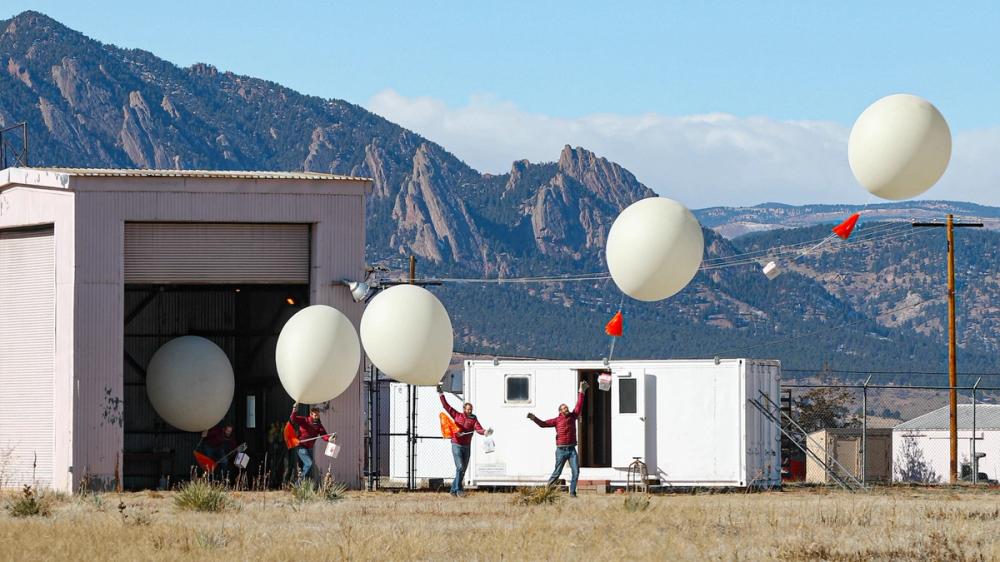
Healing the Ozone: First Steps Toward Success
A worldwide effort to heal damage to the ozone layer is showing early progress.
Access resources.🦟 “Rachel Carson’s Warning on D.D.T. Ignited an Environmental Movement”
This 12-minute video explores how the publication of “Silent Spring” by Rachel Carson in 1962 set the stage for the environmental movement. “Students did find the video informative,” said Erica Zara, a teacher at William Cullen Bryant High School in Queens, N.Y. “They noted that D.D.T. and other chemicals have positive and negative impacts, and compared that to other examples we have studied this year.”
Teacher Shane Gower, from Readfield, Maine, said his students made connections to modern social change movements unrelated to the environment, like Black Lives Matter. “They struggled to come up with books, though they could name YouTubers involved in social movements,” he said.
This video is also an excellent fit for projects exploring Women’s History Month on the contributions of women to science.

Rachel Carson’s Warning on D.D.T. Ignited an Environmental Movement
Author Rachel Carson’s strike against the pesticide DDT turned her into both an environmental hero and a foil for those…
Access resources.🐝 “Beekeepers and Scientists Join Forces to Protect the Pollinators”
This nine-minute video, which is especially popular among middle school students, explores colony collapse disorder, a phenomenon first identified by scientists in the 2000s. The phenomenon has caught the public’s attention and ignited a new wave of concern and respect for the honeybee.
“The student activity questions were well planned,” said Vida Cantieri, a teacher at Norwood Park School in Chicago. “Students asked more questions and wanted to learn more about the topic.”
One of the activities has students write an essay from the perspective of a bee. Consider partnering with an ELA or English teacher for this lesson. Research shows that interdisciplinary instruction strengthens students’ abilities to recognize bias, think critically, tolerate ambiguity and engage with ethical concerns.

Beekeepers and Scientists Join Forces to Protect the Pollinators
Honeybees, heroes in the national food supply, are under threat from parasites, exhaustion and a mysterious ailment. Here’s how beekeepers…
Access resources.🚫 “Toxic Waste in the Neighborhood: The Love Canal Disaster”
This 11-minute video explores the history behind the contamination of Love Canal, near Niagara Falls, N.Y.
“The interactive of the Superfund sites around the country gave students great options to choose a site they could further explore,“ said Zack Burns at Hardin Valley Academy in Knoxville, Tenn.
The Love Canal story is a great example of the power of community-led activism. Consider using this video in partnership with a Government and Civics teacher.

Toxic Waste in the Neighborhood: The Love Canal Disaster
In 1978, toxic chemicals leaking from an old landfill thrust an upstate New York community called “Love Canal” into the…
Access resources.Explore Retro Report’s library and find hundreds of videos and resources that will bring history to life in science classes. Create your free teacher account and join thousands of educators who are already using our videos to increase engagement, spark discussion and foster critical thinking skills.
ISADORA VAREJÃO is an engagement producer.
RELATED ARTICLES:
- Browse Our Most Popular Social Studies Activities in 2025 (So Far)
- Our Teacher Advisors’ Favorite Social Studies Videos for 2025
- Four Issues Teachers Struggle With (and Tools for Tackling Them)
- How I Introduced Local Native American History at My High School—and How You Can, Too
- This Earth Day, Deepen Students’ Knowledge and Bust Through Myths About the Ozone Layer
