
Transcript
ARCHIVAL (PBS NEWSHOUR, 4-24-23):
ANCHOR: Battles have erupted at schools, school boards and library meetings across the country…
NARRATION: Book removals in schools have surged in recent years.
ARCHIVAL (NEWS NATION, 9-20-22):
ANCHOR: Two different national reports find more books are being banned from schools, and they’re expecting record highs.
NARRATION: In the 1970s, one student took school library book bans to the Supreme Court.
ARCHIVAL (CBS NEWS, 3-2-82):
STEVEN PICO: As much as this is a local issue, I think it also brings the First Amendment into question, and when those two are in conflict, to me, the First Amendment has to win.
STEVEN PICO: I found book banning in general at age 17 to be against everything I had been taught up till that age.
NARRATION: Steven Pico grew up in suburban Levittown, Long Island, in the 1970s. When he was in high school, he began to attend school board meetings as a student representative.
STEVEN PICO: At one of the school board meetings, a librarian within the school passed by me and reached over and whispered into my ear – The school board members went into the library last night and removed books. So that’s how I first learned that they were removing books.
ARCHIVAL (NBC NEWS, 3-2-82):
NEWS REPORT: The Island Trees, Long Island, School Board ordered nine books removed from the schools as anti-American, anti-Christian, anti-Semitic, and just plain filthy.
ARCHIVAL (CBS NEWS, 3-2-82):
NEW REPORT: Levittown, Long Island, is typical of many of the communities where book banning has occurred. Suburban, predominantly white, conservative. The school board obtained lists of books that a coalition of right-wing groups claimed were objectionable for children.
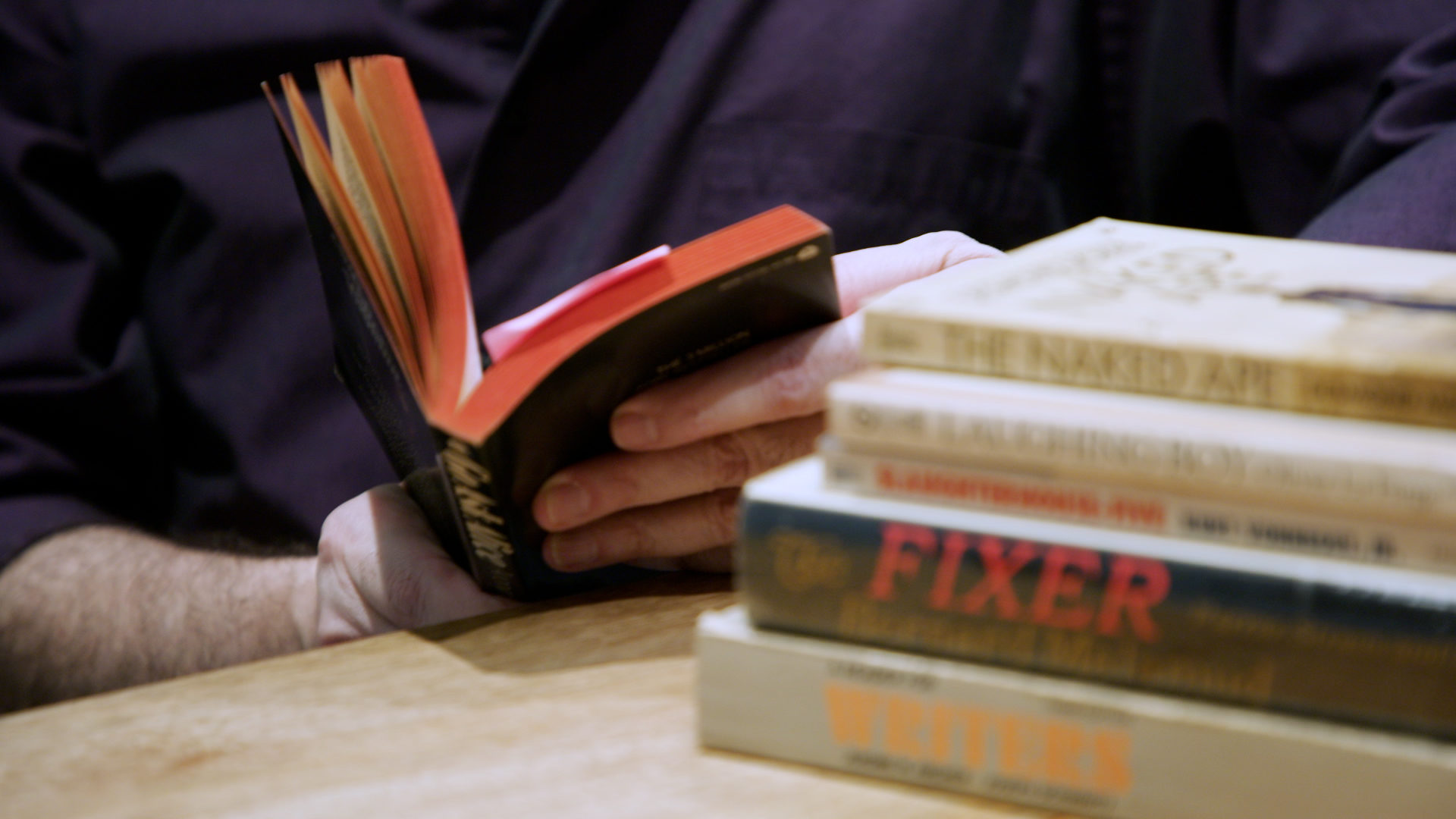
STEVEN PICO: One of the books was a Pulitzer Prize winner by Bernard Malamud called “The Fixer.” Because of a few derogatory terms, this whole book, which opposes anti-Semitism, was banned. They banned one book by Alice Childress because students in the novel are told that George Washington owned slaves. I thought her book was very meaningful to me, just like I thought “Go Ask Alice” was very important to me as a young adult.
ARCHIVAL (NBC NEWS, 3-2-82):
NEWS REPORT: The books included Eldridge Cleaver’s “Soul on Ice” and Kurt Vonnegut’s “Slaughterhouse-Five.”
STEVEN PICO: I thought about the authors involved, and I thought of the fact that half of the books were written by African American authors, and I saw the school board action as trying to silence these voices in my community, and that scared me, because clearly the school board was trying to deny certain aspects of American history and prevent slavery, for example, from being discussed in our schools.
I felt that they needed a student to actually lead the movement, and lead a larger movement, because I didn’t think it involved just our community. I decided to hire a lawyer to challenge the Board of Education to sue them in federal court, claiming that they were violating the First Amendment rights of students, and in January of 1977, with Kurt Vonnegut Jr. at my side, we announced publicly that we were suing the Island Trees Board of Education.
I thought that we had a right to be exposed to a diversity of ideas, not just the ones with which they politically agreed and approved.
ARCHIVAL (CBS NEWS, 3-2-82):
FRANK MARTIN: The issue here is not the books. What’s at issue here is local control.
NARRATION: The school board vice president, Frank Martin, said decisions about the school should be left up to the community.
JUSTIN DRIVER (EDUCATION LAW SCHOLAR, YALE LAW SCHOOL): The school would say, why should we be prohibited from determining what’s in our library? There’s a tremendous amount of local control over educational matters, and the Supreme Court of the United States has no business getting involved in the day-to-day operations of the school library.
NARRATION: The case went on more than for five years. . .
ARCHIVAL (NBC NEWS, 3-2-82):
STEVEN PICO: These books were on those shelves. These books were approved by professionals.
STEVEN PICO: It was national news at that point, and I went to the Supreme Court.
ARCHIVAL (NBC NEWS, 3-2-82):
NEWS REPORT: The justices seemed agitated.
STEVEN PICO: I didn’t know how it was going to go.
ARCHIVAL (NBC NEWS, 3-2-82):
NEW REPORT: Powell – Isn’t it the job of school boards to decide what’s suitable, not courts? Rehnquist – Couldn’t Mr. Pico get the books he wants at any bookstore? Berger – Should judges prevail over elected school boards? Stevens – But what about bad taste?
NARRATION: The Supreme Court decision found that only books that were considered pervasively vulgar or educationally unsuitable could be removed.
ARCHIVAL (NBC NEWS, 6-25-82):
NEWS REPORT: Today the Supreme Court ruled for the first time that school children have a constitutional right to receive ideas – all ideas.
STEVEN PICO: It’s a fantastic decision. It’s a – anyone that respects the First Amendment and the free flow of ideas is overjoyed today.
NARRATION: But the Supreme Court ruling in Pico was unusual, and that’s had some long-term implications.
JUSTIN DRIVER: Pico is one of the most fractured decisions in the Supreme Court’s history. Judges have wrestled with what Pico actually means.
NARRATION: It turns out that there were seven different opinions issued by the court and not one of them had the five justices signed on so it could be considered a precedent-setting majority opinion . . .
JUSTIN DRIVER: Justice Brennan wrote what lawyers would refer to as a plurality opinion rather than a majority opinion, but it is not true that the Supreme Court issued a clean First Amendment holding on this issue, and they’ve not followed up on this opinion in the decades since Pico has been issued.
NARRATION: . . . and over time, that’s led to some uncertainty about whether Pico applies in the modern age.
ARCHIVAL (4 WASHINGTON, 4-21-23):
NEWS REPORT: High school librarians in Spotsylvania were ordered to clear the shelves of these 14 titles.
NARRATION: Today, Steven Pico thinks his case should still be considered a landmark legal precedent, but as new cases wind their way to the Supreme Court, it is unclear if it will be.
STEVEN PICO: When I announced this lawsuit at age 17, my goal was clear: I wanted to see these nine books returned to use in my school system without restriction. That’s what ultimately happened. It took five and a half years and a Supreme Court decision, and it helped hold back the floodgates of censorship for many, many years.
ARCHIVAL (WBIR10, 7-17-24)
PROTESTER: Protect the freedom to read!
PROTESTERS: Don’t ban books!
STEVEN PICO: Justice Brennan said that local school boards may not remove books simply because school board members dislike the ideas contained in those books. Nobody’s denying that parents have a responsibility and an obligation to be involved in their students’ and their children’s education. Of course they do. Banning is not the solution.
(END)
Book Bans, Student Rights and a Fractured Supreme Court Ruling
Island Trees v. Pico tested student rights, free expression and the limits of school boards.
In the 1970s, high school student Steven Pico challenged his Long Island school board after it removed books, including “Slaughterhouse-Five” and “Down These Mean Streets,” from his school library. Pico argued that the bans violated students’ First Amendment rights, and his lawsuit went all the way to the Supreme Court.
The court agreed in part, ruling in Island Trees v. Pico (1982) that school boards cannot remove books simply because they dislike the ideas contained in them. Yet the justices issued seven different opinions, leaving a precedent that is influential but unsettled.
This video examines the fractured nature of the justices’ decision, the First Amendment principles at stake, and how the court’s ambiguity left lasting uncertainty. Steven Pico’s story connects today’s controversies over what’s allowed on library shelves to a case that continues to influence debates about censorship, free expression, student rights and the tension between local control and constitutional protections.
- Producer: Sandra McDaniel
- Editor: Heru Muharrar
 Grades
9-12
Grades
9-12

 Grades
9-12
Grades
9-12

 1 Lesson Plan


