Lesson Plan: Island Trees School District v. Pico
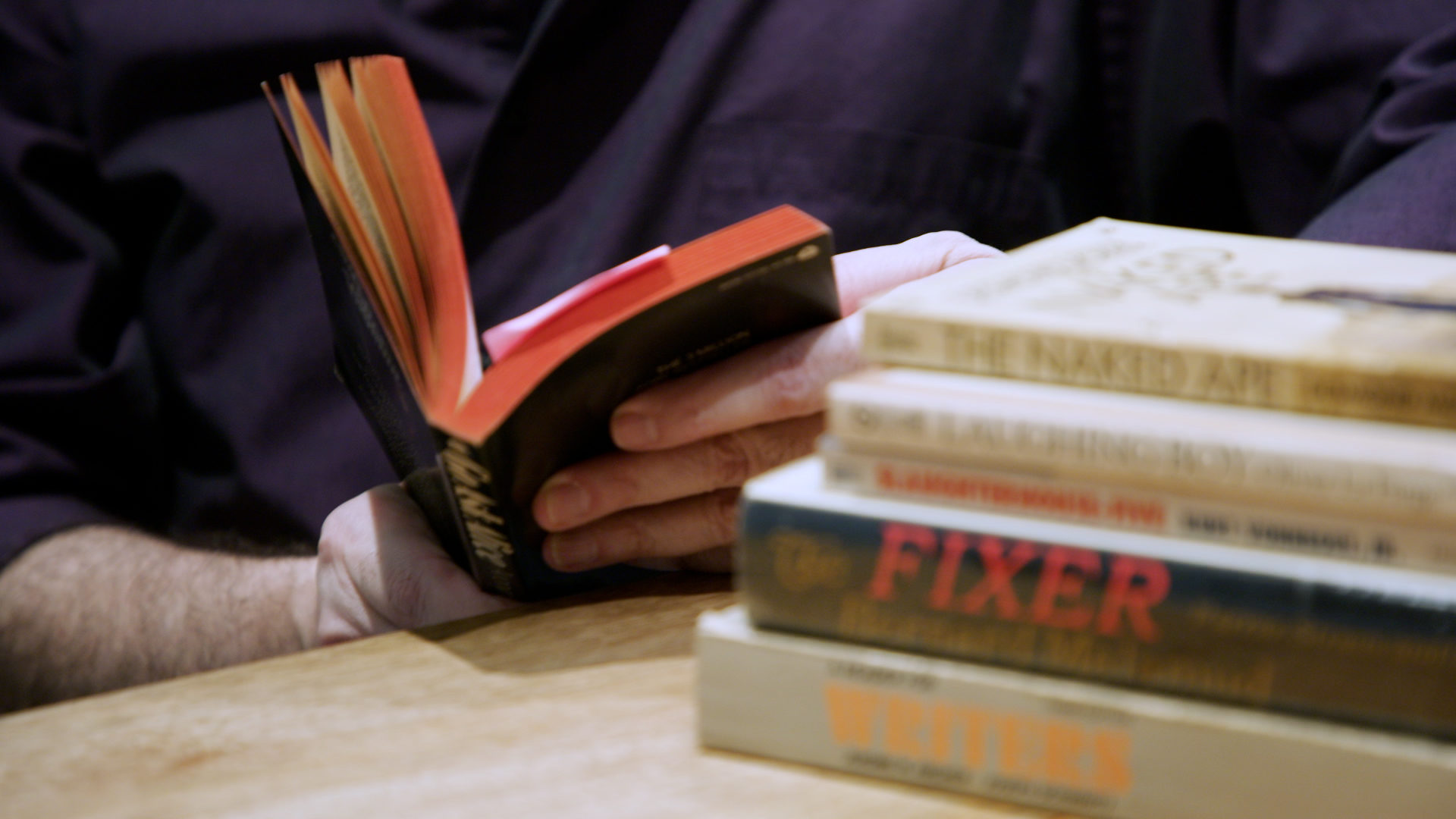
In the 1980s, Steven Pico, a high school student from Levittown, Long Island, found himself at the center of a national controversy over book banning. Upon learning that his school board had removed several books from the library, Pico challenged their actions, arguing that the removal was an attempt to suppress diverse ideas and voices. His case eventually reached the Supreme Court, highlighting the ongoing debate about who should have the authority to determine the appropriateness of books in schools. This case provides a valuable context for discussions about educational freedom and the role of literature in exposing students to a variety of perspectives.
Subjects:
English Language Arts
-
This lesson supports units on literary analysis, freedom of expression and argumentative writing by exploring book banning and studentsโ rights.
Grade Level:
9-12
-
Modifications can be made for younger students by simplifying excerpts and focusing more on discussion than legal analysis.ย For older students, include deeper research on legal precedents and recent book challenges.
Lesson Duration:
2 class periods
Essential Questions:
-
What are the arguments for and against banning books in public school libraries?
-
How does Island Trees SD v. Pico affect studentsโ rights?
-
In what ways do a community’s values and its diverse populations influence the school’s educational vision?
Lesson Objectives:
Students will:
-
Analyze arguments for and against book banning.
-
Examine excerpts from challenged books to identify controversial themes.
-
Develop an argumentative essay outline presenting a reasoned stance on book banning.
Materials:
-
Retro Report video โBook Bans, Student Rights and a Fractured Supreme Court Rulingโ (Transcript)
-
Student Activity handout
Procedure:
-
Distribute the Student Activity handout and have students begin by reflecting on their own reading experiences. Which book(s) affected them deeply? Which ones challenged their thinking? Have they read any books that may be considered โcontroversial?โ
-
As needed, provide background on the Island Trees SD v. Pico case, explaining its significance in the debate over educational freedom.
-
See: โBoard of Education, Island Trees Union Free School District No. 26 v. Pico by Picoโ | Oyez, Cornellโs Legal Information Institute
-
-
Show the Retro Report video โBook Bans, Student Rights and a Fractured Supreme Court Ruling.โ Have students complete the corresponding questions while they are watching the film.
-
Organize students into small groups to discuss the guided questions. Encourage respectful sharing of thoughts (i.e., aim for understanding and constructive sharing of ideas, avoid personal attacks, use โIโ statements), and active listening (i.e., pay attention, show that you are listening, donโt interrupt). Facilitate a whole-class shareout to highlight key insights and varying perspectives.
-
Next, have students examine select excerpts from “Slaughterhouse-Five,” “The Catcher in the Rye,” and “Black Boy.”ย Instruct students to read and annotate each excerpt, highlighting controversial themes and discussing their importance.
-
For each, briefly review why the included excerpts might be seen as inappropriate by some and why they might be important for readers to engage with.
-
Kurt Vonnegut, โSlaughterhouse-Fiveโ | The Banned Books Project, Carnegie Mellon University
-
J.D. Salinger, โThe Catcher in the Ryeโ | The Banned Books Project, Carnegie Mellon University
-
Top 10 Banned Books that Changed the Face of Black History: Richard Wright, โBlack Boy”ย | National Coalition Against Censorship
-
-
Guide students in creating a Venn diagram to list arguments for and against book banning, using evidence from the Pico case and the book excerpts.
-
Argumentative Essay: Introduce the essay prompt: “Who should decide which books are appropriate for school libraries, and what criteria should guide these decisions?”ย Review the essay outline template for students to organize their thoughts, including a thesis statement, supporting reasons, and a rebuttal.
Extension Activity:
-
Students may work in small groups to create visual materials such as posters or infographics that highlight key points from the lesson or develop a series of social media posts or hashtags that encourage community discussion about access to literature.
Scoring Rubric for Essay:
About the Author:
Brande Johnson is a middle and high school English, Social Studies and AP Computer Science teacher in Nevada. She has a Masterโs in Educational Leadership as well as a Masterโs of Education in Instructional Design and Technology.ย She has been a teacher in both California and Nevada since 2009.ย She has taught 6-12th grade ELA,ย Social Studies, middle and high school computer science, as well as student leadership and student council.
Standards
Common Core Literacy Standards
-
CCSS.ELA-LITERACY.RI.9-10.1: Cite strong textual evidence to support analysis.
-
CCSS.ELA-LITERACY.W.9-10.1: Write arguments to support claims with clear reasons and relevant evidence.
-
CCSS.ELA-LITERACY.SL.9-10.1: Initiate and participate effectively in a range of collaborative discussions.
College, Career, and Civic Life (C3) Framework for Social Studies
-
D2.Civ.9.9-12: Explain how the U.S. Constitution protects individual rights, including freedom of speech and expression.
-
D2.Civ.10.9-12: Analyze the roles of the Supreme Court and other institutions in protecting constitutional rights.
-
D4.1.9-12: Construct arguments using precise and knowledgeable claims, supporting them with evidence from multiple sources.
-
D4.4.9-12: Critique arguments for credibility, accuracy, and relevance.
