
Transcript
ARCHIVAL (KTVU, 4-13-25):
BERNIE SANDERS: The oligarchy will concede nothing!
ARCHIVAL (FOX, 5-3-21):
SENATOR JOSH HAWLEY: A lot of people don’t really understand just how powerful Big Tech is.
ARCHIVAL (FOX4, 3-24-25):
ELON MUSK: Thanks to the DOGE team.
ARCHIVAL (FOX, 5-3-21):
SENATOR JOSH HAWLEY: Concentrated power, monopoly, aristocracy: That’s a political choice.
MATT STOLLER (AUTHOR, GOLIATH: THE 100-YEAR WAR BETWEEN MONOPOLY POWER AND DEMOCRACY): There have been periods in American history where you see this immense fusion of political and economic power.
ARCHIVAL (1921):
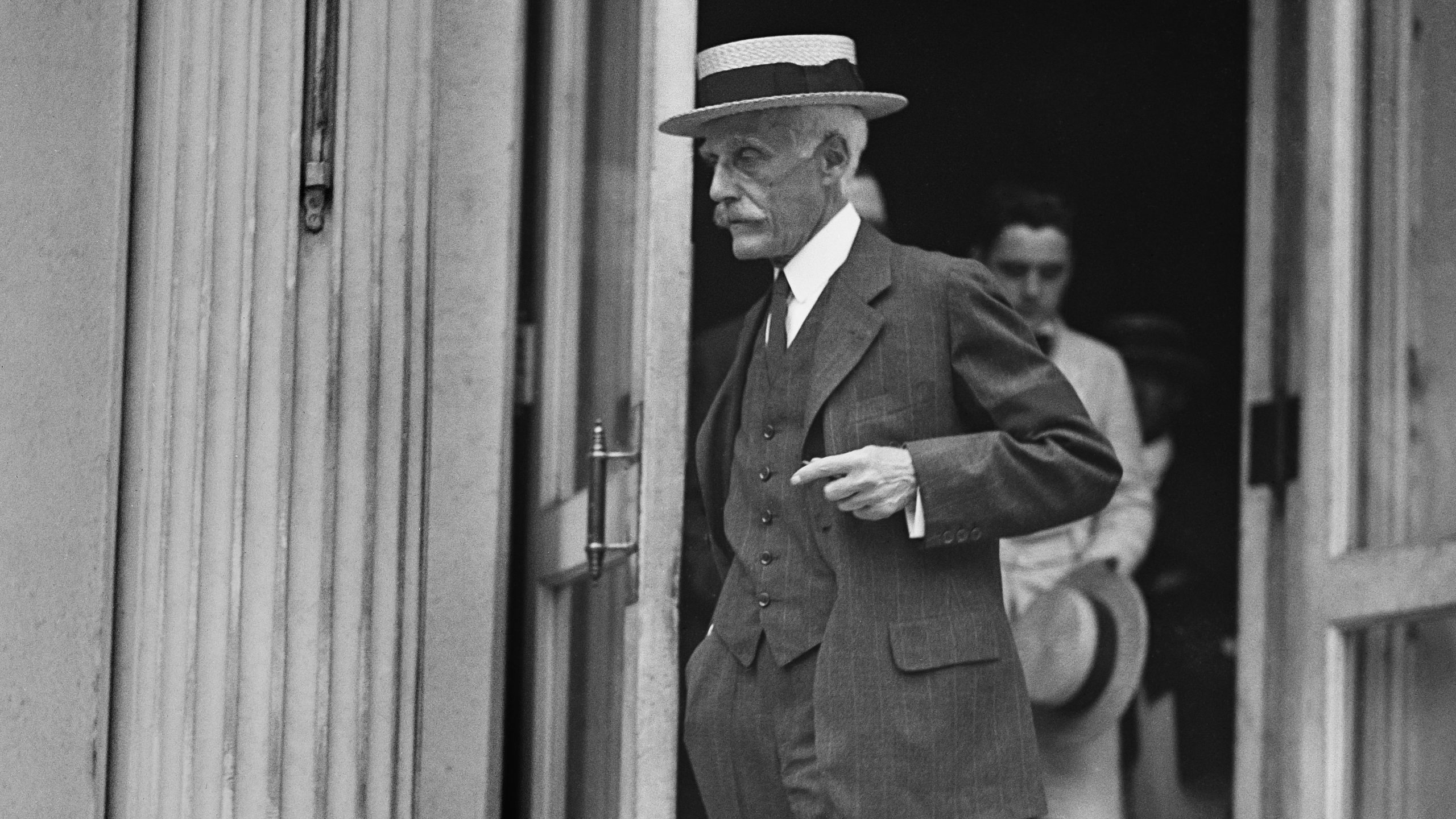
NEWSREEL: Here’s Andrew Mellon.
MATT STOLLER: This is a guy who gave himself tax cuts personally. He didn’t distinguish between the public interest and self-interest. Sometimes people would joke – three presidents served under Andrew Mellon. Corporate America has an origin story. In 1893, there was this big sort of depression and crash, and J.P. Morgan used links to British creditors to take a lot of bankrupt railroad lines and consolidate them. Then he did that to companies in iron and steel.
ARCHIVAL (1930):
ANNOUNCER: Banker J.P. Morgan.
MATT STOLLER: Morgan combined corporate assets that were relatively spread out around the country. He formed companies like General Electric; U.S. Steel, the first billion-dollar company. He really set the template for what corporate America would look like. Andrew Mellon learned a lot of tactics from J.P. Morgan. He had steel companies, oil companies, glass companies, control over railroads, coal mines. He owned a lot of banks in and around Pittsburgh. There were big political battles over whether you would have so much economic power in the hands of a few.
ARCHIVAL (SMITHSONIAN FOLKWAYS RECORDINGS):
SONG: Oh, it’s Harding, lead the G.O.P. Harding. . .
MATT STOLLER: In the 1920 election, Andrew Mellon was a big Republican donor. Warren Harding was pretty much pro-monopoly. He was playing poker in the White House and drinking whiskey, having his buddies steal money from public lands through the Teapot Dome scandal. Harding brought Mellon in as the secretary of the Treasury, essentially to negotiate international war debts. They were like, oh, we need, you know, a banker. Also, in the 1920s, the Treasury secretary was automatic chair of the Federal Reserve.
ARCHIVAL (1921):
NEWSREEL: Andrew Mellon became secretary of the Treasury. Government debt was reduced, taxes were cut and the foundation for a new period of prosperity was laid.
MATT STOLLER: The third-richest man in the country was now in charge of corporate taxation and the taxation of the wealthy. He used his position to privilege his own banks, using inside information that he was creating. He owned an aluminum monopoly, Alcoa, and he made sure a lot of government buildings incorporated aluminum.
Mellon is also going to Europe and visiting Mussolini.
ARCHIVAL (NATIONAL ARCHIVES AND RECORDS ADMINISTRATION, OFFICE OF WAR INFORMATION, 1942):
BENITO MUSSOLINI: Tre opere. . .
MATT STOLLER: Mussolini, in the 1920s, is just like an authoritarian. He’s not considered a Nazi. He runs a fascist state. He says, I’m going to get industrialists together with the government, and that’s the right way to run a society. Mellon looks at this like, democracy’s a thing over here but, you know, I get why you want order. He would never say, overtly, man, I wish I could kill my domestic political opponents, but he doesn’t ultimately think there’s very much of a real difference between an authoritarian state and a democratic state, as long as the democratic state is smart enough to leave the industrialists alone.
ARCHIVAL (1932):
NEWSREEL: Hollywood is now swept up in the Roaring Twenties.
MATT STOLLER: At the time, Andrew Mellon was considered the best Treasury secretary since Alexander Hamilton. There were three Republican presidents in the ’20s. He was the Treasury secretary for all three. People thought the deregulatory policies – putting money and power in the hands of financiers – were making the economy really great, but what was happening was a financial bubble. There was huge amounts of speculation, a lot of mergers and acquisitions. The new technology was deploying electricity throughout the country. That was the economic development paradigm of the time.
ARCHIVAL (1929):
NEWSREEL: Somehow, it didn’t last forever.
MATT STOLLER: When the stock market crashed, that whole thing came undone. The global banking system just cratered. Everyone’s like, it’s just a recession, it will get better. Keeps getting worse, there are no jobs, and Andrew Mellon stands firm. He’s like, the government’s role is not to give relief to the unemployed.
ARCHIVAL (1932):
NEWSREEL: At the foot of Capitol Hill, all shacks and tents were destroyed.
MATT STOLLER: There was a march of World War I veterans called the Bonus Army, kind of like Occupy Wall Street, protesting because they didn’t have any money or food, and President Hoover sent out tanks, and they got run out of D.C. by the Army.
We think about democracy as a thing where you go to the voting booth and if your guy wins, yay; if he doesn’t, oh boo-hoo. But there’s this whole way of understanding liberty and a free society that goes beyond elections and has to do with where you work, how you get ideas. What we’ve seen is the growth of people with immense power and control over the arteries of commerce. Elon Musk is the transformation of that kind of economic power, which is always sort of tacitly political power, into real political power.
ARCHIVAL (CNN, 6-6-25):
NEWS ANCHOR: The president’s biggest campaign donor, who was so close that Trump invited him to sleep at the White House, is now calling for him to be impeached.
MATT STOLLER: It gives you a sense for what the stakes are for our political system, as I think it has for earlier generations of Americans.
(END)
This 1920s Treasury Secretary Helped Big Business Drive the Economy
The economic vision of American industrialist Andrew Mellon loomed large over the boom and bust of the 1920s.
Andrew Mellon, one of the richest men in America in the 1920s, served as Treasury secretary under three presidents. He used his government position to lower taxes for the wealthy, influence banking policy and support big businesses – including some he owned himself – while the American economy soared after World War I.
Mellon believed the American economy worked best when the government stayed out of the way. Many people at the time agreed, celebrating the Roaring Twenties as a period of strong growth. But problems were brewing. Large companies were gaining power, financial speculation was on the rise and income inequality was growing. After the stock market crashed in 1929, the U.S. economy collapsed. Mellon refused to support relief for the unemployed, holding on to the belief that the government should not interfere.
A century later, business leaders like Elon Musk have asserted their influence over economic policies. Mellon’s story helps explain how economic power became concentrated in the hands of a few, and why the role of government in regulating business is still debated today.
- Producer / Editor: Matthew Spolar
 Grades
9-12
Grades
9-12

 1 Lesson Plan


