
Transcript
ARCHIVAL (CBS NEWS, 10-20-73):
NEWS REPORT: In breathtaking succession tonight, the following historic events occurred.
ARCHIVAL (NBC NEWS, 10-20-73):
NEWS REPORT: The president has fired the special Watergate prosecutor, Archibald Cox, and Mr. Nixon has directed that agents of the F.B.I. seal off the offices of the special prosecutor, the former attorney general and the former deputy attorney general, and we’ve never heard anything like that before.
KEN GORMLEY (AUTHOR, “ARCHIBALD COX: CONSCIENCE OF A NATION”): If Nixon was allowed to get away with this, there was no turning back, and it was unclear whether the rule of law would survive this moment.
ARCHIVAL (ABC NEWS, 6-19-72):
NEWS REPORT: Over the weekend, five men were nabbed in the Democratic National Headquarters here in Washington, seemingly preparing to tap or bug the place.
NARRATION: In June 1972, a break-in at the Watergate Hotel would set off one of the most notorious political scandals in American history, whose unfolding drama kept Americans glued to their television sets.
The burglars had ties to President Richard Nixon’s reelection campaign, and by the spring of 1973, a new attorney general, Elliot Richardson, promised to appoint a special prosecutor who would investigate whether Nixon’s inner circle was involved.
ARCHIVAL (5-18-73):
NEWS REPORT: Richardson pledged there will be no White House influence in the prosecution.
NARRATION: After seven people refused to take the job, Richardson turned to Archibald Cox, a Harvard law professor.
KEN GORMLEY: This was a no-win assignment. Everyone was going to be angry, and Archibald Cox told me that he anguished over this, and in the end he said, who better to do this than a 60-year-old law professor who isn’t going anywhere in public life anyway?
ARCHIVAL (5-18-73):
ARCHIBALD COX: All I can do is pledge my best. I am confident that whatever else I shall be, I shall be independent.
NARRATION: As Cox began his investigation, Congress was holding hearings on Watergate, and soon there was a bombshell revelation.
ARCHIVAL (SENATE WATERGATE COMMITTEE, 7-13-73):
VOICE OFFSCREEN: Mr Butterfield, are you aware of the installation of any listening devices in the Oval Office of the president?
NARRATION: A former Nixon aide revealed that the White House had secretly recorded the president’s conversations in the Oval Office.
ARCHIVAL (SENATE WATERGATE COMMITTEE, 7-13-73):
ALEXANDER BUTTERFIELD (FORMER DEPUTY ASSISTANT TO THE PRESIDENT): I was aware of listening devices, yes sir.
NARRATION: Richard Ben-Veniste was one of the prosecutors working with Cox.
RICHARD BEN-VENISTE (CHIEF OF WATERGATE TASK FORCE): We certainly were astounded. We had no choice in doing our job, but to pursue that evidence through whatever means necessary.
NARRATION: Assuming the tapes might shed light on the Watergate break-in and any potential coverup, they took an unprecedented step: They subpoenaed the White House for the tapes.
KEN GORMLEY: This was something that had never happened before, and it was something that was terrifying, frankly, for Archibald Cox. He worried constantly that if he made a misstep here, he could show that in fact, the rule of law was meaningless in the end if a president defied it.
NARRATION: Nixon refused to turn over the tapes, even after Cox obtained a court order.
ARCHIVAL (NBC NEWS, 10-20-73):
NEWS REPORT: The president announced that he would not obey a court order to surrender the Watergate tapes. . .
NARRATION: Instead, Nixon offered to provide a summary of the tapes and ordered Cox to stop using the courts to obtain any more material from the White House.
RICHARD BEN-VENISTE: Archie Cox was not a person who was comfortable in opposing a presidential order, and he was under great pressure to fold.
NARRATION: On Saturday, October 20th, he held a nationally televised press conference to explain that he would reject Nixon’s offer and keep pressing for the tapes.
KEN GORMLEY: Millions of people were watching. They saw a man of absolute integrity who was trying to do his job.
ARCHIVAL (NIXON PRESIDENTIAL LIBRARY, CBS NEWS, 10-20-73):
ARCHIBALD COX: I read in one of the newspapers this morning the headline “Cox Defiant.” I do want to say that I don’t feel defiant. In fact I told my wife this morning, I hate a fight. Some things I feel very deeply about are at stake. In the end, I decided that I had to try to stick by what I thought was right.
KEN GORMLEY: Cox concluded he had taken an oath, he had promised to take this investigation wherever it went.
ARCHIVAL (NIXON PRESIDENTIAL LIBRARY, NBC NEWS, 10-20-73):
NEWS REPORT: The special Watergate prosecutor Archibald Cox says that he will not obey President Nixon’s order to stop using the courts to try to obtain the Watergate tape recordings. He says he will not accept the president’s compromise and that he would not resign his job.
RICHARD BEN-VENISTE: Then we went home. It was a Saturday afternoon. Everybody knows that Washington’s a very quiet place on a Saturday night.
ARCHIVAL (NBC NEWS, 10-20-73):
ANNOUNCEMENT: ‘The Tonight Show’ will not be seen tonight so that we may bring you the following NBC News special report.
NEWS ANCHOR: Good evening. The country tonight is in the midst of what may be the most serious constitutional crisis in its history.
ARCHIVAL (CBS NEWS, 10-20-73):
NEWS REPORT: The special prosecutor in the Watergate affair has been fired under orders issued by the president of the United States.
ARCHIVAL (NIXON PRESIDENTIAL LIBRARY, 10-20-73):
NEWS REPORT: Elliot Richardson has resigned his post as attorney general.
ARCHIVAL (NIXON PRESIDENTIAL LIBRARY, NBC NEWS, 10-20-73):
NEWS REPORT: Deputy Attorney General Ruckelshaus, his successor, was ordered to fire Archibald Cox. He refused.
KEN GORMLEY: Richardson recognized ultimately that his career wasn’t the most important thing here. It was much bigger than that.
ARCHIVAL:
Agents of the F.B.I., acting at the direction of the White House, sealed off the offices of the special prosecutor.
RICHARD BEN-VENISTE: The president of the United States had defied a court order, sending the F.B.I. by force into our office, to essentially seize our files. This was a clear violation of the law by the highest elected official of the land.
KEN GORMLEY: If the president could come in and fire the person investigating him and shut down the office, there no longer is a rule of law that governs.
NARRATION: The incident came to be known as the Saturday Night Massacre, and it looked like it might be the end of an independent Watergate investigation. But then something surprising happened.
ARCHIVAL (NBC NEWS, 10-22-73):
NEWS REPORT: More than 50,000 telegrams poured in on Capitol Hill today. So many, Western Union was swamped. Most of them demanded impeaching Mr. Nixon.
ARCHIVAL (ABC NEWS, 10-22-73):
NEWS REPORT: In the Congress, for the first time since the Watergate case began, talk of presidential impeachment no longer sounds like idle chatter.
RICHARD BEN-VENISTE: There was a firestorm of outrage. Nixon had to be hiding something very important. What was it? The public did not allow Richard Nixon to get away with it, and that turned the tide.
NARRATION: The acting attorney general appointed another special prosecutor, who subpoenaed even more tapes, leading to a landmark Supreme Court case holding that the courts had the power to order the president to turn over the tapes.
ARCHIVAL (CBS NEWS, 7-24-74):
NEWS REPORT: The Supreme Court ruled, 8 to nothing, that President Nixon must turn over 64 subpoenaed White House tapes.
KEN GORMLEY: That opinion stands for one of the most important propositions in American law today, that no person, even the president, is above the law.
NARRATION: The tapes showed that Nixon had tried to stop the Watergate investigation just days after the break-in, all but guaranteeing that he would be impeached.
ARCHIVAL (8-8-74):
PRESIDENT RICHARD NIXON: I shall resign the presidency effective at noon tomorrow.
NARRATION: It was the end of his presidency.
(END)
Inside the Saturday Night Massacre: Nixon, Watergate and the Fight for Accountability
Nixon’s 1973 firing of a Watergate prosecutor raised questions about executive power, accountability and the limits of the law.
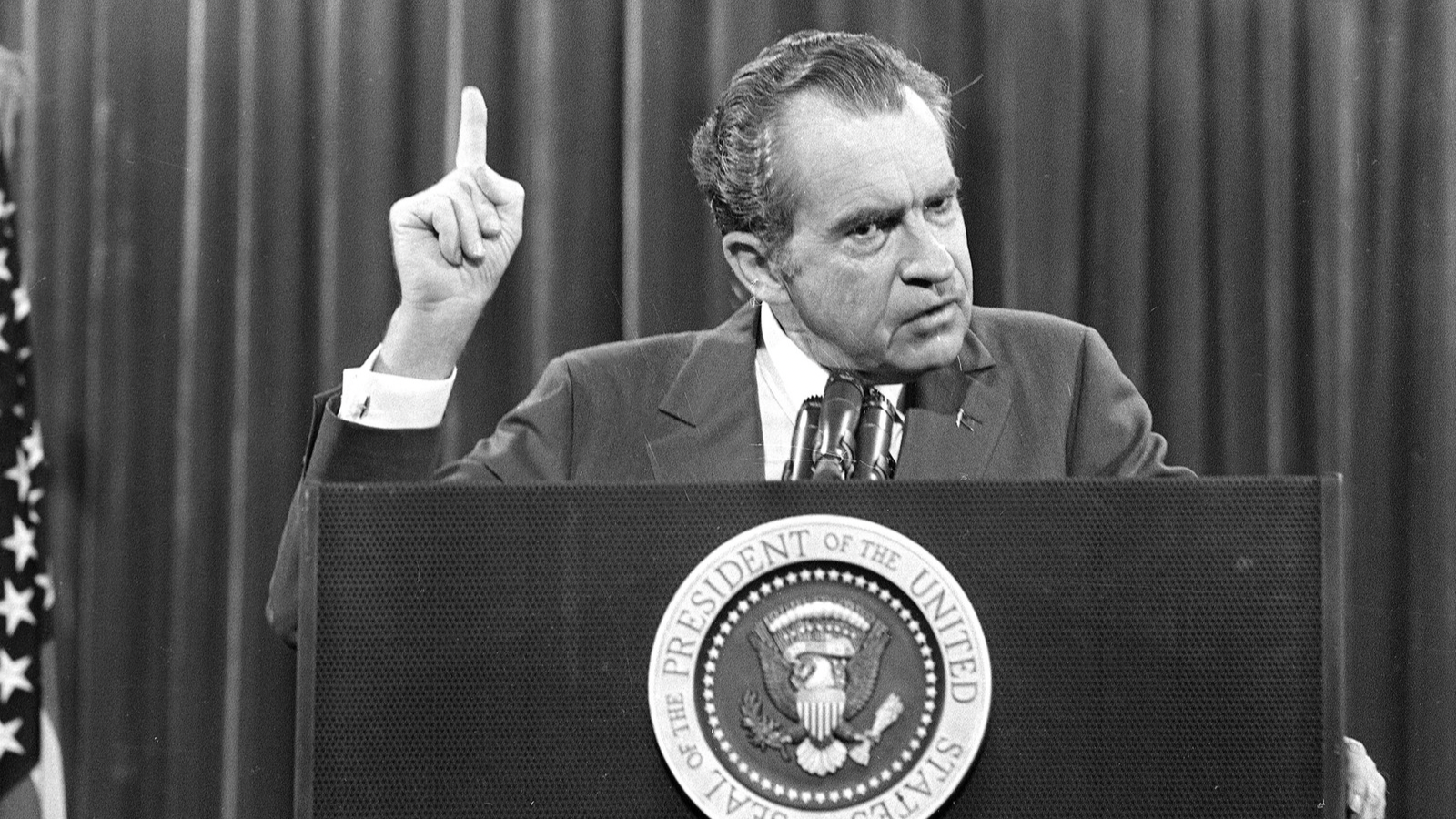
On Oct. 20, 1973, President Richard Nixon ordered the firing of Archibald Cox, the special prosecutor overseeing the Watergate investigation. The order followed Cox’s insistence that Nixon comply with a court ruling and turn over secret Oval Office recordings. Two senior Justice Department officials resigned in protest rather than carry out the order, and the confrontation, known as the Saturday Night Massacre, put the future of the investigation into doubt.
This short doc examines the episode through the eyes of a prosecutor who witnessed it, Richard Ben-Veniste. Legal historian Ken Gormley provides context on why Nixon’s refusal to comply with the court order tested the limits of presidential power and stirred public outrage, sparking calls for Nixon’s impeachment.
- Producer: Scott Michels
- Editor: Anne Checler
 Grades
9-12
Grades
9-12
 1 Lesson Plan


