
Transcript
Click here for the full video page and educator materials.
TEXT ON SCREEN: March 16, 1970
ARCHIVAL (NBC NEWS, 3-16-70): CHET HUNTLEY: So far this year, almost 200 people died of overdoses of heroin.
ARCHIVAL (NIXON CAMPAIGN COMMERCIAL, 1968): NEWS REPORT: Crimes of violence in America will double by 1972. We cannot accept that kind of future for America.
NARRATION: In the late 1960s America’s inner cities were hit by a wave of violent crime and heroin addicts seeking money for drugs.
Politicians responded with harsh penalties. The war on drugs was born.
JOHN DUNNE: There should be no confusion or question as to what the driving force behind those laws was. Punishment. Deterrence. Not rehabilitation.
NARRATION: Forty years and hundreds of billions of dollars later, the nation’s prisons are packed with drug offenders.
ARCHIVAL (NBC, 4-17-14): RICHARD LIU: Heroin is causing more deaths than car crashes or violent crime.
NARRATION: And heroin is back, but the users…
ARCHIVAL (ABC 10-29-10): ASHLEY: I don’t look like a heroin addict.
NARRATION: …and the response …
ARCHIVAL (MONTGOMERY COMMUNITY MEDIA, 12-24-14): LARRY HOGAN (MARYLAND GOVERNOR): It’s a health issue, we have people dying.
NARRATION: …are profoundly changed.
KURT SCHMOKE (BALTIMORE MAYOR 1987-99): Previously it was people in the inner-city, it was ‘those people.’
REBECCA HOGAMIER: But now, the lawmakers have a connection. Addiction is in their backyard, it’s in their house, it’s in their basement.
HEROIN AND THE WAR ON DRUGS:
ARCHIVAL (NBC NEWS, 3-16-70): CHET HUNTLEY: New York City has the worst narcotics problem in the country.
ARCHIVAL (ABC, 9-3-74): MAN: Here comes the sale. There goes the stuff. Boom.
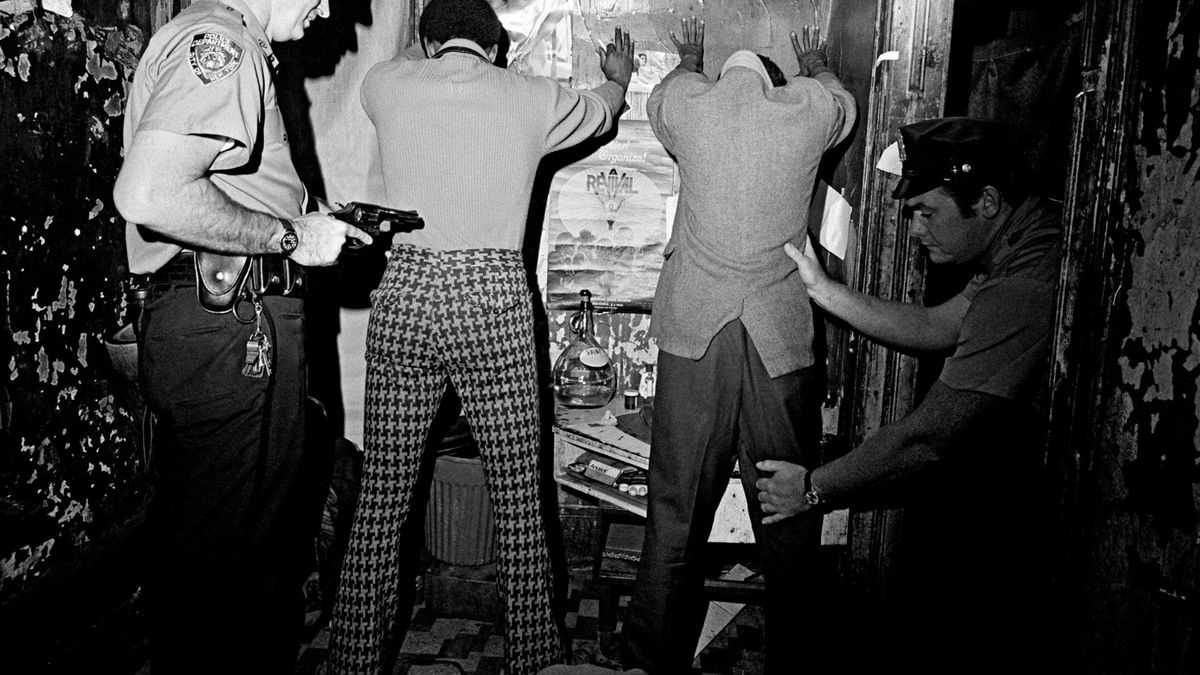
NARRATION: In the late 1960s and early 1970s, New York City struggled with high rates of heroin addiction, and the crime that went with it.
ARCHIVAL (NBC, 2-4-71): GREGORY LUCAS (FORMER ADDICT): I would stick up, I would steal…
JOHN DUNNE (N.Y STATE SENATOR, 1966-89): Those were tough times. There was a great deal of fear abroad in the community.
NARRATION: Under intense pressure, including from leading African American politicians, New York State tried a variety of approaches – even forced treatment – to solving the heroin problem.
ARCHIVAL (CBS, 1-3-73): NELSON ROCKEFELLER: Lets tell it like it is. We have achieved very little permanent rehabilitation.
NARRATION: Frustrated, in 1973, Nelson Rockefeller proposed the harshest drug laws in the nation.
JOHN DUNNE: The motivation for the governor was to be punitive. He said, “Let’s tell it like it is. Now we have to have very tough penalties, emphasis on penalties, which will deter drug use.”
NARRATION: Former state senator John Dunne was one of the sponsors of the new laws.
JOHN DUNNE: The most serious provision in the law was mandatory incarceration for a term of imprisonment up to life for the sale of any amount greater than one ounce – one ounce – of heroin.
NARRATION: But New York was not the only city fighting a heroin epidemic.
ARCHIVAL (NBC, 2-4-71): CHARLES QUINN: In the slums of Washington, DC…
NARRATION: Washington, D.C. took a more medical approach.
ROBERT DUPONT (DIRECTOR, NARCOTICS TREATMENT ADMINISTRATION, 1970-1973): We took urine samples from everybody who came into the jail, 44 percent of them were positive for heroin.
NARRATION: Dr. Robert DuPont started a treatment program at the department of corrections. It offered the city’s addicts an experimental heroin replacement drug, methadone.
ARCHIVAL (ABC, 6-3-71): BILL GILL: Methadone, a bitter, inexpensive, synthetic drug that the city hopes most addicts will chose over a $50 a day heroin habit and all of the crime that goes with that.
ROBERT DUPONT: Most of our patients were people from the criminal justice system. We ended up treating 15,000 heroin addicts. Overdose deaths went from 70 a year to 4. The crime rate on a monthly basis was cut in half over that period of time.
NARRATION: The city’s experience caught the attention of President Richard Nixon…
ARCHIVAL (NIXON SPEECH, 6/17/71 ): PRESIDENT RICHARD NIXON: America’s public enemy number one in the United States is drug abuse.
NARRATION: In 1971, Nixon declared war on drugs, and methadone treatment was part of his plan.
KURT SCHMOKE (BALTIMORE MAYOR 1987-99): Looking back at some of Nixon policies, they were moving towards a public health approach. But that came to a screeching halt.
[NEWSPAPER HEADLINE ABOUT THE DEATH OF JANIS JOPLIN]
ARCHIVAL (NBC, 10-5-70):
FRANK MCGEE: There were fresh needle marks in her arm and the coroner said she died of an overdose of drugs.
NARRATION: Heroin was all over the media…: The public’s fear grew…
ARCHIVAL (NBC, 5-2-75): POLICEMAN: Police, police, hold it. Everybody freeze. You’re under arrest.
NARRATION: Tough New York style drug laws and heavy mandatory sentences spread across the country… and Washington, D.C.’s success lowering crime with methadone was overshadowed.
KURT SCHMOKE: The politics said, “Let’s get tough.” The tougher you are, the more politically viable you’re going to be. And that was more police, more prisons, longer sentences.
ARCHIVAL (CBS, 4-26-88): BOB FAW: We are waging a war on drugs and we are losing.
NARRATION: In 1988, frustrated by his city’s raging drug problem, Baltimore mayor Kurt Schmoke, a former federal prosecutor, began to openly challenge the lock ‘em up approach.
ARCHIVAL (CBS, 4-26-88): KURT SCHMOKE (BALTIMORE MAYOR): It’s not solving the problem. It’s not getting to the answer and we’re wasting millions of resources and millions of lives.
NARRATION: He even suggested decriminalization.
KURT SCHMOKE: You weren’t going to be able to prosecute your way out of addiction.
ARCHIVAL (CBS, 4-26-88): KURT SCHMOKE: If we went after it as a health problem, I think in the long run get both a reduction in crime and a reduction in addiction rates.
NARRATION: His idea sparked a lot of debate, but went nowhere.
ARCHIVAL (NBC, 5-18-88):
REPRESENTATIVE CHARLES RANGEL: It’s immoral, it’s illegal and it’s not going to happen.
NARRATION: As the AIDS crisis hit… the stakes around heroin grew even higher.
ARCHIVAL (ABC, 4-16-87): TOM JARRIEL: By far the most common way heterosexuals get AIDS is through intravenous drug use.
ARCHIVAL(ABC, 4-16-87): BETH NISSEN: There is an alarming new concentration of AIDS cases among inner city blacks and Hispanics.
NARRATION: Hoping to save lives, Schmoke started an experimental clean needle exchange.
ARCHIVAL (STREAMLINE FILMS):
OUTREACH WORKER: You can only get AIDS through sexual intercourse or sharing needles.
NARRATION: Baltimore’s HIV rate plummeted. Schmoke then tried—without success – to convince the federal government to fund needle exchanges nationwide.
KURT SCHMOKE: There were many people that just thought it was retreat in the war on drugs, we were, quote, “Sending the wrong signal.”
ARCHIVAL (HOUSE FLOOR, 1997): TOM COBURN: A free needle exchange program is a free needle exchange for a felon.
KURT SCHMOKE: The heroin problem was still perceived as an inner-city problem and to some people, just a problem of people of color. So you had all these representatives from districts that viewed the problem as ‘those people’ not ‘our people.’
NARRATION: Despite that perception, by then the vast majority of new heroin users were white.
ARCHIVAL (NBC, 9-25-92): POLICE: Hold up! Get on the floor! Police!
NARRATION: The nation continued trying to punish away the drug problem, which also now included crack cocaine.
But, ironically, it turned out that back when New York passed its Rockefeller drug laws, the city’s heroin crisis was already subsiding – on its own.
SAMUEL ROBERTS (HISTORIAN, COLUMBIA UNIVERSITY): Drug epidemics often burn themselves out rather quickly.
NARRATION: Although older addicts remained, there was a dramatic drop in new users. In Harlem, researchers found teenagers shunned heroin after observing its devastating impact.
SAMUEL ROBERTS: Younger siblings and cousins or peers…people who witness it from very close hand take note. By the time you were of age to really think about that experimentation you’ve already seen negative consequences.
NARRATION: But this trend made little difference to the public, and had little impact on the escalating war on drugs and crime.
SAMUEL ROBERTS: As the heroin epidemic was petering out we brought in these laws. There’s something very sad about that, in that we set in motion this whole system for over a generation that perhaps was not necessary.
NARRATION: For John Dunne, the harsh drug laws he helped pass, were turning out to be a mistake.
JOHN DUNNE: My conversion originated, really, based in civil rights issues.
NARRATION: In 1990, Dunne went to Washington to serve in the Department of Justice.
JOHN DUNNE: I was the Assistant Attorney General for Civil Rights, which led me to visit a number of federal prisons. I was shocked to find the number of inmates who were there, really, as a result of criminal laws such as we had enacted in the ‘70s.
NARRATION: Dunne saw that inner city drug users and small time dealers, mostly young African American men, filled the nation’s jails.
JOHN DUNNE: It was relatively easy to pick drug sellers off the street where the trade was going on. Those who were engaged in nonviolent drug-related crimes really constituted the vast proportion of those who were being sent to prison. The rate, and relative percentages, of incarceration among minority communities has had a devastating effect.
NARRATION: After he left the Justice Department, Dunne returned to New York to try to reverse the harsh drug laws he had helped pass.
ARCHIVAL (ABC, 10-29-10): CHRIS CUOMO: The number of heroin users has nearly doubled in just the past 3 years.
NARRATION: It’s been 40 years …And billions of dollars since the last heroin epidemic…And the United States is again facing a heroin crisis.
ARCHIVAL (ABC, 10-19-10): LISA LING: Mary is 24 years old, pregnant and hooked on heroin.
REBECCA HOGAMIER (WASHINGTON COUNTY HEALTH DEPARTMENT): In the 1970s it was an inner city problem and it was young men of color. It’s not that now. It’s equally men and women and it’s primarily white.
ARCHIVAL (NBC, 9-6-14): MARK POTTER: Authorities say the heroin surge is directly linked to the widespread use of prescription painkillers in this country.
ARCHIVAL (THE WHITE HOUSE, 10-21-13): PRESIDENT BARACK OBAMA: Four out of five heroin users started out by misusing prescription drugs.
JOE FARMER: When I was around 14 years old my mom was actually on pain medicine. I had really easy access to it.
NARRATION: Joe Farmer is typical of what the media calls “the new face of heroin.” He’s young, white, middle class and lives in rural Hagerstown, Maryland.
JOE FARMER: I started using heroin when I was 17. Someone told me, you know, “I can’t get pills but, you know, I can get raw, or heroin.”
NARRATION: He was sent to Maryland’s Washington County Detention Center on heroin related theft charges.
DRUG COUNSELOR (AT WASHINGTON COUNTY DETENTION CENTER): Have a seat.
NARRATION: The jail was one of the first in the nation to offer “medication assisted treatment” with a drug called Vivetrol.
DRUG COUNSELOR (SPEAKING TO JOE FARMER): We will get your Vivitrol shots here every month until you’re released.
NARRATION: Unlike methadone, an opiate which replaces heroin, long acting Vivitrol blocks heroin’s affects.
JOE FARMER: Vivitrol works on your opiate receptors and it blocks them. It’s just a shot you get every month and it just keeps you from getting high.
NARRATION: Rebecca Hogamier started the program in 2011. She believes Vivitrol will help newly detoxed addicts stay clean after they leave jail.
REBECCA HOGAMIER: I was thinking you could offer this medication and you could reduce recidivism at the same time. We’ve been arresting them for how long and it hasn’t helped. Has it made heroin addiction go away? Has it decreased the demand for heroin? No, it hasn’t.
NARCAN TRAINING CLASS: How does naloxone work? What happens is the heroin in their body….
NARRATION: Washington County also started training police to use Narcan, a drug that stops overdoses in progress.
REBECCA HOGAMIER: In the last two years over 30 states have implemented laws for Narcan. The whole United States has changed their perspective and are looking at addiction as a public health issue.
ARCHIVAL (VERMONT GOVERNOR STATE OF THE STATE ADDRESS, CSPAN, 1-8-14): GOVERNOR PETE SHUMLIN: We must address it as a public health care crisis.
ARCHIVAL (CNN DEBATE, 9-16-15): CARLY FIORINA: My husband, Frank, and I buried a child to drug addiction. So, we must invest more in the treatment of drugs.
ARCHIVAL (WTHI-TV, 4-30-15):
LORI WILSON: Mike Pence is changing his stance on allowing needle exchanges to operate statewide.
REBECCA HOGAMIER: Now, the lawmakers have a connection. That is where the compassion is.
NARRATION: Joe Farmer is grateful to be in jail at a time when the focus is on rehabilitation, not just punishment.
JOE FARMER: I now am at the point where I need to do this for myself, and actually make something out of myself.
NARRATION: As for John Dunne’s effort to help rescind the Rockefeller drug laws – it took over a decade…and there is now broad consensus that mass incarceration can’t solve the nation’s drug problems.
JOHN DUNNE: Part of what brought about a change is an awareness that punitive measures are not the answer. But also that it’s happening to me. It’s happening to us. It’s happening to my family.
KURT SCHMOKE: The lives that could have been saved, the families that would have remained intact…the war on drugs was pretty devastating to the United States. And hopefully we’ve seen the error of our ways and are going to move in a different direction.
(END)
How Heroin Addiction’s Rural Spread Changed the War on Drugs
From time to time over the past 40 years, efforts were made to treat heroin addiction as a public health instead of a crime problem. But they were not successful.
In the late 1960s and early 1970s, America’s inner cities were wracked by an epidemic of heroin addiction and the crime that went with it. New York State responded with harsh drug laws, including mandatory minimum sentences up to life in prison for selling just one ounce of heroin. Soon, other states and the federal government adopted similar laws, and the nation’s prisons filled up with non-violent drug offenders, mostly young black men.
From time to time over the past 40 years, efforts were made to treat heroin addiction as a public health instead of a crime problem. But they were not successful.
Related:
Photo Essay: Surviving Heroin by Sarah Weiser
Heroin, Survivor of War on Drugs, Returns With New Face by Clyde Haberman
- Producer: Jill Rosenbaum
- Editor: Kenneth Levis
- Reporter: Sarah Weiser
 Grades
9-12
Grades
9-12

 1 Lesson Plan


