
Transcript
JAMES WOOLEY (U.S. ARMY VETERAN): In 2014, I woke up, restrained to a gurney, naked. I had an I.V. in my arm. So that hurt. I was wondering where my clothes were. I was wondering where I was. I was wretchedly embarrassed, felt ashamed. At that point I was still very much suicidal and was like, ‘oh my god, what’ve you done?’ I was alcoholic, military sexual trauma PTSD soldier. And, um, the world gets really small, because all you can see is your pain. I felt like I had tried as hard as I could, and that I was just never going to get it right. That I was just destined to be tortured forever until I died.
JUDY EINZIG (READING LETTERS FROM JEROME MOTTO TO VETERANS): October 18th, 1973. This is just a note to let you know we are interested in how you are coming along. April 24th, 1974, we continue to be interested in how you are doing. We want you to know that our interest in you continues. We hope that life is going well for you at this time.
NARRATION: In the late 1960s, a San Francisco psychiatrist named Jerome Motto began an unusual experiment. He wanted to understand how to help people driven to suicide, and he recruited researcher Chrisula Asimos.
CHRISULA ASIMOS (FORMER RESEARCHER): To me the whole idea of working with suicidal people was really new. I do recall thinking, ‘oh my gosh I’m going to talk to a lot of depressed and suicidal people all the time, am I ready for this?’
ARCHIVAL (TRAINING, FILM, “THE CRY FOR HELP,” 1965):
Contrary to popular belief, people who threaten suicide do kill themselves.
NARRATION: At the time, suicidal people were so misunderstood, that the developing field created training videos to teach doctors and first responders what not to do.
ARCHIVAL (TRAINING, FILM, “THE CRY FOR HELP,” 1965):
POLICEMAN: This isn’t too bad, lady. You wanna succeed you better cut deeper next time.
CHARLOTTE ROSS (1931-2019, SUICIDE PREVENTION SPECIALIST): You could take almost any medical book you want and you’d be lucky if you could find the word suicide in it.
ARCHIVAL (TRAINING, FILM, “THE CRY FOR HELP,” 1965):
NEIGHBOR: She hurt very bad?
POLICEMAN: Nah, she’s looking for sympathy, wants a little attention.
NEIGHBOR: Don’t we all?
CHRISULA ASIMOS: There really was a judgemental stance that they took. It’s like, ‘What you’ve done is manipulative. And it’s not legitimate. And I really don’t buy into your pain.’
NARRATION: Motto embarked on his study with a team of researchers that included his wife, Pat.
PAT MOTTO (LOOKING THROUGH STACKS OF RESEARCH): This is from the project. And this one was mine.
NARRATION: They fanned out across San Francisco to talk with over 3,000 patients hospitalized for depression or suicidal thoughts.
PAT MOTTO: This is number 2,859.
CHRISULA ASIMOS: We each established a relationship with a patient in the hospital. Here’s somebody who is, you’re sharing the deepest pain and experience with and then that person left. And we thought, ‘Oh you know, who knows what’s going to happen after they leave?’ And so we’re going to send a letter saying we just care. That’s it.
PAT MOTTO: Jerry was in World War II. And he always had letters from home. They brought back that sense that, you know, this will be over. War is hell, but there’s somebody out there that cares.
CHRISULA ASIMOS: We wanted it brief. I think it was just a couple of sentences, you know. No expectations and let’s see if it works.
NARRATION: Motto and the researchers decided to focus on patients who had declined follow up treatment, and to send them letters at regular intervals over the next several years.
CHARLOTTE ROSS: The key thing was doing something for nothing. Doing something because you cared. And I said, ‘I don’t know how you’re going to get that across in a letter.’ I really didn’t. And I wasn’t overly enthusiastic, I guess I said, ‘Is that all you’re going to do?’
NARRATION: Before long though, they began hearing back.
CHRISULA ASIMOS (READING FROM A LETTER): “Please call me. I’m really down. Don’t know what to do. I can’t talk to anybody.”
NARRATION: And they were able to help some of the patients get back into treatment. But they hoped the letters might be doing something more.
CHRISULA ASIMOS: Every year we’d go up to Sacramento to the vital statistics records. We wanted to look and see what the death records were like. That was very anxiety provoking, you know, looking at and going, ‘Oh, don’t, please please don’t have the names that I know on this.’
NARRATION: After Motto and the researchers scoured the records, they discovered something remarkable – the group of patients who had received the letters had about half the suicide rate as the control group who had not, in the first two years after leaving the hospital.
CHRISULA ASIMOS: The letters seemed to matter. It was pretty exciting. Yeah. It really was exciting. He was such a salesman about that, you know, that the ties that bind are really what it makes, you know, life – it’s the essence of life itself.
NARRATION: Motto published the results in 1976, and spread the word about caring letters at conferences afterwards. But the years passed, and then decades.
CHRISULA ASIMOS: We still, over the years, couldn’t believe that nobody picked this up and did this! Why didn’t anybody do this?
CHARLOTTE ROSS: All I remember is conversation about it just dwindled away.
NARRATION: By the mid 2000s, a suicide crisis was emerging among American service members and veterans. David Luxton, a U.S. Air Force veteran and clinical psychologist, was hired by the Department of Defense to help find a solution. As he searched for ideas, he came across Motto.
DAVID D. LUXTON (CLINICAL PSYCHOLOGIST): I will admit, when I was first reading the literature on this, reading Motto’s work, I was a little skeptical. There’s something kind of intangible about this caring connection.
NARRATION: For a field that had grown reliant on prescription drugs and finite 50-minute therapy sessions, the notion of sending letters to patients over time didn’t quite fit.
CHARLOTTE ROSS: That’s not what people are looking for and what they’re looking for is the pill that will do the same thing, to a hammer everything’s a nail. To them, everything is medication and treatment.
NARRATION: And yet, as suicide rates continued to climb, it was clear to Luxton that they needed more tools. He kept returning to Motto’s original study. And a more detailed follow up paper Motto and a colleague published in 2001.
DAVID D. LUXTON: These caring letters, actually reduced the rate of people dying by suicide. And that’s been something that’s, few other studies have been able to show, have been effective at doing, with any kind of intervention. And so that requires some attention.
NARRATION: Luxton and other researchers have been testing Motto’s technique, but with a modern twist -– using text messages and emails instead of letters. James Wooley took part in one study.
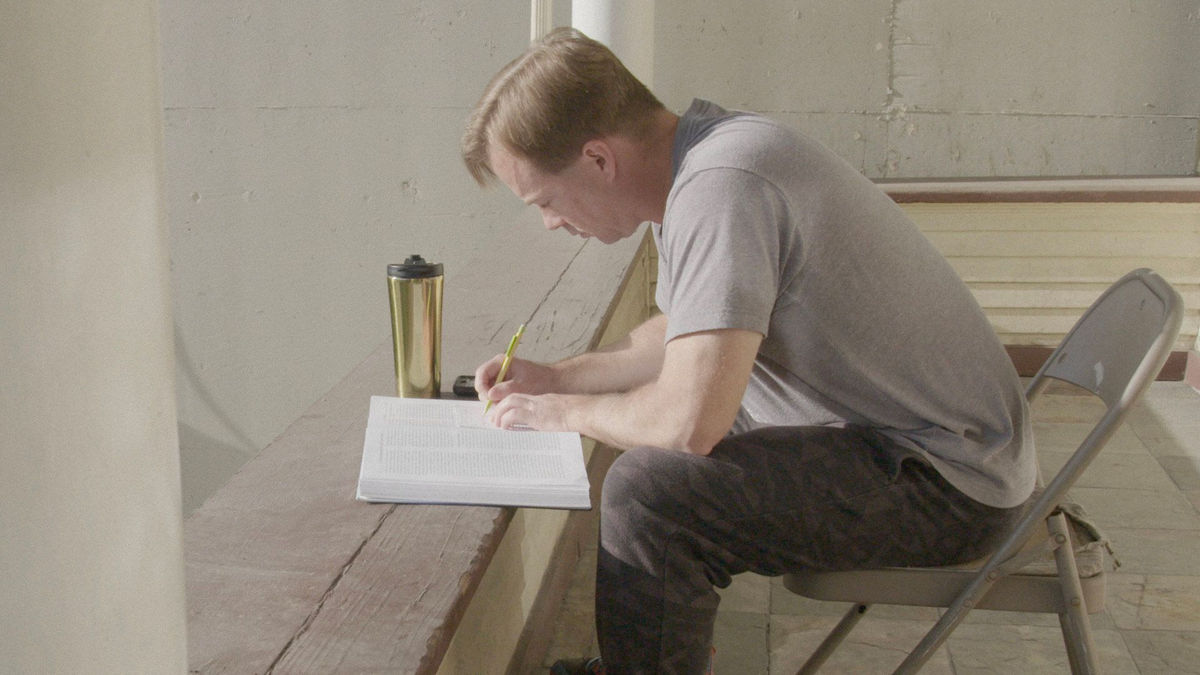
JAMES WOOLEY: The first one that I really remember was a couple months after I got out of the hospital. ‘Hey James, how you doing? What’s going on?’ And it was no big deal at the time. I was like, ‘oh yeah, they’re sending me that e-mail. Huh, great. Don’t need that.’
NARRATION: Wooley had spent ten months on the inpatient unit in intensive therapy, and he was now sober. But as he moved from the V.A. hospital, to a homeless shelter, to a room he now rents in San Jose, he hit a rough patch.
JAMES WOOLEY: I was scared, lonely. I was working a new job, working living in a new city with strangers and I was just coming back here to, not much. They sent me one around the holidays when I was particularly low. I opened up the email and I read it and it made me feel better. I just knew that if I was in crisis again, that I had a place to go. That there were people that cared about me, and it was okay. That I wasn’t burdening anyone, by asking for help.
NARRATION: While more study is needed, researchers say that repeated follow-up contacts show promising results in reducing suicidal behavior in the short term.
DAVID D. LUXTON: It can overlay whatever else is happening with that person, whatever their treatment may be. So when a person is in crisis they can reply back and we can then actively intervene and help, and help get them into care.
NARRATION: And with high suicide rates across the country, new attention is being paid to nontraditional approaches including Motto’s, more than 50 years after he mailed his first letter.
CHRISULA ASIMOS: He clearly wanted to see that happen. Yeah, I’m sorry he didn’t see that in his lifetime.
JAMES WOOLEY: The letters approach is treating a person as an individual, not as a number. And not treating them like a cog in the machine. That’s where the real power is.
(END)
Could a Simple Intervention Fight a Suicide Crisis?
A simple intervention to reduce suicide deaths – written messages of compassion and empathy – showed promise in the 1960s, but has been overlooked until now.
Suicide deaths in the United States have risen to their highest levels on record, according to government reporting, signaling a growing mental health crisis, with military personnel and veterans at increased risk. Experts have struggled to find effective solutions. Now researchers are rediscovering evidence from a 1960s study that a simple intervention – following up hospitalizations with written messages of compassion and empathy – may save lives.
We partnered on this story with HuffPost Highline. Using in-depth reporting and narrative storytelling, Jason Cherkis traces the origin of the Motto approach, one of the only ones that has ever led to a reduction in suicide deaths, and visits people working at the forefront of the field today. Read it here.
- Producer: Sarah Weiser
- Editor: Anne Checler
- Reporter: Jason Cherkis
 Grades
10-12
Grades
10-12


 1 Lesson Plan

