
Transcript
ARCHIVAL KCCI, (8-16-15):
HILLARY CLINTON: How are you?
WOMAN: I’m good!
FOOD VENDOR: Hillary! Come and get a corn dog!
MARK CHEATHEM (PROFESSOR OF HISTORY, CUMBERLAND UNIVERSITY): When you think about how the United States was founded. . .
ARCHIVAL (8-17-15):
JEB BUSH: One more bite.
MARK CHEATHEM:. . . Americans threw off the shackles of monarchy. They established this representative democracy.
ARCHIVAL (C-SPAN, 7-10-92):
AL GORE: Well…
MARK CHEATHEM: They wanted someone to represent them who made that connection with the everyman.
ARCHIVAL (C-SPAN, 8-11-11):
MITT ROMNEY: So this is all for show?
MARK CHEATHEM: And what’s really interesting is that as we look back, we can see that 1840 really sets the standard. You see these new forms of politicking taking place.
TITLE:
POLITICKING: A 19TH CENTURY CAMPAIGN SERIES
“THE COMMON TOUCH”
MARK CHEATHEM: In the 1840 election, Democrat Martin Van Buren’s running as the incumbent. The problem was, he had overseen the most severe financial depression that the United States had ever faced. Van Buren didn’t act aggressively to combat the economy, and Americans began to see him as an out-of-touch elitist.
RON SHAFER (AUTHOR, “THE CARNIVAL CAMPAIGN”): People were out of work, their wages were cut. The Whig Party, which was a new party at the time, knew they had a good chance to reach the working man.
MARK CHEATHEM: If you wanted to elect a president, one way to almost ensure your success was to nominate a military hero. William Henry Harrison defeated the Shawnee leader Tecumseh and his men at the Battle of Tippecanoe. He took the nickname from that battle, Old Tippecanoe, into the election.
RON SHAFER: At first Harrison stayed home, as presidential candidates always did, because it was considered to be improper to go out and brag about yourself and attack your opponent. The Whigs would show these posters of him as a young general riding out. He was 67 years old, but they didn’t have photographers in those days. Then after he was nominated, a Democratic newspaper wrote this article.
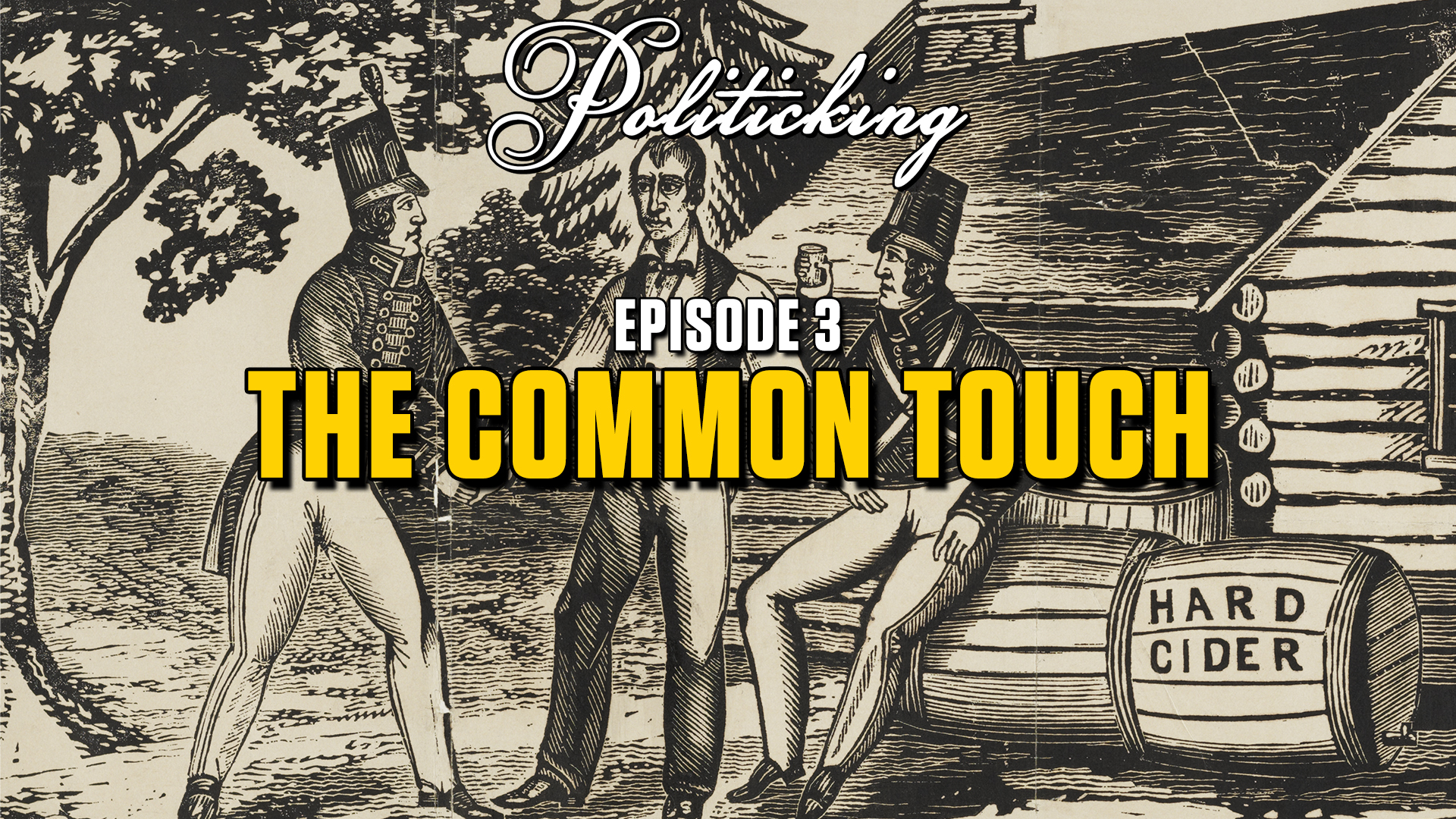
MARK CHEATHEM: This newspaper described Harrison as – if you gave him a mug of hard cider and a pension, he would sit in his log cabin by the fireplace and study moral philosophy for the rest of his life. It was meant as an insult, that Harrison was too old.
RON SHAFER: The Whig people said, oh, what are we going to do about this? And one guy said, well, why don’t we just go with it? So they created this image of Harrison as the hero of the poor man, living in a simple log cabin and drinking hard cider, which is the drink of the common man. It was like beer. That’s when they decided to build on the image and get the passion of voters up.
MARK CHEATHEM: He goes on the campaign trail, which no presidential candidate before him had done, and meets with crowds of people at these campaign rallies.
RON SHAFER: On June 6th, 1840, William Henry Harrison gave the first presidential campaign speech in history. People loved it. They had a chance to actually go see somebody running for president of the United States.
ARCHIVAL:
SINGING: Oh, who has heard the great commotion, motion, motion, all the country through. It is the ball a-rollin’ on for Tippecanoe and Tyler, too…
MARK CHEATHEM: Whigs attracted voters by using expressions of cultural politics as entertainment.
ARCHIVAL:
SINGING: And with him we’ll beat little Van…
MARK CHEATHEM: There was one song in particular, “Tippecanoe and Tyler, Too.”
ARCHIVAL:
SINGING: Let them talk about hard cider, cider, cider and log cabins, too…
RON SHAFER: This caught on all over the country. It wasn’t just a little campaign song. They didn’t have a Top 40 in those days, of course, but this would have been No. 1. They had barrels of free hard cider, and then you had these parades that would go for miles. A common feature was this big rolling ball. It was about 10 feet high and it has slogans plastered on it. This is where the phrase keep the ball rolling came from.
This was like a huge party, and since this would have been all guys, for the first time in history they invited women to a political gathering. They gave them these white handkerchiefs to wave as the parade went by. Women couldn’t vote, but they could persuade their husbands and boyfriends who to vote for, as we all know.
MARK CHEATHEM: What’s fascinating to me is that Van Buren understood what was happening, but because the Democrats have been successful, they’re looking at these newfangled ways of doing campaigning and they’re thinking – voters aren’t going to respond to this. they’re going to think it’s silly. But Van Buren was wrong.
RON SHAFER: William Henry Harrison defeats Martin Van Buren. The champion of the poor man defeats the champion of the rich man. Now, there’s one thing: Harrison really wasn’t a poor man. In fact, he grew up in a rich plantation in Virginia. His father was a signer of the Declaration of Independence and his best buddies were guys like George Washington and Thomas Jefferson; they used to come over to the house.
MARK CHEATHEM: Martin Van Buren grew up the son of a tavern keeper, a very modest household. But he crafts this image of someone who knows manners, who knows which fork to use, which wine to drink, and that really comes from probably his insecurity about where he stood socially in comparison to the people around him.
Modern-day politicians have taken the lessons of 1840 to heart. They’ve learned to try to present themselves as being the everyman, as having similar experiences to voters.
ARCHIVAL (C-SPAN, 8-23-24):
J.D. VANCE: She doesn’t want to be on film guys, so just cut her out of anything.
MARK CHEATHEM: They want to express that common touch that Harrison and others in the early republic put into place.
(END)
Charm Offensive: Why Politicians Reach for ‘Relatable’
For American politicians, the obsession with appealing to the everyman dates back to the raucous campaign of 1840.
William Henry Harrison’s 1840 campaign for the presidency set the stage for modern-day political campaigning. Harrison flipped the script, turning an insult into a winning strategy with parades, songs, and a log cabin image. These early tactics mirror today’s campaigns, where image and public appeal can have an outsize impact.
- Producer / Editor: Matthew Spolar
- Graphics: Cullen Golden
- Additional Editing: Heru Muharrar
 Grades
8-12
Grades
8-12
 1 Lesson Plan

