
Transcript
NARRATION: George Contstantinou and Farid Ali are part of a growing group using surrogate mothers to have children – gay men.
FARID ALI: I no longer feel that it’s a unique story. I’m a father now facing the same challenges as any other parent, gay or straight.
GEORGE CONTSTANTINOU: Yeah.
NARRATION: George and Farid used an egg donor and their twins were carried by a surrogate, Jeni Denhof, who already had two girls of her own.
JENI DENHOF: This is a dream, for women to be able to give this gift. And have that feeling, knowing I provided a family for someone.
NARRATION: But it was complicated. New York, where George and Farid live, did not allow paid surrogacy.
JENI DENHOF’S DAUGHTER (READING TO HER MOTHER): Does your cat say meow?
NARRATION: So, they found Jeni, who lives in Colorado, where it is allowed. Surrogacy laws vary widely from state to state, the legacy of the dramatic fight over a baby girl born in New Jersey in 1986. She was known as Baby M.
ARCHIVAL (NBC, NIGHTLY NEWS, 1-8-87):
NEWS REPORT: It’s a case that might test the wisdom of a Solomon.
NARRATION: It was the first case of its kind, pitting a surrogate mother, Mary Beth Whitehead, who bore the baby for a $10,000 fee, against the child’s father, William Stern.
ARCHIVAL (NBC NEWS, 3-31-87):
MARY BETH WHITEHEAD: When she was born she just looked so much like my daughter. And to just give her away for $10,000…I couldn’t do it.
ARCHIVAL (NBC NEWS, 1-8-87):
WILLIAM STERN: Nobody seems to be concerned about fathers’ rights. Fathers have dreams, too.
NARRATION: Stern provided the sperm, and along with his wife Betsy, hired Whitehead to conceive and carry the child.
ARCHIVAL (NBC NEWS, 9-10-86):
NEWS REPORT: A contract Mrs. Whitehead signed stated she would not try to keep the baby.
HAROLD CASSIDY (MARY BETH WHITEHEAD’S ATTORNEY): When she gave birth, you know, she did surrender the child and she was so distraught she did nothing but cry.
GARY SKOLOFF (WILLIAM STERN’S ATTORNEY): The Sterns had the baby for several days. Then, Mrs. Whitehead came back, very upset and said she needed to have the child for a few days back in her house again and then she would bring the baby back to the Sterns.
NARRATION: But when she didn’t come back, the Sterns got a court to order Whitehead and her husband to return the baby.
HAROLD CASSIDY: Police officers showed up at her home, and there was some confusion. And she did what I think any woman would do, any mother who loved their child.
GARY SKOLOFF: While the police were there she passes the baby out the window to him, they both escape and flee to Florida.
ARCHIVAL (NBC NIGHTLY NEWS, 3-31-87):
NEWS REPORT: Whitehead had been hiding in Florida for 87 days when police found her at her mother’s house and took the infant away.
NARRATION: desperate to keep the baby, Whitehead turned to the media.
ARCHIVAL (NBC NEWS, 9-10-86):
MARY BETH WHITEHEAD: They stole my baby! Don’t let them get away with it!
GARY SKOLOFF: She had many a press conference. Talking about surrogacy and her child and this was her child and they were taking her child away from her. And it started to capture the press and the public.
HAROLD CASSIDY: It was the first contested surrogacy case in the United States’ history. The courts had never seen it. The media had never seen it. The public had never seen it.
NARRATION: Throughout the trial, the press was fascinated with the story and the issues it raised. From income disparity…
ARCHIVAL (NBC NEWS, 3-31-87):
NEWS REPORT: The father, Stern, a biochemist, married to a pediatrician, pitted against the mother, Whitehead, a high school dropout married to a garbage collector.
NARRATION: …to potential exploitation of women.
ARCHIVAL (ABC NEWS, 3-31-87):
ARTHUR MILLER: We don’t want to see surrogate mothering being sort of a cottage industry for the poor women of America.
NARRATION: Ultimately, the case raised questions about how modern families are made.
ARCHIVAL (ABC NEWS, 3-31-87):
GARY SKOLOFF: One out of seven married couples in the U.S. cannot have children because they are infertile, and adoption is no longer a viable process in the country.
HAROLD CASSIDY: There is nothing in the best interests of any of these children that they be separated from their natural mothers.
NARRATION: Inside the courtroom, testimony included a dramatic tape recording of Mary Beth Whitehead calling Bill Stern from Florida.
ARCHIVAL (ABC NEWS, 2-4-87):
MARY BETH WHITEHEAD: I gave her life, I can take her life away. If that’s what you want, that’s what I’ll do.
WILLIAM STERN: No, Mary Beth, no Mary Beth, wait…
MARY BETH WHITEHEAD: That’s what I’m gonna do, Bill.
WILLIAM STERN: Please, Mary Beth…
REPORTER: Lawyers for the Sterns introduced the tapes saying they showed Mrs. Whitehead is too unstable to win custody. Her lawyer said they only show how much she cared.
ARCHIVAL (NBC NEWS, 3-31-87):
NEWS REPORT: Good Evening. Baby M goes to her father.
NARRATION: In the end, the judge gave custody to the Sterns, and ruled for the first time that a surrogacy contract could be enforced.
ARCHIVAL (CBS NEWS, 3-31-87):
HAROLD CASSIDY: I’m on my way to the appellate division right now.
NARRATION: But on appeal, the New Jersey Supreme Court disagreed.
GARY SKOLOFF: They had not much of a problem about the issues of custody. But the question is what do we do about surrogacy.
ARCHIVAL (ABC NEWS, 2-3-88):
JUDGE: Let’s assume that the surrogacy agreement is declared void.
REPORTER: The court found the exchange of money for a child, illegal, perhaps criminal and potentially degrading to women.
GARY SKOLOFF: To my shock, shock, seven to zero it was voted not enforceable. They said we’re not going to allow this to happen in this state.
ARCHIVAL (ABC, 2-3-88):
NEWS REPORT: The Justices also ruled that the trial court was wrong in terminating all the natural mother’s parental rights including visitation privileges.
ARCHIVAL (ABC, 2-3-88):
MARY BETH WHITEHEAD: I want to be able to see her, but I don’t need her in my home to love her.
HAROLD CASSIDY: She did not get full custody, but she won a battle that preserved the rights of other women which influenced law around the world.
GARY SKOLOFF: This was the beginning of a very big step in the world of family. And the law had totally failed to keep up with it at all. No one had really looked at it, considered it, put together what to do about it.
NARRATION: Even after the decision, the country remained fascinated with the story of Mary Beth Whitehead and Baby M. A made-for-TV movie was watched by millions and states began passing laws outlawing or limiting paid surrogacy.
ARCHIVAL (ABC, WORLD NEWS TONIGHT, 6-27-88):
NEWS REPORT: Michigan today became the first state to outlaw paying a woman a profit to be a surrogate mother.
JOHN WELTMAN: (FOUNDER, CIRCLE SURROGACY): The visions of Mary Beth Whitehead screaming, give me back my baby. It frightened people from this concept and made them turn away. But it didn’t stop people from having children through surrogacy. And in fact, if anything, surrogacy grew after 1988.
NARRATION: It grew in part because of a new development in reproductive technology – in vitro fertilization.
ARCHIVAL (NBC, NIGHTLY NEWS, 3- 10-87):
NEWS REPORT: Doctors remove eggs from the woman’s fallopian tubes. The eggs are mixed with the husband’s sperm to allow fertilization to occur outside the body. The resulting embryo is placed back in the woman’s uterus.
NARRATION: This technique also allowed a surrogate to carry a baby produced with another woman’s egg.
ARCHIVAL (CBS NEWS, 9-20-90):
NEWS REPORT: The surrogate mother had no genetic link to the child.
NARRATION: In 1990 in California, surrogate mother Anna Johnson sued for custody of a baby conceived in a laboratory using the egg and sperm of the intended parents.
ARCHIVAL (CBS NEWS, 10-22-90):
NEWS REPORT: But, Judge Parslow ruled she was simply a host – in effect, a foster parent.
HAROLD CASSIDY: Very quickly there was a switch to the non-genetic surrogacy where the effort was, well, let’s try to get around the opinion of the New Jersey Supreme Court.
JOHN WELTMAN: At least 99 percent is now gestational or egg donor surrogacy.
ARCHIVAL (NBC, TODAY, 10-3-12):
NEWS REPORT: Surrogacy. It’s almost doubled in the past six years.
NARRATION: The tide of public opinion began to turn…
ARCHIVAL (NBC, TODAY, 10-3-12):
NEWS REPORT: Like real life storks, surrogates are bringing babies to an increasing number of families all across the country.
NARRATION: …as celebrities started coming forward about their use of donor eggs and surrogates.
ARCHIVAL (ABC, GOOD MORNING AMERICA, 5-11-19):
NEWS REPORT: He’s here and he’s perfect! That’s what Kim Kardashian has to say about her and Kanye’s new baby boy, who was born via surrogate.
NARRATION: No one keeps track of how many surrogate babies are born.
JOHN WELTMAN: I’m quite comfortable in saying it’s several thousand a year children being born.
NARRATION: George and Farid met Jeni through an agency, Circle Surrogacy, where she also worked after the twins were born. Founder, John Weltman, says finding surrogates is surprisingly easy. The agency receives more than 1000 applications a month.
Jeni says she never worried about giving the babies up. Nor did she feel exploited. She said she was aware of the clear medical risk of carrying twins.
JENI DENHOF: You have to be okay recognizing this is not my baby and yes, I’m offering my body. They go over all the various things that could happen, including risking your life. Most surrogates we know the risks that we’re taking.
GEORGE CONSTANTINOU: Family, this is Jeni. Jeni, this is our friends and family.
FARID ALI: That was quite an emotional journey for her, as well as physical. She got to be a rock star for nine months to these two gay guys in New York.
JENI DENHOF: We were not in need financially. That being said, I never like to downplay the fact that yes, I was compensated to carry these kids and it helped our family.
NARRATION: Jeni’s fee – around $30,000 – was just a small part of the entire cost.
GEORGE CONSTANTINOU: The surrogate, the egg donation, the fertility clinics, the surrogate agency, the trips back and forth, I’d say at least $120,000.
NARRATION: Because it’s so expensive, some intended parents try to find surrogates themselves online. Others turn to a global marketplace of clinics where the cost of surrogacy is often lower.
ARCHIVAL (CBS, THIS MORNING, 8-13-14):
NEWS REPORT: By some estimates, prospective parents spend more than a billion dollars a year hiring egg donors, surrogate mothers and brokers all over the world.
NARRATION: Even as it grows, the surrogacy business in this country remains largely unregulated. Unscrupulous operators have made off with clients’ money and created surrogate babies just for sale.
JOHN WELTMAN: I think it is the Wild West in surrogacy because there’s no required license. You don’t have to be a lawyer. You don’t have to be a social worker or psychologist. People are entering this, some of whom are very honorable, and some of whom are not so honorable. I’d like to see regulation take place.
NARRATION: Surrogacy laws are handled on a state-by-state basis. Some states are surrogate-friendly, while others are highly restrictive – this may be the most lasting consequence of Baby M.
HAROLD CASSIDY: There is nothing resolved about the question of whether we as a people are going to embrace surrogacy.
GARY SKOLOFF: Baby M set back surrogacy that everybody just doesn’t want to touch it. Legislators are very, very concerned about whichever they go, it offends somebody the other way. It’s a very highly controversial topic.
NARRATION: In part under pressure from gay men, some states have lifted restrictions, including New Jersey, where Baby M was born, and New York, where George and Farid live.
GEORGE CONSTANTINOU: What comes next after one gets married? Kids. So that’s the logical next step. There needs to be, you know, surrogacy equality in all states.
NARRATION: As for Baby M herself, Melissa Stern is now an adult. At 18 she terminated her legal relationship with Mary Beth Whitehead, and was adopted by the woman who raised her, Betsy Stern.
GARY SKOLOFF: She went to college, she went to graduate school, she met a man, she married that man. Melissa has done beautifully.
NARRATION: The Sterns and Melissa have shunned publicity all these years…ever since their case set off a debate about parenthood that has yet to be fully resolved.
GEORGE CONSTANTINOU: The benefit to surrogacy is biological ties to your child, and it’s just going to become bigger and bigger because the bottom line is people want kids.
(END)
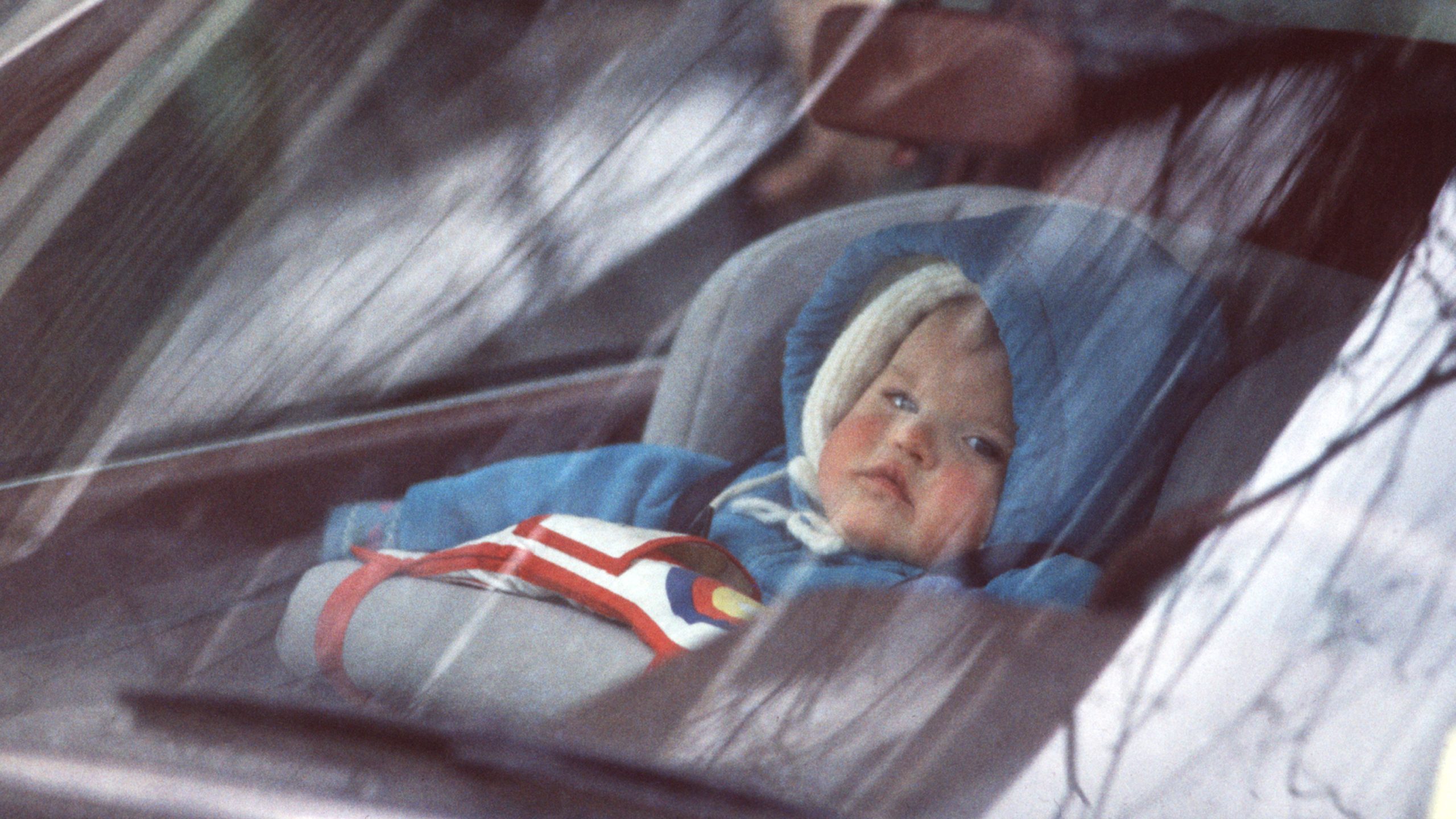
How Baby M Influenced Surrogacy Laws Across the United States
The Baby M case raised unresolved questions about surrogacy, contracts, and parental rights.
More Americans are turning to surrogacy to build families, but laws governing the practice are unsettled. In some states, paid surrogacy is legal and regulated; in others, it is restricted or simply unaddressed. This short documentary traces the roots of that legal patchwork back to a landmark custody battle in the 1980s involving a child known at the time as Baby M, later identified as Melissa Stern.
In 1988, the Baby M case made national headlines and forced courts to confront questions about surrogacy, parental rights and the role of contracts in family formation. This video examines how that landmark decision shaped the legal debates that followed, and why, decades later, surrogacy laws still vary widely from state to state.
Drawing on archival reporting and contemporary interviews, the film shows how early court decisions, advances in reproductive technology and changing families shaped state-by-state responses to surrogacy. It follows parents navigating the conflicting laws, surrogate mothers describing their experiences, and legal experts reflecting on why regulation has lagged behind practice.
- Producer: Jill Rosenbaum
- Editor: Anne Alvergue
- Reporter: Olivia Katrandjian
- Additional Reporter: Sandra McDaniel
- Update Producer: Sianne Garlick
- Update Editor: Alex Remnick
