Transcript
ARCHIVAL (NBC NEWS, 8-14-03):
NEWS REPORT: We are in the midst of what appears to be a colossal and history-making blackout.
ARCHIVAL (ABC NEWS, 8-14-03):
NEWS REPORT: People trapped in elevators in buildings. They have activated the emergency command center.
JARROD BERNSTEIN: You’re staggering, trying to take in as much information as you can.
ARCHIVAL (ABC NEWS, 8-14-03):
NEWS REPORT: Mayor Bloomberg’s advice is to go straight home.
ARCHIVAL (ABC NEWS 8-14-03):
NEWS REPORT: The subway system is down.
ARCHIVAL (ABC NEWS 8-14-03):
NEWS REPORT: Ottawa is completely without power now.
ARCHIVAL (CBS NEWS, 8-18-03):
NEWS REPORT: The lightning-quick domino series of failures.
ARCHIVAL (CBS NEWS, 8-15-03):
WOMAN: Gotta go to the bathroom and you can’t even go nowhere.
ARCHIVAL (CBS NEWS, 8-15-03):
NEWS REPORT: 50 million people are thought to have lost power.
NARRATION: In 2003, a massive blackout struck major areas of the U.S., and Canada and was perceived as a wake-up call for the nation. But decades later, are we any better prepared?
MICHAEL KORMOS (FORMER EXECUTIVE VICE PRESIDENT OF OPERATIONS, PJM INTERCONNECTION): I don’t think you can ever say with 100 percent confidence we won’t have a blackout.
NORA MEAD BROWNELL (FORMER COMMISSIONER, FEDERAL ENERGY REGULATORY COMMISSION): Electricity is really far more important than anyone realizes. We take it for granted. We flick the switch and it goes on, but it has to be in balance or the lights go out.
ARCHIVAL (ABC NEWS, 8-14-03):
NEWS REPORT: There has been a massive power outage throughout much of the Northeast, both of the United States and of Canada.
ARCHIVAL (CBS NEWS, 8-14-03):
NEWS REPORT: Millions and millions of people were caught by surprise when the electrical grid suddenly crashed.
ARCHIVAL (NBC NEWS, 8-15-03):
NEWS REPORT: It shut down a hundred power plants, from Ottawa down to Cleveland, and as far east as New York.
ARCHIVAL (NBC NEWS, 8-15-03):
NEWS REPORT: The most immediate concern was for thousands believed to be stranded underground in the dark in the New York subway system, or in elevators in skyscrapers.
ARCHIVAL (CHILD BEING CARRIED BY A POLICE OFFICER UP A LADDER):
POLICE OFFICER: Everything’s alright, buddy.
JARROD BERNSTEIN: The attacks of 9/11 were pretty fresh in everybody’s mind, and the first thought on almost every New Yorker that I spoke to’s mind was – is this terrorism?
ARCHIVAL (NBC NEWS, 8-14-03):
MICHAEL BLOOMBERG (MAYOR OF NEW YORK): The police are saying that the evacuation procedures are working, people are calm, and that they are getting out.
NARRATION: A normal August afternoon had turned to crisis. Around 50 million people across the U.S. and Canada were left without power.
ARCHIVAL (ABC NEWS, 8-15-03):
NEWS REPORT: All of Cleveland’s water supply runs on electric pumps.
JANE CAMPBELL (FORMER MAYOR OF CLEVELAND): My water commissioner said the people in the Heights have water for three hours. I said, water? I thought the electric was out. He said, Mayor, how do you think the water gets from the lake to the people in the Heights?
ARCHIVAL (NBC NEWS, 8-15-03):
MAYOR JANE CAMPBELL: You can get along in the dark, you can get along in the heat, but water becomes a health and safety issue very quickly.
NARRATION: While terrorism was soon ruled out, there was a frenzied search to unravel the mystery behind the source of the blackout.
ARCHIVAL (ABC 8-15-03):
PRESIDENT GEORGE W. BUSH: We don’t know yet what went wrong, but we will.
ARCHIVAL (ABC NEWS, 8-14-03):
NEWS REPORT: What we’re hearing on the radio is that there was some sort of incident in Ontario, Canada.
NORA MEAD BROWNELL: There was a lot of finger-pointing.
ARCHIVAL (NBC NEWS, 8-15-03):
NEWS ANCHOR: U.S. officials initially accused a mishap at a Canadian utility plant. The mayor of Toronto fired back.
MEL LASTMAN (MAYOR OF TORONTO): Tell me, have you ever seen the United States take blame for anything?
NARRATION: It took 29 hours for the power to be turned back on in most major cities, but the outage contributed to at least 11 deaths and caused an estimated $6 billion in economic losses.
MICHAEL KORMOS: We were fortunate that the grid stayed up as it did and it didn’t continue cascading any further.
NARRATION: Engineers spent months unraveling the cause of the blackout and traced it not to New York or Canada, but to a single power line in Ohio.
JANE CAMPBELL: The theory was, it was a tree in suburban Cleveland, and we were like, what?
NARRATION: The official report later found it was a series of human and operational failures that set the blackout in motion. An overloaded power line went unnoticed because the alarm system failed at the local power company, FirstEnergy, and soon other lines were overloaded.
JOHN FUNK (FORMER ENERGY & UTILITIES REPORTER, CLEVELAND PLAIN DEALER): When the line overheated it sagged, and as it sagged, it hit a tree that shouldn’t have been in the right-of-way corridor.
NARRATION: Meanwhile, at the regional service operator, Midwest ISO, an employee had gone to lunch and forgot to turn back on the tool that monitored grid problems.
JOHN FUNK: As the grid in Ohio got less and less stable, with too much voltage over too few lines, power plants began to turn off, and eventually it cascaded around the Lake Erie loop and all the way to New York.
ARCHIVAL (CBS NEWS, 11-19-03):
NEWS REPORT: Investigators said today this nation’s worst power blackout was mostly the fault of the FirstEnergy Corporation of Akron, Ohio.
JOHN FUNK: FirstEnergy was busy trying to grow, trying to absorb other companies, and the report found that they had let many basic things go. That included tree trimming under these power lines. Their computers hadn’t been upgraded. There was more than that.
NARRATION: FirstEnergy has said publicly that it has implemented new safeguards. Many saw the blackout as emblematic of a wider problem, one brought about by a lack of government oversight for years in the electric industry.
ARCHIVAL (CBS NEWS, 8-8-04):
NEWS REPORT: The standards are voluntary and not enforceable.
NORA MEAD BROWNELL: It’s like expecting your kids, when you walk out of the room and leave a pile of candy, not to help themselves unless you’ve said there will be consequences if you grab that pile of candy.
NARRATION: FirstEnergy was never fined for its role in the blackout. In 2005, Brownell’s agency, the Federal Energy Regulatory Commission, was finally given the power to impose fines, and since then has levied hundreds of millions of dollars in penalties against companies that violate its rules.
But fundamental issues remain.
JANE CAMPBELL: It still doesn’t quite make sense to me that the grid was that vulnerable.
BYRON DORGAN (FORMER N.D. SENATOR): It’s a big old system. When it started, you had a local system. You had an electric power provider, a plant, a spiderweb of wires around the plant that served customers near the plant. Then you put together a national system where you connect all those spider webs. It’s grown up over a long period of time, and there just isn’t one center or one organization or one entity that’s in control of the whole system.
NARRATION: There have been improvements since the blackout, including those that allow power companies to better monitor usage. The goal is to use that information to redirect power across the nation’s grid in real time to stop blackouts before they start.
MICHAEL KORMOS: At some point, there may be a breakthrough where it becomes very efficient and effective to store energy, in that you’ll be able to shift energy uses to different parts of the day as one grid, as one system, and I think that will dramatically change how this industry is operated.
NARRATION: But for now in its most recent report, the American Society of Civil Engineers gave the U.S. energy infrastructure a D+. Its reasoning included aging grids, a lack of financial investment and a changing energy landscape.
For nearly two decades the demand for electricity in the U.S grew slowly, but the growth of electric vehicle charging stations and artificial intelligence data centers has caused demand to spike.
ARCHIVAL (CBS NEWS, 6-16-25):
NEWS REPORT: Data centers have a voracious appetite for electricity, and so they really are a driving factor in our country not having as much electricity as we need.
ARCHIVAL (CBS MORNINGS, 7-19-24):
NEWS REPORT: A ChatGPT query uses nearly 10 times the electricity of a typical internet search.
NARRATION: Combine this with the fact that 80 percent of blackouts are caused by extreme weather – tornadoes, hurricanes and abnormally hot or cold temperatures – which can cause serious damage to the power grid’s infrastructure.
ARCHIVAL (ABC NIGHTLY NEWS, 2-17-21):
NEWS REPORT: Another night there with millions without power, without heat, without water, and authorities acknowledging they do not know when the power will be back on.
NARRATION: One example of this is a 2021 deadly winter storm in Texas, which left 4.5 million people without power.
ARCHIVAL (CBS TEXAS, 2-15-21):
NEWS REPORT: In the simplest terms, this Texas power crisis is a supply and demand issue. Too many people need electricity right now and there’s nowhere near enough to go around.
NARRATION: A recent estimate from the Department of Energy says that the U.S. will need to spend hundreds of billions of dollars to fully upgrade the electrical infrastructure.
NORA MEAD BROWNELL: We’re really living on our great-grandparents’ willing to spend money on roads, on bridges, on electric transmission lines. We haven’t done that in a long time, and we have to get real about that.
(END)
What the 2003 Blackout Revealed About the U.S. Power Grid
When a major blackout hit the U.S. and Canada in 2003, more than 50 million people lost power. Today, questions remain about the vulnerability of the power grid.
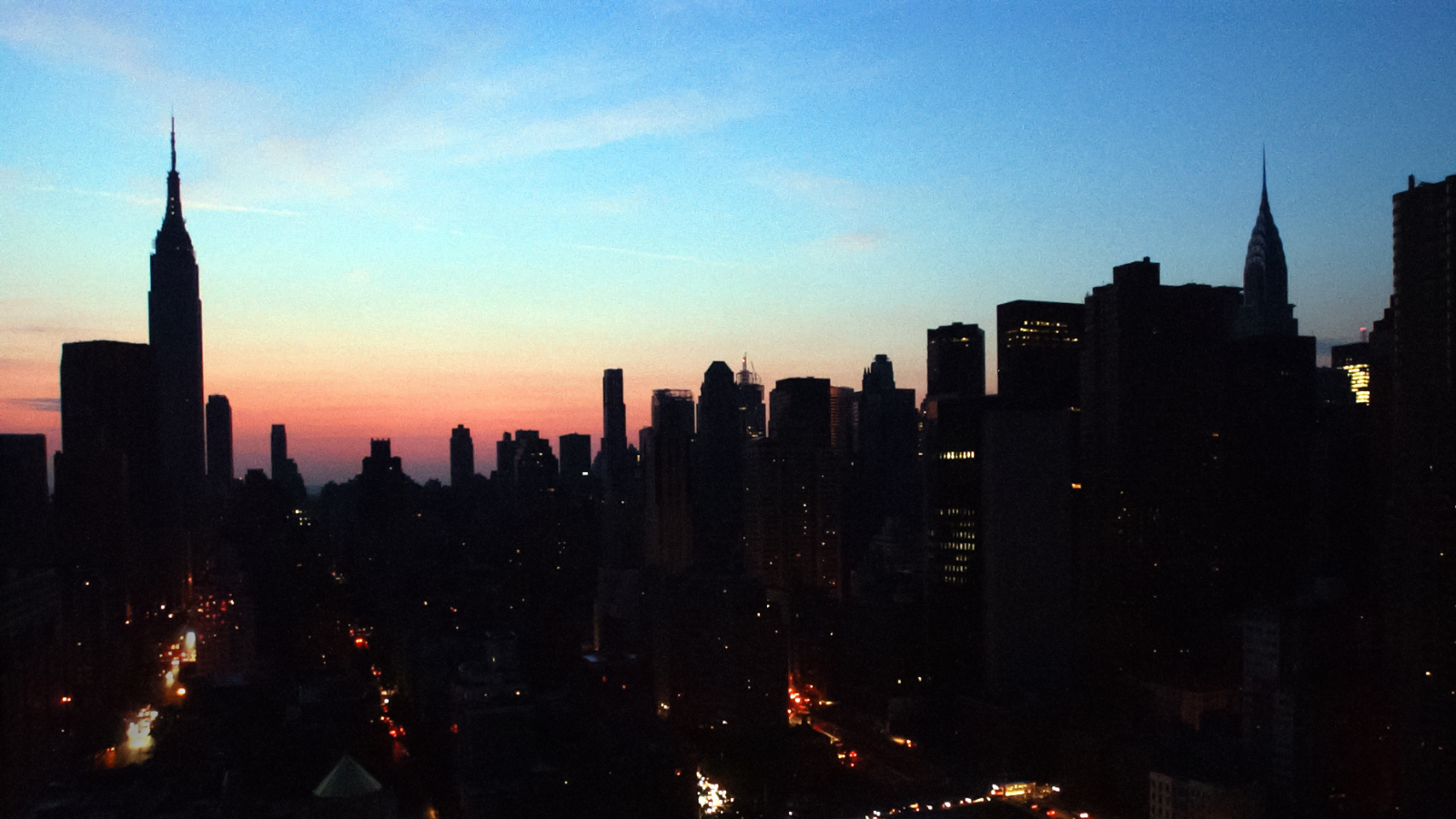
Late one Thursday afternoon in the summer of 2003, the power suddenly went out. Within minutes, the largest blackout in U.S. history shut down electricity across much of the Northeast, the Midwest and parts of Canada.
In the days and weeks that followed, reporters and investigators worked to figure out what caused the outage. Their findings raised bigger questions about how reliable the power grid was, and whether a system built decades earlier could handle modern demands.
Since then, some improvements have been made. But new risks have also emerged, and demand for electricity has spiked. Today, governments and utility companies are still trying to decide how to protect the power grid and prevent another widespread blackout.
- Producer: Matthew Spolar
- Director: Jonathan Gruber
- Editor: David Feinberg
- Update Producer: Sianne Garlick
- Update Editor: Alex Remnick
 Grades
9-12
Grades
9-12

 2 Lesson Plans