

This essay is a finalist in the 2024 Retro Report Civic Engagement Challenge, a student contest supported by the William and Flora Hewlett Foundation.
By Deborah Son
Envision stepping into a classroom where all books are out of reach, without a soul to help access these resources, supposedly available for public access. Picture navigating another form of communication alone with hearing impairments. Visualize others establishing a barrier to maintain a measured distance to refrain from conversations.
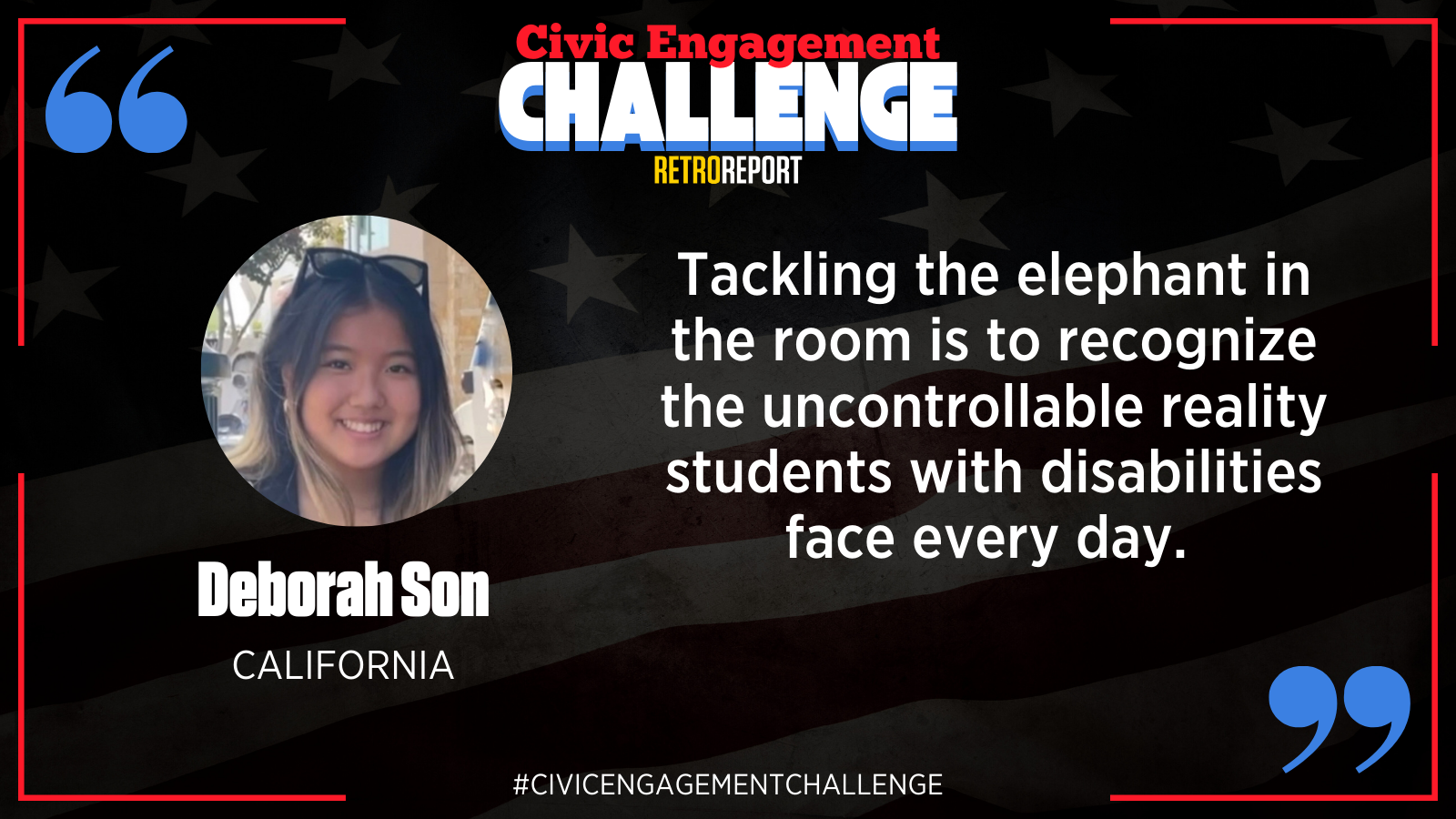
The first thing a person thinks of when they hear the word “disabled” is a crippled individual who lost their sense of life. Tackling the elephant in the room is to recognize the uncontrollable reality students with disabilities face every day. Whether it is at school, or out in the community, disabled individuals face social isolation and a lack of access to services. Raising awareness and increasing support systems in the community contributes to fostering a safe environment where every individual has equal opportunities.
As a third person who engages with students with disabilities, I have witnessed a disregard for their needs and personal journey. While general education students have convenient access to mental health resources, additional accommodations for students with special needs from school faculty are rare. Counselors lacking specialized training in disabilities are common and often lead to insufficient support and advocacy for students with diverse needs. When staff are not tailored to attend to students with developmental challenges, they may feel belittled and incompetent.
Similarly, students with hearing impairments experience the absence of sign language in school rallies and captions on school announcement videos. These vital components including captions and sign language provide a sensory learning experience. It allows visual content to be accessible, ensuring their ability to be fully engaged. The feelings of frustration caused by barriers hinder their participation in activities they hope to be involved in, but are restricted from. Despite the awareness and advocacy for students with disabilities, many schools still struggle to provide a supportive environment for everyone.
In terms of socialization, students with disabilities experience exclusion and isolation. In a bustling environment with students crowded together, there are groups of students in the corner of the room waiting for acceptance. However, due to social stigmas and limited opportunities for interactions, it may result in difficulty communicating and forming friendships. Going back to prior statements concerning students with disabilities not being included in school activities and events, the potential interactions are limited between students. Therefore, general education students are less likely to advocate for the needs of students with disabilities because of their unfamiliarity.
While schools claim to prioritize student equality, details like these highlight the need for continuous improvements. It is not about pitying students with disabilities, but acknowledging their presence, challenges, and competencies. The goal is to create a society that embraces diversity and empowers all students.
