


Students will learn how Black women have often been at the forefront of activism and advocacy relating to ballot access, voter suppression, and the right to vote.
Civil Rights and Civil Liberties
Posted inU.S. History
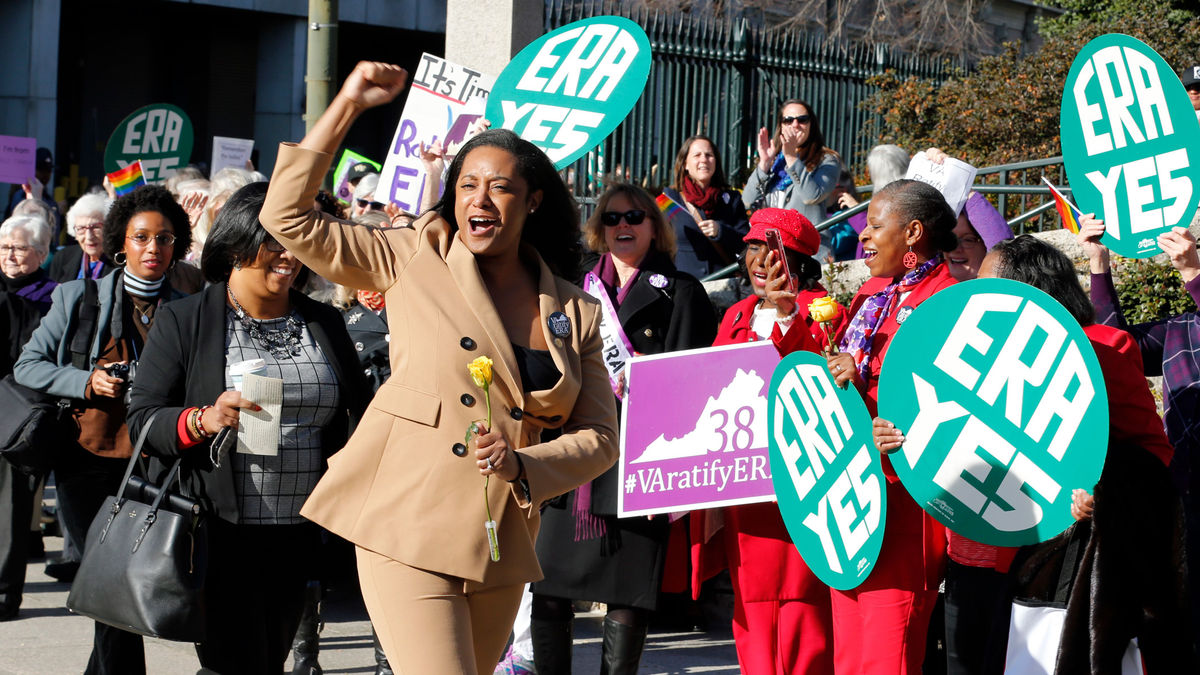
Lesson Plan: From Women’s Suffrage to the ERA
Students will examine the history of the Equal Rights Amendment, develop a claim, and use evidence gathered from a variety of sources to support their answer.

Posted inCivics and Government
Lesson Plan: The Kerner Commission and Racial Inequality in America
Students will learn how current protests against police violence and racial inequality are connected to the past, and about the White House commission that released a report in the aftermath of the major urban disorders of 1967.

Posted inCivics and Government
Lesson Plan: Poll Watchers and the Long History of Voter Intimidation
Students will examine primary and secondary sources related to voter intimidation to determine how integrity of elections can be ensured.

Posted inU.S. History
Lesson Plan: Media Literacy and the Lost Cause Narrative
What happens when history is written not by the victors, but the losers? After the Civil War, the United States began the difficult process of reuniting and healing after four years of brutal conflict and centuries of Black enslavement. During this process of Reconstruction, the question arose for former Confederates of how to remember the Civil War and its causes. In an attempt to justify their actions, white Southerners created a historical narrative of the Civil War known as the Lost Cause. This romanticized version of historical events has since been largely discredited by historians. Nonetheless, the impact of this collective regional memory remains. In this activity, students will apply a fact-checking process to the six key tenets of the Lost Cause narrative.

Posted inCivics and Government
Lesson Plan: The Pentagon Papers and the Fight Over Press Freedom
Students will learn about the Pentagon Papers during Nixon’s presidency, the long history of U.S. presidents battling national security leaks and the role of a free press in America’s democracy.

Posted inCivics and Government
Lesson Plan: American Reckoning
Students will learn about a little-known story of the civil rights movement told using excerpts from “American Reckoning,” a Retro Report and PBS Frontline collaboration.

Posted inLesson Plan
Lesson Plan: Comparing Geographic Racism in the U.S. and South Africa
Students will explore how segregationist laws and policies manifest and have affected the development of urban areas by comparing the United States and South Africa.

Posted inU.S. History
Lesson Plan: Japanese Americans Incarcerated
In the months after Japan attacked Pearl Harbor, President Franklin Roosevelt ordered 120,000 people of Japanese descent, most of them American citizens, rounded up and imprisoned in internment camps. In 10 camps across the American West, Japanese Americans persevered for four years. Even after they were removed from their homes and places of business, these people created new communities within the camps.
Posted inCivics and Government
Lesson Plan: Legacy of the Korematsu Decision
Students will learn how the U.S. government imprisoned 120,000 people of Japanese descent, most American citizens, during World War II and the lasting impact of a related Supreme Court ruling.
