
Lesson Plan: Lessons From the 1976 Republican Convention
 Grades 9-12
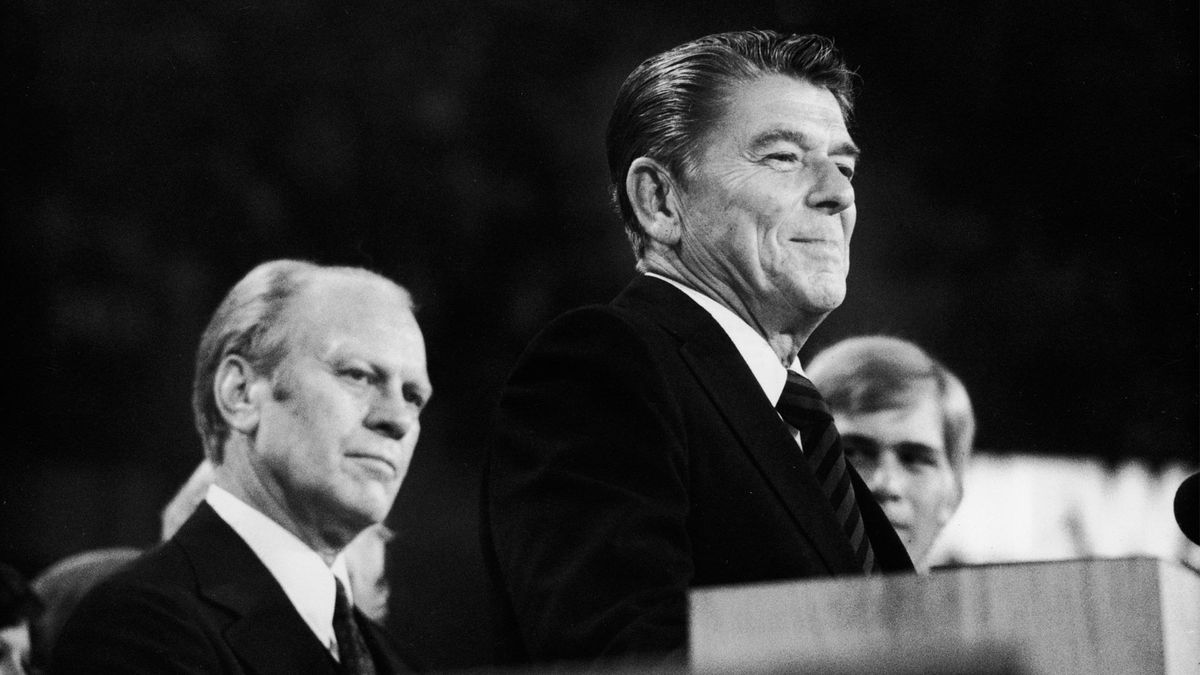
The 1976 Republican convention was one of the last political conventions where the party’s nominee for president was not determined well in advance. President Gerald Ford held the lead with the most delegates, but California’s governor, Ronald Reagan, was close behind, and the remaining uncommitted delegates held the power. The convention revealed an ideological divide in the party: Some Republicans viewed Ford as too liberal and saw Reagan as a conservative alternative. The convention showcased a kind of bare-knuckle politics and drama that hasn’t been seen since.



Subjects:
Civics/ Government, AP US Government and Politics, U.S. History
- Civics/ Government
- Useful in an American Government curriculum when teaching about Presidential elections and/or Political Party conventions.
- AP U.S. Government
- This lesson relates to Unit 5 of the AP US Government and Politics curriculum, Especially Topic 5.3 – Political Parties, Topic 5.8 – Electing a President, and Topic 5.10 – Modern Campaigns
- AP U.S. History
- Period 9
- U.S. History
- This lesson would be helpful in teaching about historic elections in American history.
Lesson Duration:
- One or two class periods (of a traditional 45-60 minute class period)
Essential Question:
- Why did Ronald Reagan challenge a sitting president in his own party for the nomination in 1976?
- Why were the uncommitted delegates so important at the 1976 Republican National Convention?
- What advantages did the Ford campaign have over the Reagan campaign at the 1976 Republican National Convention? How did the Ford campaign use those advantages?
Lesson Objectives:
Students will:
- Examine the ideological divide within the Republican Party in 1976.
- Analyze how candidates and their campaigns pursue the votes of delegates during an openly contested convention.
- Define and explain incumbency and the advantages incumbency gives a candidate.
Materials:
- Retro Report video “Lessons From the 1976 Republican Convention: How Ronald Reagan Lost the Nomination” (Transcript)
- Student Activity handout
- Children/Achievements, President Ford Committee, 1976 | Museum of the Moving Image, The Living Room Candidate: Presidential Campaign Commercials 1952-2012
- 1976 Reagan for President Primary TV Ad – Little Girl | Kansas Politics, YouTube
Procedure:
- Have students watch one Gerald Ford television ad and one Ronald Reagan television ad from the 1976 campaign. (Links are provided on the Activity handout.) Have students record their impressions of Ford and Reagan based on the ads.
- Poll the class and see how many would support Ford, how many would support Reagan, and how many are uncommitted.
- Follow Up: Ask students to share if they support Ford, Reagan, or are uncommitted by show of hands. Have members from each group share how they arrived at their conclusion.
- Have students watch the Retro Report video Lessons From the 1976 Republican Convention: How Ronald Reagan Lost the Nomination and answer the questions provided on the Activity handout.
- After watching the video, check for understanding by using questions from this list:
- In the 1976 Republican presidential primary, what were the ideological differences between Reagan and Ford?
- How did the party establishment view Reagan? How did the populist base of the party view Reagan?
- How did Ford’s convention managers create advantages and privileges for the delegates supporting Ford, and create disadvantages for the delegates supporting Reagan?
- How did Ford seek to unify the party after he won the nomination?
- How did Reagan’s loss at the convention set up his victory four years later?
- After watching the video, students will produce a written short answer to the following prompt:
- Do you believe that Ronald Reagan lost the nomination in 1976, or do you believe that Gerald Ford won the nomination?
Extension Activity:
- Have students watch Ronald Reagan’s Remarks at the Republican National Convention in Kansas City, Missouri — 8/19/76 | Reagan Foundation. After watching the speech, have students record three to five observations about how Ronald Reagan’s 1976 convention speech served as a launching pad for his successful 1980 presidential campaign. The template for this activity is on the last page of the Activity handout.
- Transcript: Republican National Convention Speech 1976 | National Archives, Ronald Reagan Presidential Library & Museum
About the Author:
Ryan Werenka teaches Social Studies at Troy High School in Troy, Mich., and was named the 2021 Michigan History Teacher of the Year by the Gilder Lehrman Institute of American History. Ryan teaches AP US Government and Politics and AP Comparative Government and Politics.
Standards
College, Career, and Civic Life (C3) Framework for Social Studies
- D2.Civ.7.9-12. Apply civic virtues and democratic principles when working with others.
- D2.Civ.8.9-12. Evaluate social and political systems in different contexts, times, and places, that promote civic virtues and enact democratic principles.
- D2.Civ.14.9-12. Analyze historical, contemporary, and emerging means of changing societies, promoting the common good, and protecting rights.
- D2.His.1.9-12. Evaluate how historical events and developments were shaped by unique circumstances of time and place as well as broader historical contexts.
- D2.His.2.9-12. Analyze change and continuity in historical eras.
- D2.His.4.9-12. Analyze complex and interacting factors that influenced the perspectives of people during different historical eras.
- D2.His.5.9-12. Analyze how historical contexts shaped and continue to shape people’s perspectives.
- D2.His.11.9-12. Critique the usefulness of historical sources for a specific historical inquiry based on their maker, date, place of origin, intended audience, and purpose.
- D2.His.12.9-12. Use questions generated about multiple historical sources to pursue further inquiry and investigate additional sources.
- D2.His.15.9-12. Distinguish between long-term causes and triggering events in developing a historical argument.
Common Core Literacy Standards
- CCSS.ELA-LITERACY.RH.9-10.4 Determine the meaning of words and phrases as they are used in a text, including vocabulary describing political, social, or economic aspects of history/social science.
