
Lesson Plan: Citizen Nation: Preparing for Success
 Grades 7-12
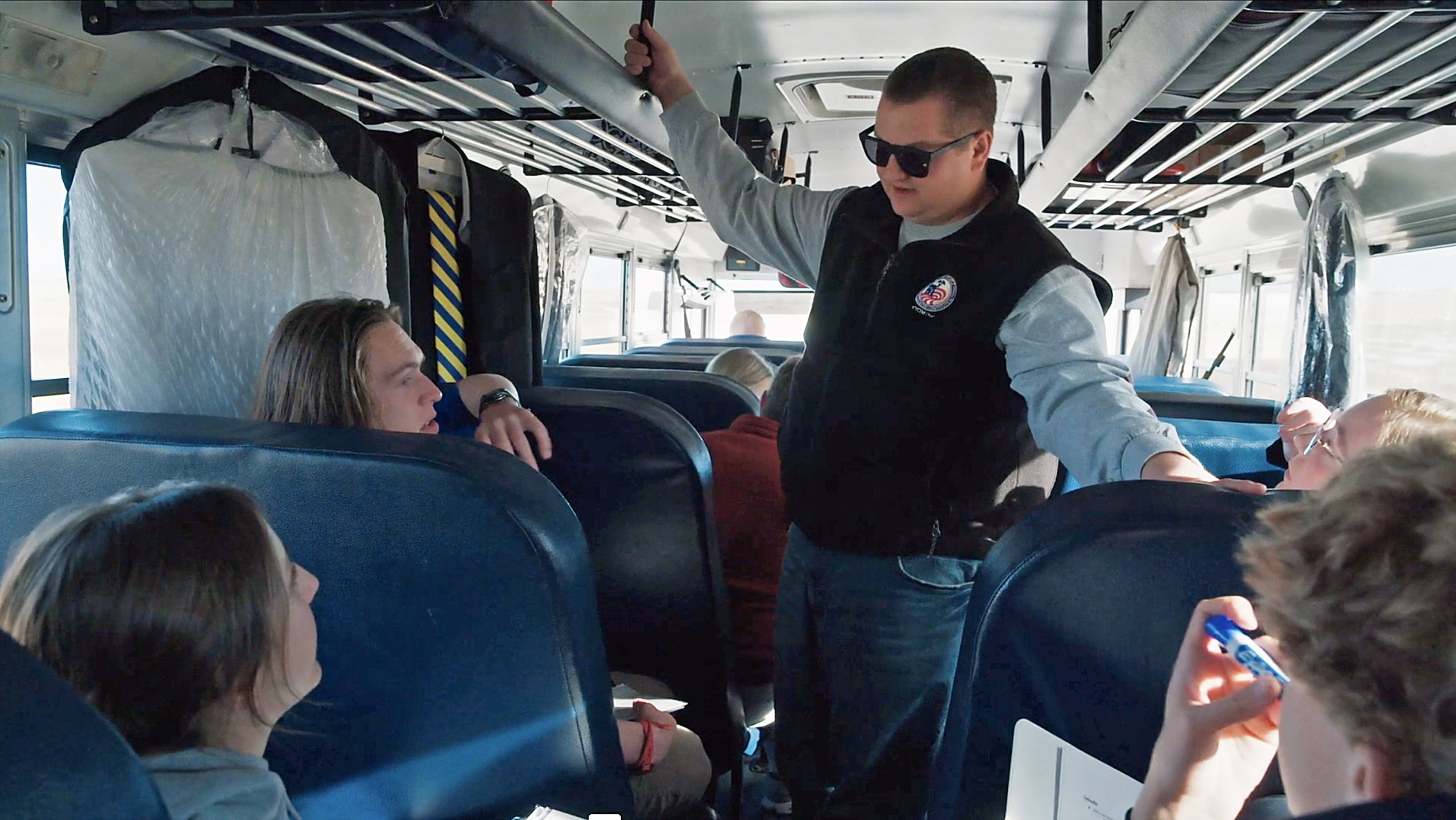
In a charged season of preparation, high school teams push themselves to sharpen their knowledge and skills before a national civics competition. Students like Graham, Angela and Caden learn that true success lies in mastering their topics and preparing for anything. The students realize that win or lose, they’re growing into informed citizens. Competition teaches us all kinds of valuable lessons whether we win or lose. Ideally, competition teaches us about the need for preparation, learning from the process of preparation, and doing our best and being happy with the results.



Subjects:
Social Studies, Civics/Government, English/Language Arts, AP US Government and Politics
- AP US Government & Politics
- This lesson aligns to Topic 1.2: Types of Democracy where students learn about different models of participation in democracy.
- Government/Civics
- This lesson could be used with an introduction to democracy about citizen power and the norms of democracy. This lesson could also be used in teaching about elections and how the competitive nature of elections resembles other forms of competition.
Essential Questions:
- What skills and life lessons can people learn from participating in competitions and being in competitive environments?
- How can participating in competitions help reinforce norms of democracy and prepare engaged citizens?
Lesson Objectives:
Students will:
- Describe students’ preparation process for competition.
- Evaluate lessons learned from both winning and losing competitions.
- Evaluate how competition is related to reinforcing democratic norms.
Materials:
- Retro Report video “Citizen Nation: Preparing for Success” (Transcript)
- Student Activity handout
Procedure:
- Distribute the Student Activity handout and have the students participate in the Brainstorm activity. Have students reflect on a time when they were involved in a competition and what steps they took to prepare for the competition.
- Watch the Citizen Nation Clip “Citizen Nation: Preparing for Success” and have students answer the four focus questions.
- Class Discussion: After watching the Citizen Nation clip, have students share their answers to the focus questions. Here are some additional discussion questions that you may use with your students:
- What is your impression of the competition between Caden and his Dad? Is it good natured and positive? Is it toxic?
- Sheridan High School’s We the People teacher Mike Thomas wants to create better citizens that think critically about government. Do you think adults that you know act this way? What about people serving in political office? If no, why not?
- Reflection: On the Student Activity have students consider the lessons that they learned from competition. They should consider what lessons they have learned from both winning and losing a competition.
- Making Connections: On the Student Activity handout, have students write a brief response to the prompt: How does participation in competitions like We the People affect American democracy?
- How Norms of Democracy are Taught Through Competition: The Student Activity has a select list of seven democratic norms. Have students read the democratic norms, define them and compose brief (1-2 sentence) responses on how exposure to competition and competitive environments could teach or reinforce democracy.
About the Author:
Ryan Werenka teaches Social Studies at Troy High School in Troy, Mich., and was named the 2021 Michigan History Teacher of the Year by the Gilder Lehrman Institute of American History. Ryan teaches AP US Government and Politics and AP Comparative Government and Politics.
Standards
College, Career, and Civic Life (C3) Framework for Social Studies
- D2.Civ.2.9-12. Analyze the role of citizens in the U.S. political system, with attention to various theories of democracy, changes in Americans’ participation over time, and alternative models from other countries, past and present.
- D2.Civ.5.9-12. Evaluate citizens’ and institutions’ effectiveness in addressing social and political problems at the local, state, tribal, national, and/or international level.
- D2.Civ.7.9-12. Apply civic virtues and democratic principles when working with others.
- D2.Civ.8.9-12. Evaluate social and political systems in different contexts, times, and places, that promote civic virtues and enact democratic principles.
- D2.Civ.9.9-12. Use appropriate deliberative processes in multiple settings.
Common Core Literacy Standards
- CCSS.ELA-LITERACY.RL.6-8.4: Determine the meaning of words and phrases as they are used in a text, including figurative and connotative meanings; analyze the impact of a specific word choice on meaning and tone.
- CCSS.ELA-LITERACY.RI.6-8.1: Cite several pieces of textual evidence to support analysis of what the text says explicitly as well as inferences drawn from the text.
- CCSS.ELA-LITERACY.SL.6-8.1: Engage effectively in a range of collaborative discussions (one-on-one, in groups, and teacherled) with diverse partners on grade 6-8 topics, texts, and issues, building on others’ ideas and expressing their own clearly.
- CCSS.ELA-Literacy.SL.11-12.1.b: Work with peers to promote civil, democratic discussions and decision-making, set clear goals and deadlines, and establish individual roles as needed.
- CCSS.ELA-Literacy.SL.9-10.1.b: Work with peers to set rules for collegial discussions and decision-making (e.g., informal consensus, taking votes on key issues, presentation of alternate views), clear goals and deadlines, and individual roles as needed.
