
Lesson Plan: 1912 Republican Convention – TR Starts the Bull Moose Party
 Grades 8-12
The presidential election of 1912 was a rare climactic political contest: one that challenged the nation’s voters to reflect on the effectiveness of American democracy, the role of the federal government in addressing the nation’s problems, and their constitutional rights, quality of life, and standard of living. This election took place amid the emergence of profound changes and challenges in American society, posed by growing industrialization, immigration and urbanization in the late 19th and early 20th centuries.
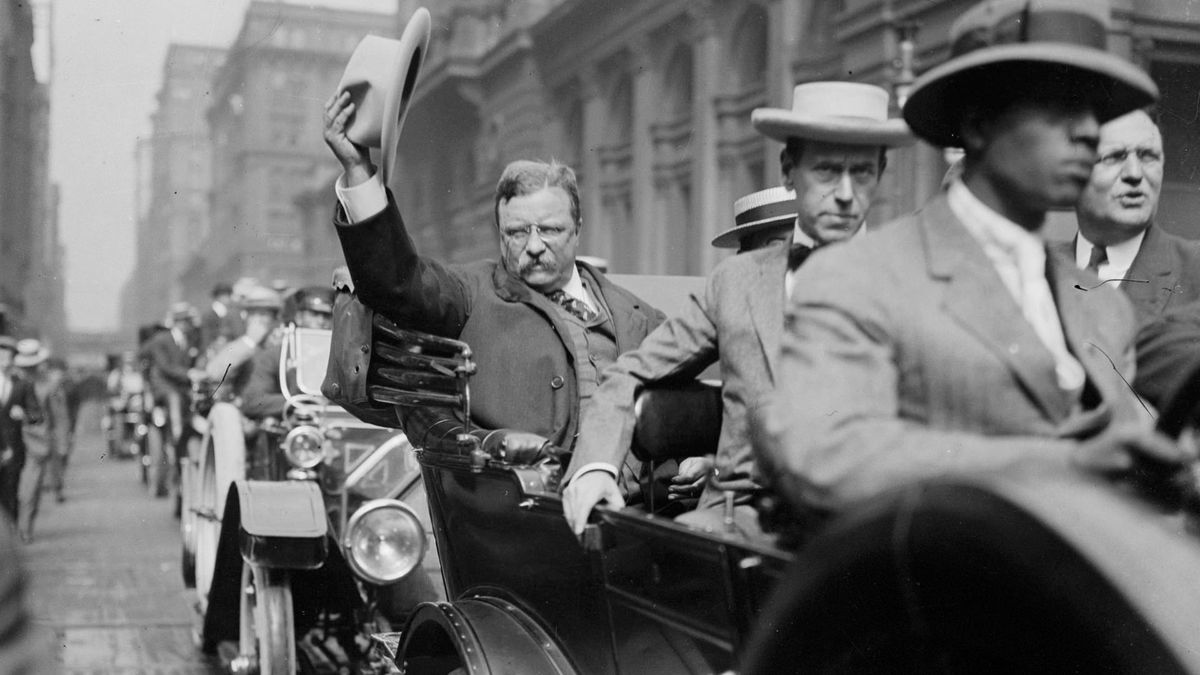
It’s one thing for a presidential candidate to win a lot of primaries. It’s another to win the nomination. Theodore Roosevelt learned that lesson in 1912 when a string of victories in the first presidential primaries gave him a clear shot at the Republican nomination and the White House. Roosevelt had decided not to pursue a third term in 1908, and turned the party over to his vice president, William Howard Taft. By 1912, it seemed clear to Roosevelt that Taft had shed his progressive ideology and was bowing to big business: Roosevelt was determined to unseat him. Taft was backed by the party bosses, so Roosevelt’s only chance to pick up delegates was in the presidential primaries, which were being held for the first time in the nation’s history. After a slow start, Roosevelt wound up trouncing Taft by sweeping 9 of the 13 states that held primaries that year. He arrived at the convention just 50 votes short of the nomination. But the party bosses stuck with Taft, and after he won the nomination, Roosevelt and his progressive followers walked out to form the Bull Moose Progressive Party. Its platform of progressive initiatives, including social security, national healthcare and an end to child labor, would later become the central tenets of the Democratic Party. Roosevelt soundly trounced Taft in the 1912 presidential election, but lost to Woodrow Wilson, the Democratic candidate who controlled the White House until 1920.

Sign up to instantly access
free resources for teachers
With 300+ short-form documentaries and dozens of educator-approved lesson plans, Retro Report brings history to life in your classroom.
Register for free to access classroom materials and student activities.
Already have an account? Sign In.
Thank you for registering!
