
Lesson plan

Lesson Plan: Crisis Reveals Character: Examining Responses on 9/11

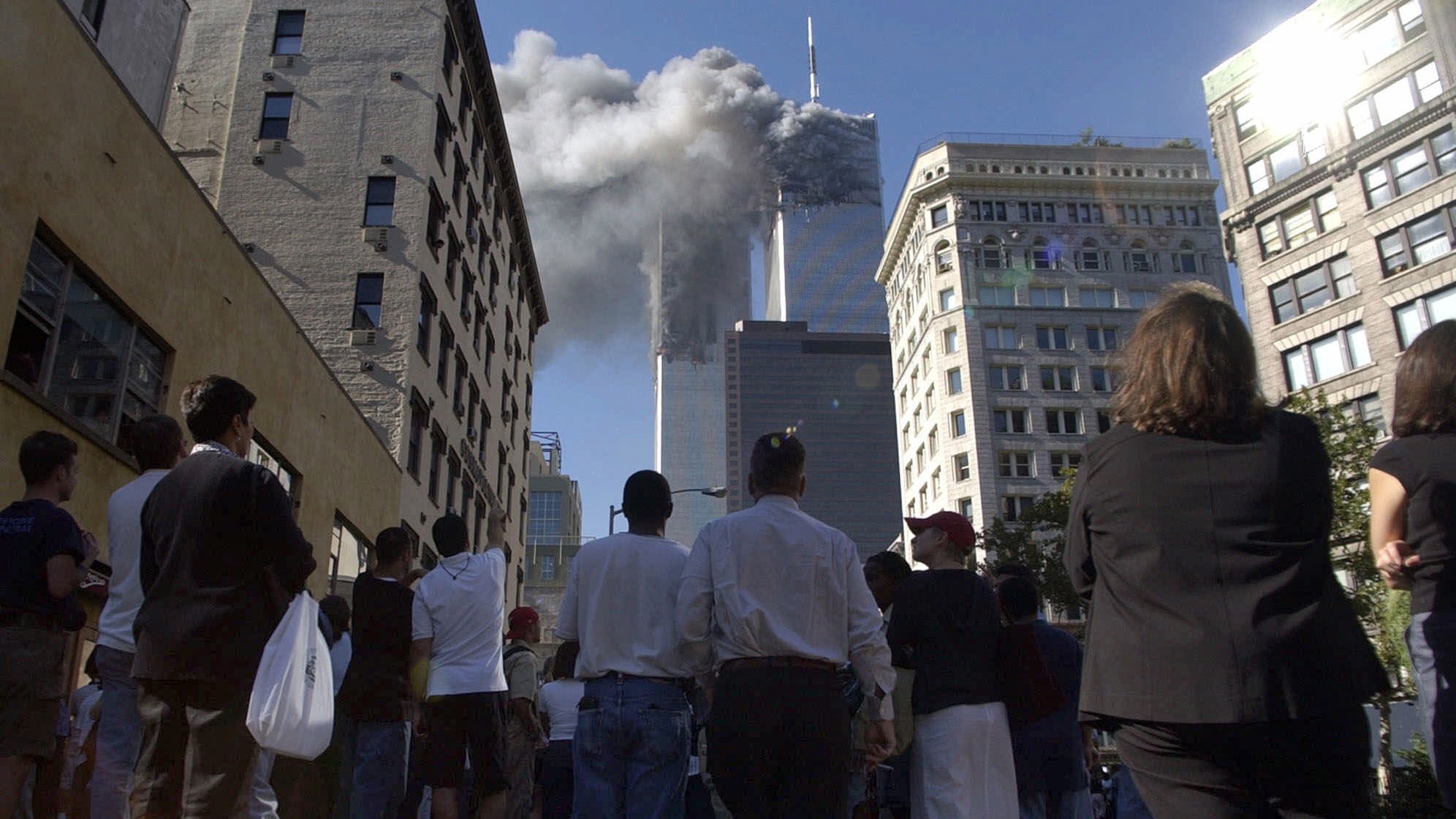
On the morning of Sept. 11, 2001, teachers at the Children’s Discovery Center in the World Trade Center complex were caring for 28 young children when the terrorist attacks began. The teachers worked together to evacuate the children and lead them to safety. In this lesson, students examine how individuals and communities responded to the events of Sept. 11, 2001, and will investigate what people’s choices and actions may reveal about human behavior during times of crisis.
See more

Subjects:

English Language Arts, U.S. History

  • Use this source to help students analyze firsthand accounts, make inferences based on people’s actions and decisions, cite textual evidence, and distinguish differences between what a text states and what a reader can infer.
  • Social studies teachers could place greater emphasis on historical context, primary sources, chronology and historical perspectives; English teachers can place greater emphasis on how the sources communicate those experiences.

Grade Level:

9-12

Lesson Duration:

  • Two 45-minute class periods, optional extension activities

Essential Questions:

  • What can an individual’s choices during a crisis reveal about human character?
  • What can firsthand accounts reveal about how people experience and respond to historical events?

Lesson Objectives:

Students will:

  • Evaluate textual evidence revealing decisions, actions, and character traits during historical crises.
  • Analyze an author’s use of characterization to depict the actions of individuals.
  • Analyze characterization choices in informational texts.

Materials:

Procedure:

  1. Day 1: Begin by introducing the lesson’s essential question: “What can an individual’s choices during a crisis reveal about human character?”
    1. Before beginning, clarify the different meanings of the word character. In this lesson, character refers to the qualities, values, and traits that may be reflected in a person’s choices or actions, not to a fictional character in a story.
    2. Explain to students that they will examine several firsthand and informational accounts of people responding to the events of Sept. 11, 2001. Students should consider what the available accounts may suggest about a person’s character while recognizing that they are analyzing only a specific and limited perspective of a real person’s life as they respond to a major crisis.
    3. Note: In literary analysis, a fictional character is the sum of what the author writes about them. In non-fiction and history, an excerpt captures only a momentary behavioral response under specific conditions; not a person’s entire identity.
  2. Have students complete the Reflect section independently. Ask them to imagine they are responsible for a group of younger children when an emergency suddenly occurs, and to explain what they would do first and why.
    1. Students should then choose three character qualities they believe would be most important in that situation and explain their choices.
    2. Encourage students to consider qualities like courage, responsibility, empathy, leadership, cooperation, patience, selflessness, quick thinking, loyalty and determination.
  3. Introduce the concept of characterization by explaining that authors do not always directly tell readers what a person is like. Instead, readers can infer character from what a person does, says, decides, how they interact with others and by how they respond to conflict.
  4. Have students complete the Investigate section. Students should read the characterization guide from Oregon State University and define direct characterization and indirect characterization in their own words.
    1. Review the difference with the class before students continue: Direct characterization tells the reader directly what a character is like. Indirect characterization requires the reader to infer character from a person’s actions, words, decisions, interactions or responses.
    2. Have students examine the two examples from “The Great Gatsby” and determine whether each represents direct or indirect characterization. Students should explain how they know.
  5. Transition to the Watch portion of the activity. Tell students that they will watch the Retro Report video “Chaos and Escape: How Day Care Teachers Saved Dozens of Children on 9/11” and look specifically for actions taken by the day care workers. Explain that they should focus less on summarizing what happens and more on what each person’s actions reveal about her character.
    1. Before showing the video, remind students that their goal is to analyze what specific choices and actions reveal about human behavior under pressure.
  6. As students watch, have them complete the chart by identifying: What the person does, What the evidence reveals about her, Evidence from the video. Students should pay particular attention to the actions of Tara Jones, Onica Sarjeant, and Supurna VedBrat as they evacuate and care for the children.
  7. After the video, briefly discuss students’ observations. Ask volunteers to share one action they recorded and the character trait they believe that action reveals. Push students to explain how the action supports their interpretation rather than simply naming a trait.
  8. Day 2: Move into the Analyze section. Explain that students will now apply characterization to three accounts connected to the events of Sept.11, 2001. Remind students to look for the pattern action → what the action reveals → inferred character traits.
  9. Have students read the first excerpt about the 9/11 flotilla independently or with a partner. Students should answer the five guided questions that follow the excerpt.
    1. Encourage students to pay attention to the author’s word choice, particularly the word “help” and the phrase “makeshift armada”, and consider what it suggests about the boat operators’ response.
    2. For the final question, have students complete the characterization chain by moving from the specific action to what it can reveal and finally to one or more character traits.
  10. Have students read the second excerpt about the town of Gander and the people who provided assistance to stranded airline passengers and crew members.
    1. Students should identify the specific actions taken by the people of Gander.
    2. Ask students to consider why the author uses the word “provided” and what the residents’ additional actions such as music evenings, barbecues, and canoe trips reveal about them.
    3. Students should complete the second characterization chain using evidence from the excerpt.
  11. Have students read the third excerpt about the passengers and crew of Flight 93. Because this passage contains more complex events, allow students additional time to read and process the information.
    1. Once again, have students answer the questions provided and complete the characterization chain using evidence from the excerpt.
  12. Conclude with the Synthesize writing task. Students should write a short analytic response answering: “Across these three accounts, what does a person’s response to a crisis reveal about his or her character?”
    1. Remind students that their response should make a clear claim about character.
    2. Students should support their thinking with examples from the three accounts.
    3. Students may use the provided sentence frames: “When people experience a crisis, their actions can reveal…”, “In the 9/11 boat rescues…”, “In Gander…”, “On Flight 93…”, and “Together, these examples show that…” as needed.
  13. Collect the completed activity or use the final response as the day’s formative assessment. Look for students’ ability to move beyond identifying actions and explain what those actions reveal about character, supported by textual evidence.

Optional Extension Activities:

  1. Characterization through a photograph: Show students a historical photograph depicting people responding to a crisis or major event. Have students write:
    1. What do you observe?
    2. What actions or details stand out?
    3. What can those actions reveal about the people pictured?
    4. What can you reasonably infer?
    5. What can you NOT know from the photograph alone?
  2. Narrative Writing Extension: Have students think of a time when someone in their life took an action that revealed something about their character. They don’t have to share anything too personal, but this should be written as a personal narrative. Then connect back by asking students to think through how this is similar to the way we analyzed the people in today’s readings. Note: This could also be done with fiction if paired with a short story or screenplay. Their writing should include:
    1. What the action was…
    2. I interpreted this action as…
    3. The character trait it revealed was…
    4. The evidence that supports my interpretation is…
    5. Then connect back by asking students to think through how this is similar to the way we analyzed the people in today’s readings.
    6. Note: This could also be done with fiction if paired with a short story or screenplay.

About the Author:

Lauren Sanders has been teaching AP Seminar, AP Research, and English in Florida since 2017.

Standards

Common Core Literacy Standards

  • CCSS.ELA-Literacy.RI.9-10. Cite strong and thorough textual evidence to support analysis of what the text says explicitly as well as inferences drawn from the text.
  • CCSS.ELA-Literacy.RI.9-10.3. Analyze how the author unfolds an analysis or series of ideas or events, including the order in which the points are made, how they are introduced and developed, and the connections that are drawn between them.
  • CCSS.ELA-Literacy.RI.9-10.5. Analyze in detail how an author’s ideas or claims are developed and refined by particular sentences, paragraphs, or larger portions of a text (e.g., a section or chapter).
  • CCSS.ELA-Literacy.RI.11-12.1. Cite strong and thorough textual evidence to support analysis of what the text says explicitly as well as inferences drawn from the text, including determining where the text leaves matters uncertain.
  • CCSS.ELA-Literacy.W.9-10.1. Write arguments to support claims in an analysis of substantive topics or texts, using valid reasoning and relevant and sufficient evidence.
  • CCSS.ELA-Literacy.W.9-10.9. Draw evidence from literary or informational texts to support analysis, reflection, and research.

College, Career, and Civic Life (C3) Framework for Social Studies

  • D2.His.1.9-12. Evaluate how historical events and developments were shaped by unique circumstances of time and place as well as broader historical contexts.
  • D2.His.3.9-12. Use questions generated about individuals and groups to assess how the significance of their actions changes over time and is shaped by the historical context.
  • D2.His.4.-12. Analyze complex and interacting factors that influenced the perspectives of people during different historical eras.
  • D2.His.8.9-12. Analyze how current interpretations of the past are limited by the extent to which available historical sources represent perspectives of people at the time.
  • D2.His.12.9-12. Use questions generated about multiple historical sources to pursue further inquiry and investigate additional sources.
  • D2.His.16.9-12. Integrate evidence from multiple relevant historical sources and interpretations into a reasoned argument about the past.

Verify your email

We'll send a verification code to .

Gift this article