
Lesson Plan: Alliances in the American Revolution
The American Revolution is often framed as a David vs. Goliath story, the Colonies against powerful Britain. But some historians say the full picture is more complicated. The Revolution was tied to rivalries that stretched across Europe. France, Spain and the German states all played significant roles, and building alliances was key to American success. This video helps students explore the role of several European nations in the historic fight for independence.
Subjects:
U.S. History, World Studies (Extension)
-
U.S. History: This lesson fits within a unit on the American Revolution, focusing on the causes of American victory and American alliances.
-
World Studies (Extension): This lesson can connect to global conflicts and introduce the concept of proxy wars and international involvement.
Grade Level:
6-8
-
This lesson plan can be modified for grades 9-12, including AP students, with adjusted scaffolding (See the procedure section.)
-
Additional scaffolding notes for other students, including ELL learners, are included in the procedure section.
Lesson Duration:
-
1 class period (45-60 minutes), with possible extension activities.
Essential Questions:
-
How do countries influence the outcome of wars beyond directly fighting in them?
-
Why do nations choose to get involved in conflicts that are not their own?
-
To what extent was the American Revolutionary War an international conflict?
Lesson Objectives:
Students will:
-
Explain why foreign countries became involved in the American Revolutionary War.
-
Describe how foreign countries supported different sides in the conflict.
-
Analyze the impact of foreign involvement on the outcome of the war.
-
Evaluate which country had the greatest influence on the outcome using evidence and reasoning.
Materials:
-
Retro Report video “How the World Came to Fight in America’s Revolution” (Transcript)
-
Student Activity handout
-
Image: Jean Baptiste Antoine de Verger, Soldiers in Uniform, c.1781 | Library of Congress,
Procedure:
-
Optional: Before beginning the activity, review and define key vocabulary terms to support English language learners (ELLs) and students who may benefit from additional reading or language scaffolding. Key terms include:
-
Alliance: Countries working together for a common goal
-
Colony: A territory controlled by another country
-
Empire: A group of territories controlled by one country
-
Diplomacy: Managing relationships and negotiations between countries
-
Proxy: Someone or something that acts for or supports another person or group
-
-
Activate Prior Knowledge (Think-Pair-Share) Present the prompt: You’re trying to beat a much stronger opponent who has more players, more resources, and more experience. What could you do to even the odds?
-
Give students a few minutes to write down two or three possible strategies independently. Then have students discuss their responses with a partner before sharing with the class.
-
Guide students toward ideas like forming alliances, using strategy or gaining outside support. Explain that the American colonies faced a similar challenge during the Revolutionary War.
-
-
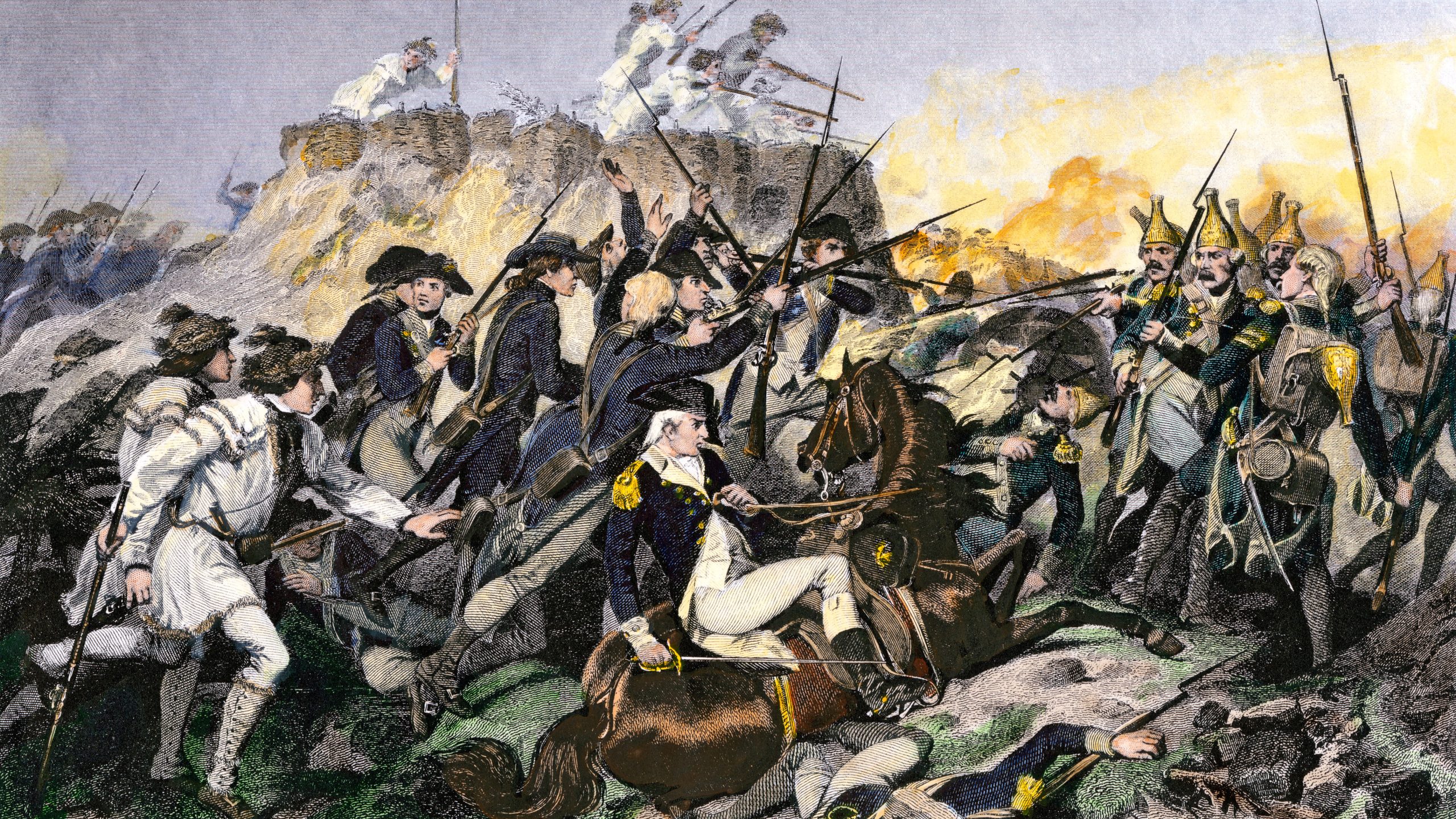
Using the See-Think-Wonder strategy, students will analyze a primary source image (Soldiers in Uniform | Library of Congress). They should first identify details they can directly observe in the image before making inferences or asking questions. Begin by asking students observational questions such as:
-
What details stand out to you about the image?
-
What do you notice about the clothing, weapons, or appearance of the people shown?
-
Do all of the people in the image appear to be part of the same group? Why or why not?
-
-
After students share observations, transition to inference questions:
-
What do you think is happening in this image?
-
Why might different groups of people be shown together?
-
What might this image suggest about who was involved in the American Revolutionary War?
-
-
Encourage students to ask questions about the image and the historical context:
-
What does this image make you wonder about the American Revolutionary War?
-
Why would people from different countries become involved in this war?
-
How does this image challenge the idea that the Revolution was simply Americans versus the British?
-
-
Encourage students to note the different groups represented in the images and consider why multiple groups may have been involved in the war. Explain that the lesson will explore how the American Revolutionary War evolved into a broader international conflict. For deeper discussion and historical thinking, teachers may ask follow-up questions such as:
-
What does this image suggest about the scale of the American Revolutionary War?
-
Why might countries outside the colonies have cared about the outcome of this conflict?
-
How might foreign involvement have changed the outcome of the war?
-
Why do nations sometimes choose to become involved in wars outside their own borders?
-
How might this image change the way we think about the American Revolutionary War today?
-
-
Watch the Retro Report video “How the World Came to Fight in America’s Revolution” (Transcript) and complete the guiding questions. Remind students that they do not need to take extensive notes; instead, focus on answering the questions with short phrases or brief responses. As students watch, encourage them to pay close attention to:
-
France’s involvement in the war
-
Benjamin Franklin’s diplomatic efforts
-
The significance of the Battle of Saratoga
-
The role of Hessians and Spain
-
-
After viewing the video, lead a short class discussion using the synthesis question: What does the video suggest about the role of alliances in wars? Encourage students to reference information from both the video and the primary source image. Guide students to understand that foreign alliances and rivalries greatly influenced the war’s outcome.
-
Organize historical information and reflect. Have students complete the chart on the activity handout. (See sample answers below.) As students work, encourage them to connect the opening Think-Pair-Share activity to the historical examples from the lesson. Students should consider how both the American colonies and Great Britain attempted to strengthen their chances of winning through alliances, military support, and outside assistance. After completing the chart, students should respond to the reflection prompt:
-
At the start of the lesson, you discussed strategies a weaker group might use against a stronger opponent. Using examples from the chart, explain how the American colonies attempted to “even the odds” against Great Britain during the Revolutionary War. How did the strategies used by the colonies compare to the ideas you discussed earlier in the lesson?
-
Note: To scaffold the activity or to focus on American alliances, remove “German States” from the table. Select “File>Make a Copy” to edit the document.
-
-
Conclude the lesson by having students respond to the final writing prompt: Which foreign country had the greatest impact on the outcome of the American Revolutionary War? Students should write a short Claim-Evidence-Reasoning (CER) response that:
-
Makes a clear claim
-
Uses at least two pieces of evidence from the video and the primary source
-
And explains how the evidence supports the claim
-
-
To support students who may need additional scaffolding, teachers may:
-
Provide sentence starters for the claim, evidence, and reasoning portions of the paragraph. (Claim: I believe [France/ Spain/ German States] had the greatest impact of the war because… Evidence 1: According to the video, it provided [specific resource/ victory]. Reasoning 1: This was important because it allowed the Americans to [result]. Evidence 2: Another way it influenced the war was [second piece of evidence]. Reasoning 2: This mattered because without this help, the British would have…)
-
Reduce the number of required pieces of evidence from two to one.
-
Allow students to discuss their ideas with a partner before writing independently.
-
Model a sample claim as a class before students begin writing.
-
Highlight or review specific moments from the video transcript that provide strong evidence
-
Provide a partially completed Claim, Evidence, Reasoning organizer or graphic organizer.
-
Allow students to respond in bullet points before turning their ideas into a paragraph
-
Provide an Evidence Menu for them to choose evidence from. The evidence can include the following:
-
France provided the Americans with money, weapons, troops, and naval support.
-
The American victory at Saratoga convinced France to openly support the colonies.
-
Benjamin Franklin traveled to France to gain foreign support for the American cause.
-
The French navy helped trap British forces at Yorktown.
-
Spain entered the war against Britain, forcing Britain to fight in multiple regions.
-
Britain hired Hessian soldiers to strengthen its army during the war.
-
Foreign support helped the colonies compete against the stronger British Empire.
-
-
-
To adapt this lesson for high school students, including those in AP U.S. History or AP European History classes, teachers may increase the complexity of the historical analysis and writing tasks. Possible modifications include:
-
Incorporating additional primary sources, such as excerpts from George Washington’s Farewell Address, Benjamin Franklin’s diplomatic writings, or the Treaty of Alliance (1778)
-
Having students examine the relationship between 18th-century foreign alliances and the underlying European power struggles of the era.
-
Expanding the CER into a longer historical argument paragraph or mini Document-Based Question using multiple sources.
-
Having students evaluate the extent to which foreign assistance was the decisive factor in American victory.
-
Having students analyze continuity and change in American foreign policy over time.
-
Extension Activities:
-
Students may research another historical or modern conflict involving foreign alliances or outside involvement. They may compare the American Revolutionary War to conflicts such as the French and Indian War, World War I, the Cold War, or current events.
-
Ask students to create a visual map or diagram of the countries involved in the American Revolutionary War and explain how each influenced the conflict.
-
During the Revolutionary War, the alliance with France was essential for American independence. However, in his Farewell Address, George Washington warned against the United States becoming too closely connected to other countries. Have students read excerpts from George Washington’s Farewell Address, focusing on warnings about “permanent alliances” with foreign nations. Why was foreign aid necessary to win the war, and why did Washington believe that maintaining such close ties would be dangerous for the young United States in 1796?
About the Author:
Jaclyn Jecha is a Social Studies educator in Wisconsin with experience teaching middle and high school History, Government and Civics. She has worked with organizations including Retro Report, PBS LearningMedia and the Center for Civic Education to develop inquiry-based history and media literacy resources.
Standards
College, Career, and Civic Life (C3) Framework for Social Studies
-
D2.His.1.6-8: Analyze connections among events and developments in broader historical contexts.
-
D2.His.14.6-8: Explain multiple causes and effects of events and developments in the past.
-
D2.His.16.6-8: Organize applicable evidence into a coherent argument about the past.
Common Core Literacy Standards
-
CCSS.ELA-LITERACY.RH.6-8.1: Cite specific textual evidence to support analysis of primary and secondary sources.
-
CCSS.ELA-LITERACY.WHST.6-8.1: Write arguments focused on discipline-specific content supported by evidence and reasoning.
