


Students will learn how driven by fears of the rise of Communism, the United States adopted a policy of containment, intervening in the politics of countries across the globe, including many countries in Latin America.
Cold War and the Nuclear Age

Posted inU.S. History
Lesson Plan: The History and Lasting Impact of the Cuban Missile Crisis
Students will analyze and evaluate the actions taken by the United States and the Soviet Union during the Cuban missile crisis.

Posted inU.S. History
Lesson Plan: Operation Ajax and the C.I.A. in the Cold War
C.I.A. activity has cast a long shadow over relations between the United States and Iran. In 1953, the agency helped to orchestrate a coup that ousted Prime Minister Mohammad Mossadegh, who was viewed as a threat to Western oil interests. The plot, known as Operation Ajax, restored Shah Mohammad Reza Pahlavi, a U.S. ally during the Cold War, to power.
Posted inCivics and Government
Lesson Plan: Regime Changes in Iran: Catalysts and Impacts
In 1953, after the Iranian government nationalized the Iranian oil industry under the control of Prime Minister Mohammed Mossadegh, the C.I.A. orchestrated a coup that resulted in a regime change in Iran. Operation Ajax restored Shah Reza Pahlavi, a U.S. ally during the Cold War, to power and paved the way for the Iran revolution in 1979, leading to a strained relationship between the two countries.

Posted inU.S. History
Lesson Plan: Cold War Breakout
Using text, images and Retro Report videos, students will analyze the early Cold War period from the perspective of the United States. This breakout game allows students to examine key events including the Truman Doctrine, the Korean War and the space race. Students will analyze relationships between countries during the Cold War and learn how those relationships created an era of mistrust, hostility and proxy battles, and nearly led to nuclear war.
Posted inU.S. History
Lesson Plan: The Berlin Airlift: Toast, Boast and Roast
Students will learn how the Berlin Airlift helped protect Berlin from Soviet control, contributed to the rise of NATO and set the tone for the Cold War.

Posted inU.S. History
Lesson Plan: What Japan’s Atom Bomb Survivors Have Taught Us About the Dangers of Nuclear War
On Aug. 6, 1945, the U.S. dropped the first atomic weapon on Hiroshima, Japan, instantly killing tens of thousands of people and unleashing suffering that has lasted for generations after World War II ended. Survivors, known in Japanese as hibakusha, recall how the sunny morning turned into devastation. “Flash! Boom! It was an extremely loud blast,” said Michiko Hattori, who was 16 years old at the time. Many of those who survived were left with disfiguring injuries, radiation sickness and severe social stigma. This lesson helps students analyze different perspectives and reflect on how history shapes our views on war and security today.
Posted inCivics and Government
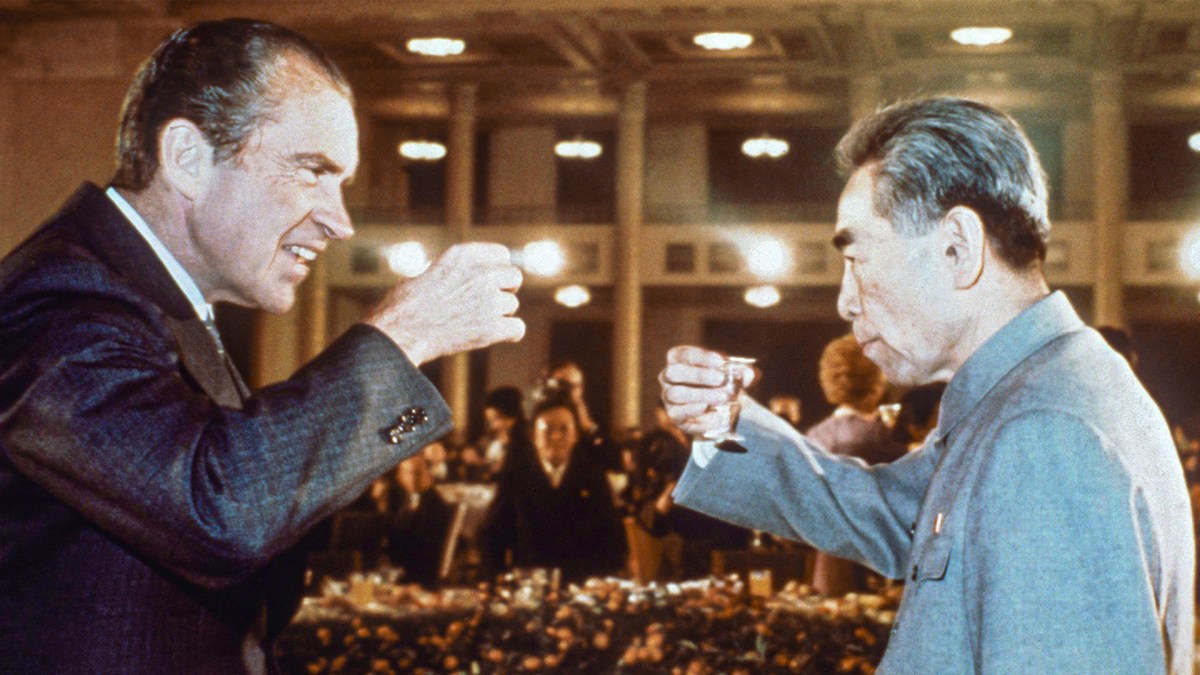
Lesson Plan: How Nixon’s 1972 China Visit Set the Stage for Today’s Tensions Over Taiwan
Students will learn about the lasting legacy of President Richard Nixon’s 1972 visit to China.


Posted inVideo
How a Cold War Airlift Saved Berlin With Food, Medicine and Chocolate

A Soviet blockade around Berlin cut the divided city off from the West. But in 1948 U.S. and British pilots began to fly food, fuel and medicine to the Allied sectors.
