

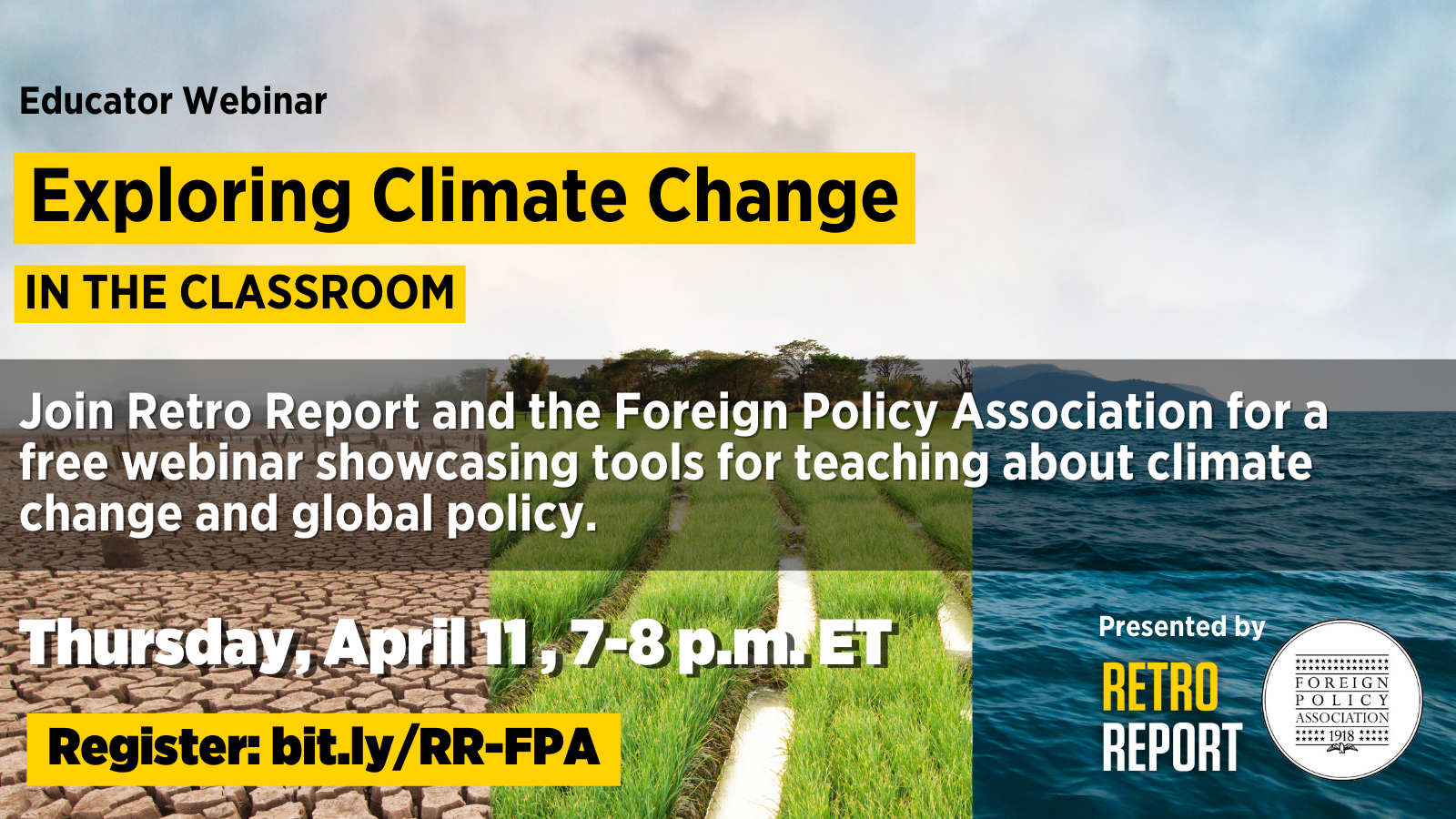
Climate change and the policies being developed to confront it are evolving rapidly, making addressing the subject in secondary classrooms a challenge. Retro Report and the Foreign Policy Association will present a webinar on April 11 to explore free resources for teaching about climate change and global environmental policy.
Here are five reasons to join us.
1. Prepare for Earth Day
Earth Day is April 22, a perfect time to discuss climate change and environmental policy. Climate change will be one of the most pressing issues throughout your students’ lifetimes. Teachers joining this webinar will discover free, engaging resources covering the history, science and policy.
2. Bridge the Subject Divide
Learning about the environment isn’t just for science classes. We’ll share some great science materials, and we’ll also feature lessons and activities that fit seamlessly into U.S. and World History and Civics and Government courses.
3. Make Your Lessons Interactive
As the school year winds down, teachers often try to counteract spring fever with active learning. During this webinar, we’ll share a simulation activity that will allow students to actively participate in the lesson and get them creating.
4. Partners Are the Best
We enjoy working with partners committed to creating free, high-quality resources for educators. For this webinar we’re partnering with the Foreign Policy Association. Its “Great Decisions” provides fantastic background and application for students.
5. Meet Students’ Interests
Studies show that young people are curious and active participants in learning about and advocating for environmental issues. Environmental Studies majors are on the rise, too. Find ways to meet the needs and interests of your students by incorporating more environmental issues into your curriculum.
Mark Earth Day using resources from this webinar. Join us April 11 from 7 to 8 p.m. ET.
DAGMAR ROTHSCHILD is an education intern at Retro Report. She is an undergraduate at Georgetown, studying International Relations.
Stay up to date. Subscribe to our newsletters.
