

It’s not often that a Sunday spent vegging on football devolves (evolves?) into a Google search to parse the meaning of “déjà vu.” For the N.F.L., that’s not a good thing.
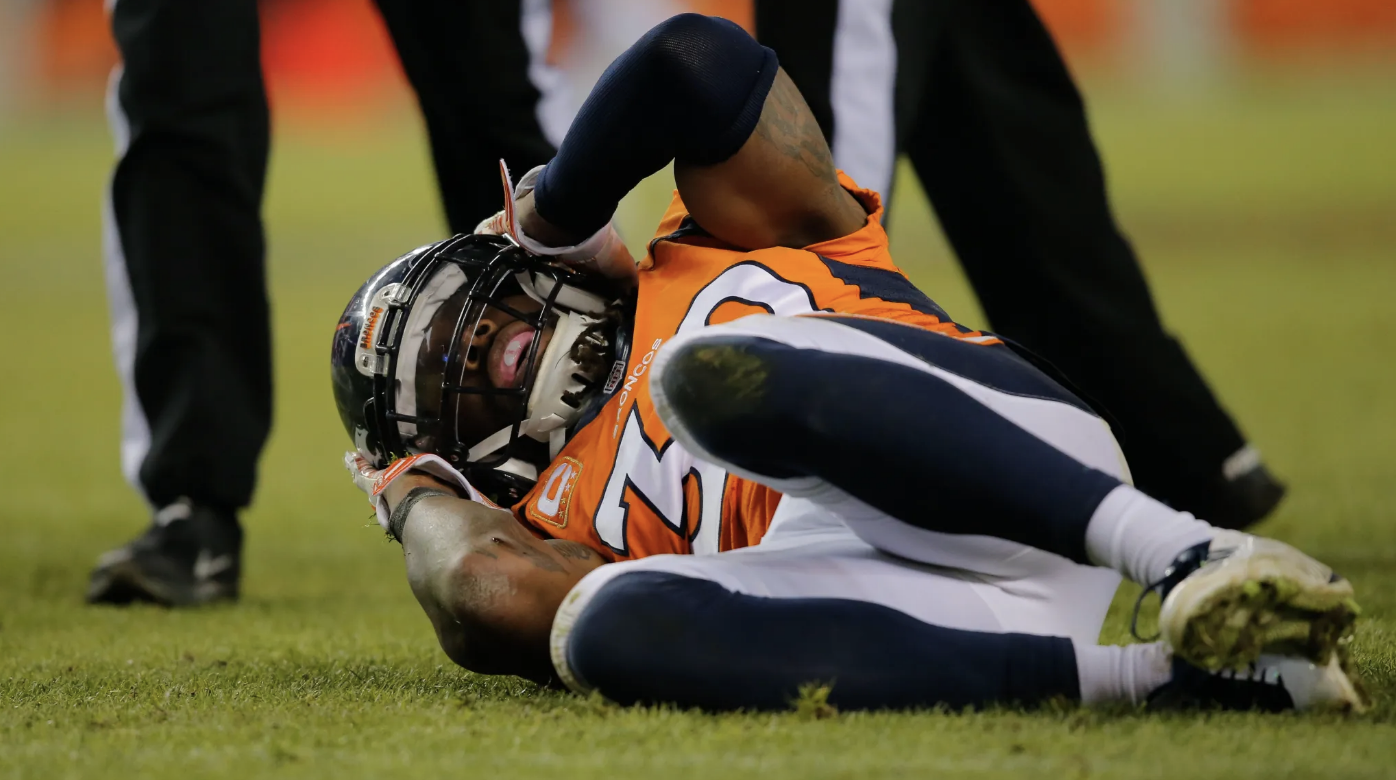
Amid the Buffalo Bills’ drubbing of the New York Jets this weekend came an all too familiar sight. Just before halftime, Jets running back Breece Hall caught a pass and barreled forward; Bills defenders Taylor Rapp and Taron Johnson tackled him for a 15-yard gain. Johnson lay sprawled on the turf and was soon ruled out of the game with a concussion. Rapp walked away from the altercation, but then suddenly, reaching for his neck, he collapsed to the turf.
Merriam-Webster offers seemingly competing definitions of “déjà vu”: 1) “the illusion of remembering scenes and events when experienced for the first time,” and 2) “something overly or unpleasantly familiar.” In the case of Sunday’s episode, the second definition is the operable one. The image of Rapp being carted off in an ambulance echoes a similar moment last month after a brutal hit to a teammate, Damien Harris – which in turn followed the remarkable decision in January to cancel a Monday Night Football game midway through the first quarter after a hit to the chest of Bills safety Damar Hamlin sent him into cardiac arrest.
As laid out in “Another Player Down,” above, the public health concerns that plague football once beset boxing. When Retro Report originally produced it in 2015 for The New York Times, revelations about chronic traumatic encephalopathy, the degenerative brain disease linked to blows to the head, were rocking the sport after the N.F.L. spent years downplaying concerns. That year, Will Smith starred in “Concussion,” playing the role of the Pittsburgh-area forensic pathologist who discovered C.T.E. during an autopsy of a legendary Steelers lineman, and then held firm against pressure to bury his findings.
As laid out in “Another Player Down,” above, the public health concerns that plague football once beset boxing. When Retro Report originally produced it in 2015 for The New York Times, revelations about chronic traumatic encephalopathy, the degenerative brain disease linked to blows to the head, were rocking the sport after the N.F.L. spent years downplaying concerns. That year, Will Smith starred in “Concussion,” playing the role of the Pittsburgh-area forensic pathologist who discovered C.T.E. during an autopsy of a legendary Steelers lineman, and then held firm against pressure to bury his findings.
But nowadays, as New York Times staff writer Jonathan Mahler told Retro Report, “anyone who continues to believe professional football players aren’t potentially shortening their lifespan by playing this game is sort of living on another planet.”
The International Olympic Committee has made flag football – a soft-contact alternative that is rising in popularity among young athletes – an official sport in 2028. The N.F.L. has rolled out changes that include new helmet technology; a raft of often-disputed penalties and protocols; and incentives for teams not to return kickoffs, one of the game’s most dangerous plays. Just last week The Times reported a new study showing C.T.E. has been found in the brains of youth football players who died in their teens.
In some ways, football is experiencing a reverse of the crisis that confronted boxing in the 20th century. Though death was no stranger to boxing, medical opposition to its brutality was piqued by the nationally televised fight that led to the death of Duk-koo Kim in 1982. In football, medical evidence detailing the sport’s long-term impact has been mounting for years. But its hold on America is so strong as a keystone of civic pride in towns across the country (and as synonymous with Thanksgiving festivities as turkey and stuffing) that the communal experience of watching and – for a smaller but enduring segment of society – playing the game overwhelms the evidence alone.
Deep in the annals of the N.F.L., deaths have occured. And every fall, as surely as daylight grows scarce, a handful of young men will likely die playing high school or college football. But the events are isolated tragedies, the grief contained to some far-flung community and its local news coverage. We updated this Retro Report film to acknowledge that in recent years, at the highest levels of football, millions of Americans have witnessed a drumbeat of distressing scenes on television that resemble times when prizefighters did, in fact, pay the ultimate price.
If the unspeakable were to happen today on a high-profile gridiron, plastered across 4K television screens, would we be desensitized? In terms of morbid spectacle, that line has yet to be crossed. But increasingly it seems that football’s true inflection point might come from the top down, not the bottom up.
MATTHEW SPOLAR, a producer at Retro Report, created the original video on high-impact injuries in sports, along with this updated version. This article first appeared in Retro Report’s newsletter. You can subscribe here and view past newsletters here.
