

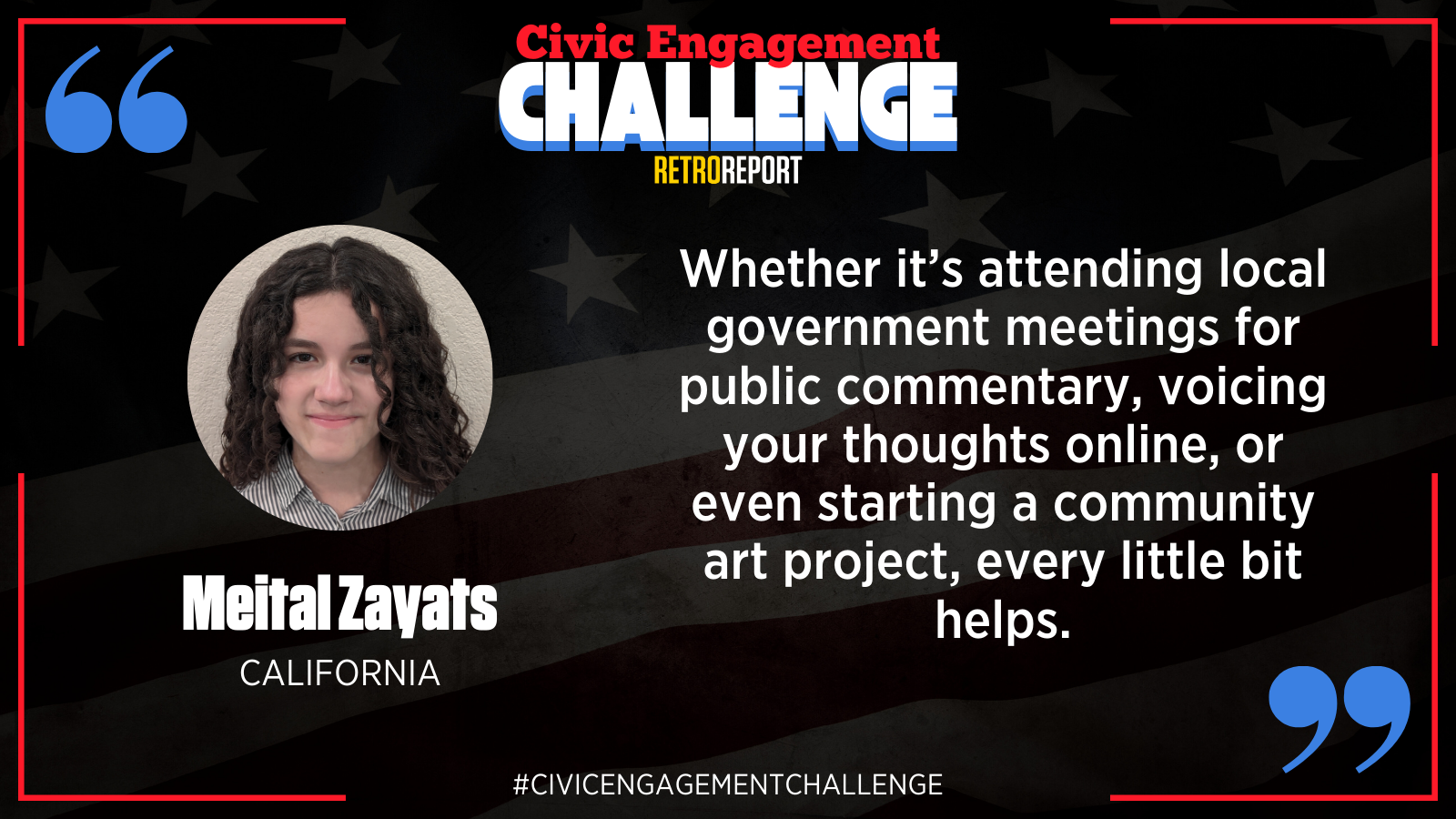
This essay is a finalist in the 2024 Retro Report Civic Engagement Challenge, a student contest supported by the William and Flora Hewlett Foundation.
By Meital Zayats
A 40 percent increase in community pride, a 50 percent increase in self-reported mental health, and a 30 percent boost in local business activity. If you were to take a guess as to what caused this drastic change, what would it be? The unexpected answer; public art.
In 2014, a report by Michigan State University, supported by the Detroit Institute of Arts, analyzed the effects public art had on the city of Detroit. Not only did it increase community belonging, but the study also concluded that it contributed to economic revitalization and wellbeing. Similar studies were run in other major cities across the United States, such as New York City, San Francisco, Los Angeles, and many other cities that implemented programs to increase public art. Each study showed the same increasing pattern as was seen in Detroit.
Yet, despite all the benefits, many communities in the U.S. still have a lack of public art due to low funding rates. According to The Reader, approximately 2.28 billion dollars were funded by federal, state, and local governments to go towards public arts. While this may seem like a lot, this number represents a little over 0.03 percent of total expenditures. Even though the amount funded for public art is higher here than seen in previous years, further examination conducted by The Reader on a per capita basis, which provides a closer look at whether investments are keeping up with community needs, reveals that, “Despite recent funding increases, the declining value of the dollar along with population growth has strained the ability of public arts appropriations to match the support to community demand.” This gap reveals that while the total amount of funding may seem generous at first glance, this money does not directly translate into meaningful support for communities trying to increase their amount of public art. Furthermore, local public artists often rely on the financial aid and commissions provided by local government, meaning that a community with low funding will not be able to support their residents with adequate public art. Ultimately, without proper funding, our communities are losing the opportunity of psychological and economic benefits that public art has to offer. These low investment rates for public art across many U.S. communities show a pressing issue of low funding that, considering its potential to improve our communities, deserves much greater attention and initiative.
To ensure more funding, it’s essential for each of us to advocate for more funding and support for public art initiatives, such as the successful programs of cities such as Detroit. Whether it’s attending local government meetings for public commentary, voicing your thoughts online, or even starting a community art project, every little bit helps. If we each take just one step towards rallying support for public art, we can work together to transform our world for the better, one community at a time.
