

Our student activities are inquiry-based, endorsed by teachers and are Google Docs, ready to be printed and shared with students. What’s not to love?
Here are the most popular student activities so far in 2026. They cover the Cold War, civil rights, U.S.-Iran relations and gerrymandering. Use the “Save Resource” feature on RetroReport.org to save and use them in the new school year.
Activity: Double V and Black Americans’ Fight for Equality
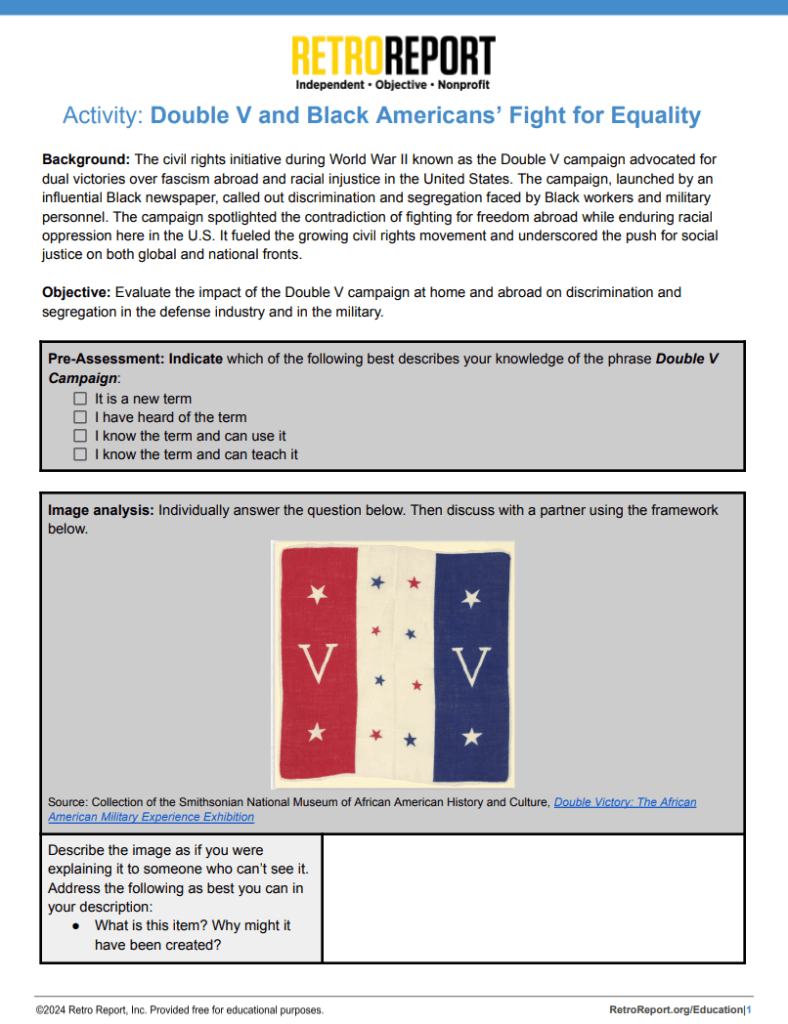
The Double V campaign, a civil rights initiative launched during World War II, advocated for dual victories: over fascism abroad and over racial injustice in the United States. The campaign, created by an influential Black newspaper, called out discrimination and segregation faced by Black workers and military personnel. The campaign spotlighted the contradiction of fighting for freedom abroad while enduring racial oppression in the U.S. In this activity, students will evaluate the impact of the Double V campaign at home and abroad on discrimination and segregation in the defense industry and in the military.
Activity: Dictators and Civil Wars: The Cold War in Latin America
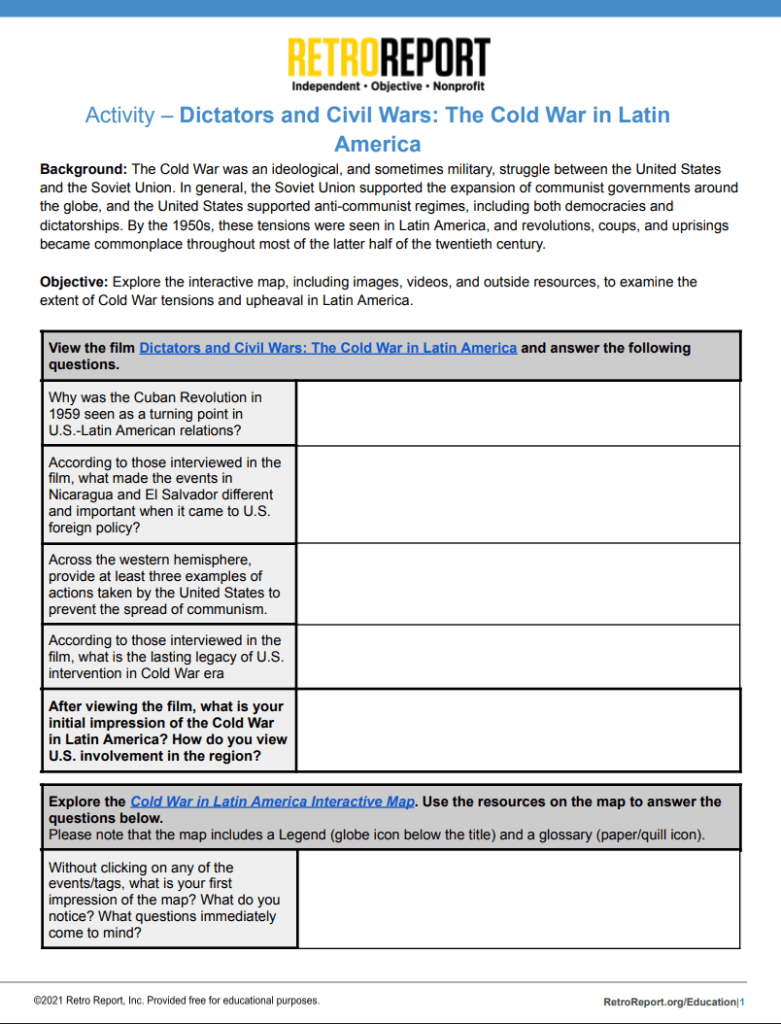
The Cold War was an ideological and sometimes military struggle between the United States and the Soviet Union. The Soviet Union supported the expansion of communist governments around the globe, and the United States supported anti-communist regimes, including both democracies and dictatorships. By the 1950s, these tensions were seen in Latin America, and revolutions, coups and uprisings emerged during the latter half of the 20th century. Through this activity, students will explore an interactive map, which includes images, videos and other resources, to examine Cold War tensions and upheaval in Latin America.
Activity: Regime Change in Iran: Oil & Operation Ajax
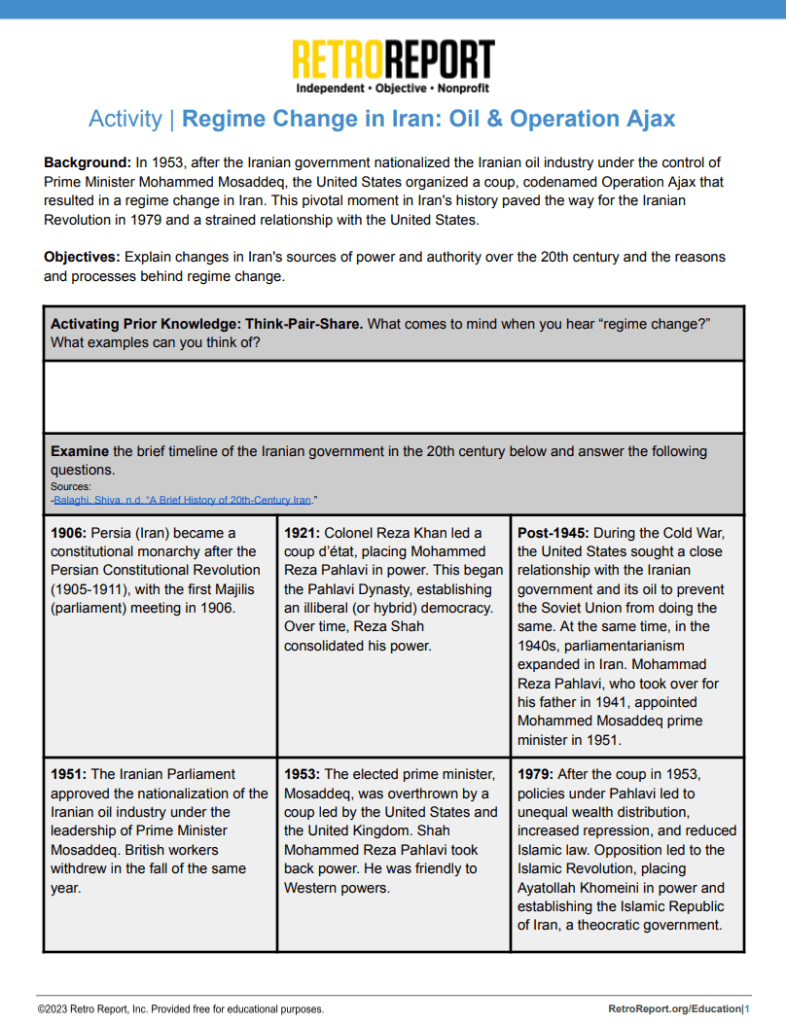
In 1953, after the Iranian government nationalized the Iranian oil industry under the control of Prime Minister Mohammed Mosaddeq, the United States organized a coup, code named Operation Ajax, that led to a regime change in Iran. This pivotal moment in Iran’s history paved the way for the Iranian Revolution in 1979 and strained relations with the United States. Through this activity, students will explain changes in Iran’s sources of power and authority over the 20th century and the reasons and processes behind regime change.
Activity: The Rise and Collapse of the Berlin Wall
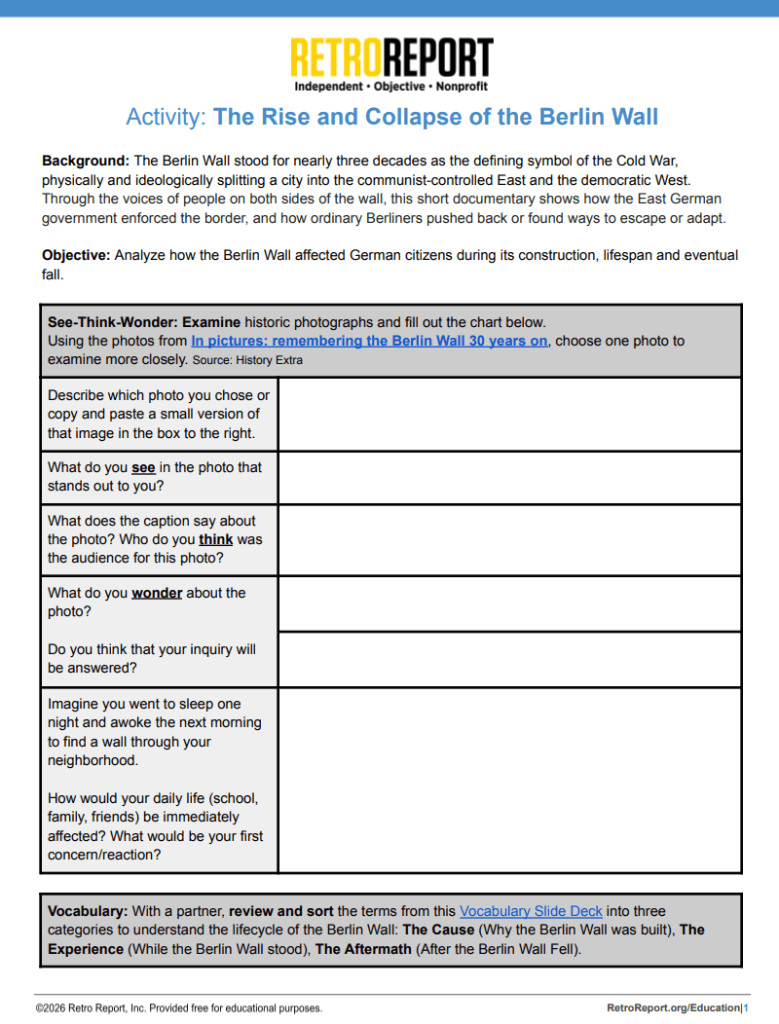
The Berlin Wall stood for nearly three decades as the defining symbol of the Cold War, physically and ideologically splitting a city into the communist-controlled East and the democratic West. Through the voices of people on both sides of the wall, this short documentary shows how the East German government enforced the border, and how everyday Berliners pushed back or found ways to escape or adapt. Through this activity, students will analyze how the Berlin Wall affected German citizens during its construction, lifespan and eventual fall.
Activity: Lateral Reading
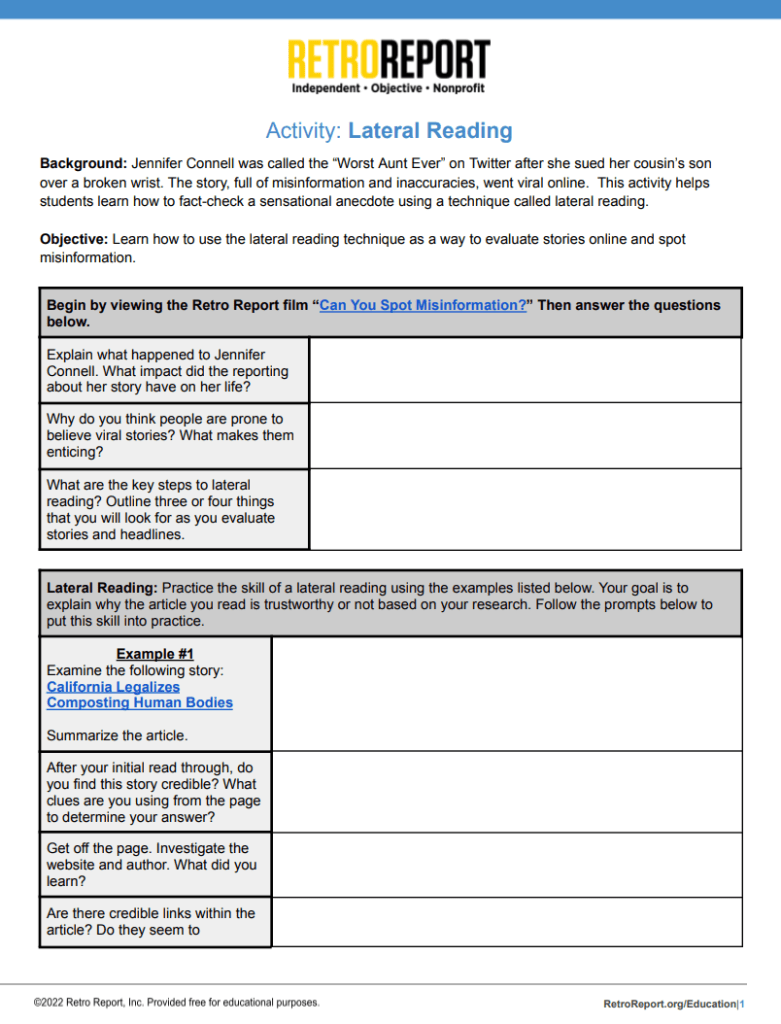
Jennifer Connell was called the “worst aunt ever” on Twitter after she sued a relative over a broken wrist. The story, full of misinformation and inaccuracies, went viral online. This activity helps students learn how to fact-check a sensational anecdote using a technique called lateral reading.
Activity: Gerrymandering
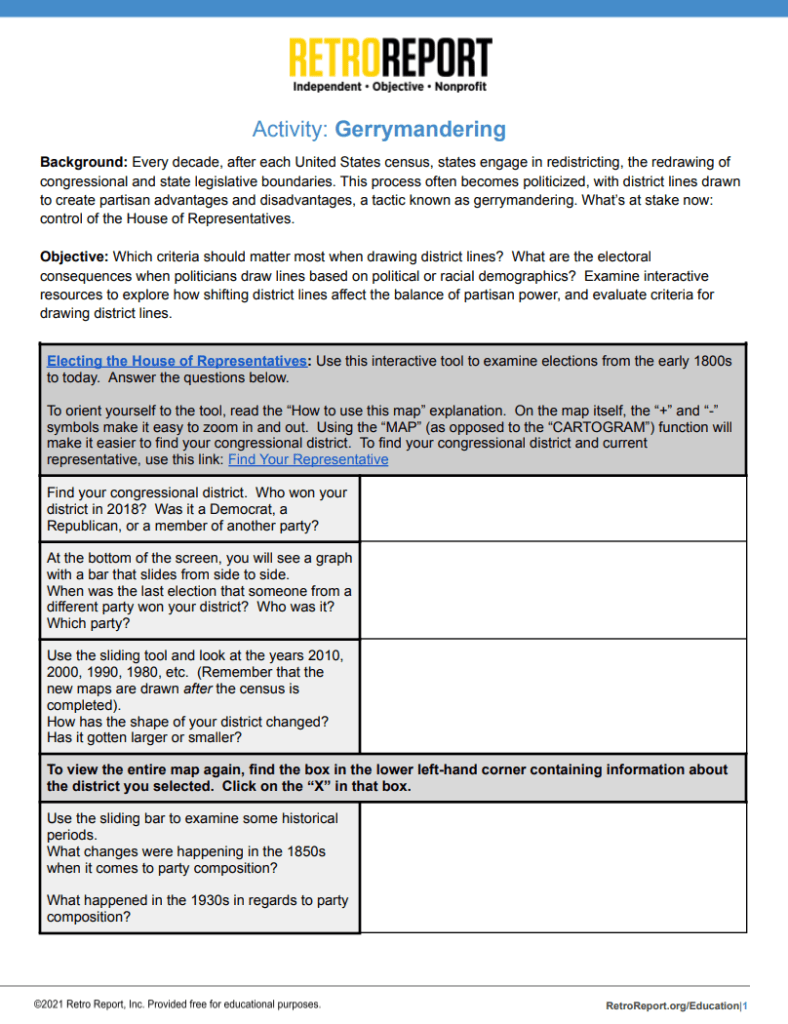
After each United States census, states engage in redistricting, the redrawing of congressional and state legislative boundaries. This process often becomes politicized, with district lines drawn to create partisan advantages and disadvantages, a tactic known as gerrymandering. Through this activity, students will examine interactive resources to explore how shifting district lines affect the balance of partisan power and evaluate criteria for drawing district lines.
