

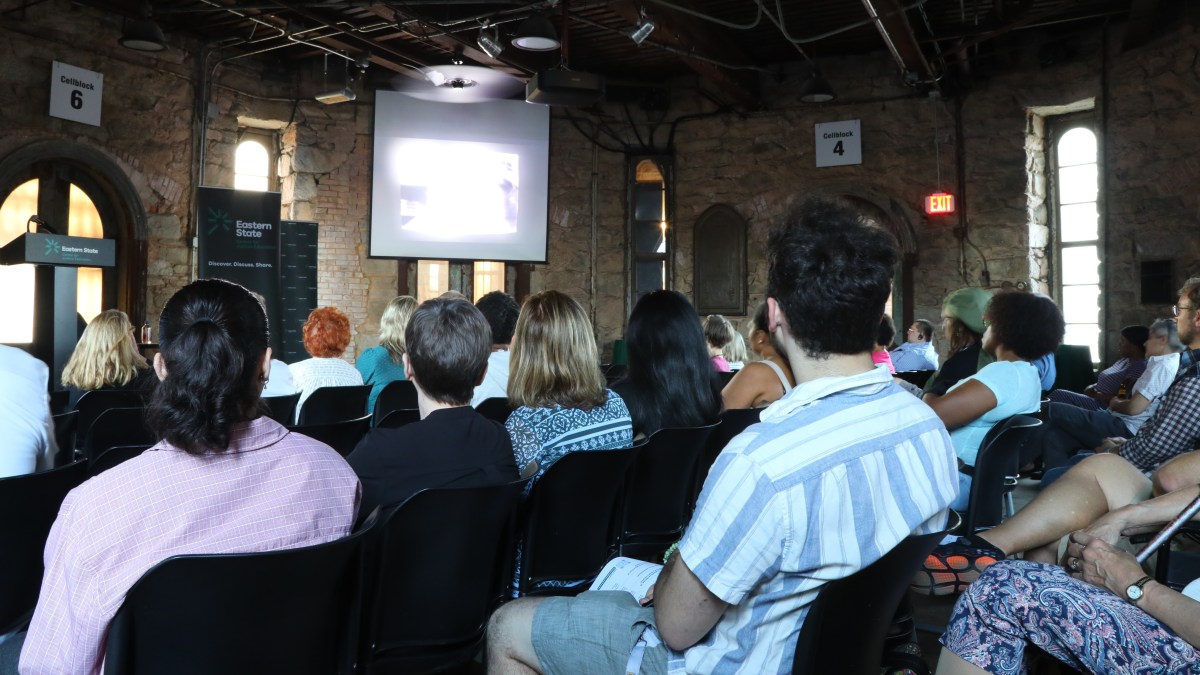
Earlier this month, Retro Report hosted a screening of the documentary “Free Joan Little” at the Eastern State Penitentiary in Philadelphia in an event that examined the connections between criminal justice and civil rights. The prison, now a museum, was one of the nation’s first correctional institutions to implement solitary confinement and later, prison reform.
The film, directed by Peabody Award-winning filmmaker Yoruba Richen, explores the landmark 1975 trial of Joan Little, the first woman in U.S. history to be acquitted after using deadly force against a sexual attack. While she was being held in a North Carolina jail, Little killed a white guard who she said sexually assaulted her. The case drew national attention and became a rallying point for civil rights activists.
An audience gathered for the screening in the museum’s central room, encircled by eroding cellblocks where prisoners were held from 1829 until 1971.
“I can’t think of a more impactful place to watch it,” said Kyra Darnton, the president and executive producer of Retro Report.
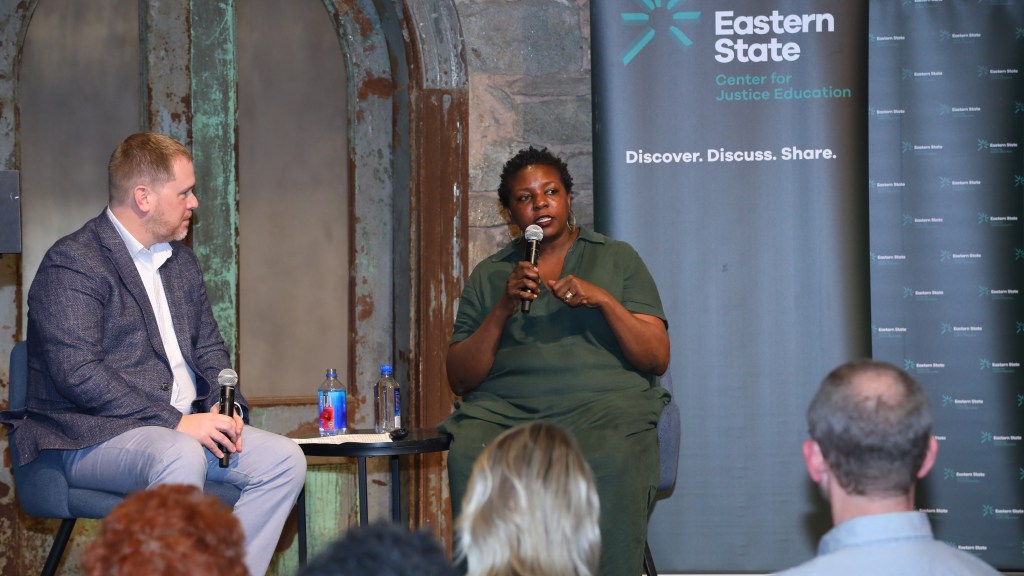
Following the screening, Retro Report’s Director of Education, David Olson, led a Q&A with Richen to discuss how Little’s case intersected with the civil rights movement, particularly in Black communities.
“They are intrinsically linked,” Richen said. “Legally, we weren’t human beings in the Constitution.”
Drawing on her decades-long career, Richen said her films, including “The Killing of Breonna Taylor” and “The Rebellious Life of Mrs. Rosa Parks,” show how Southern courts have failed to deliver justice in cases involving violence against Black women.
While researching a film about Rosa Parks, Richen said she discovered that Parks, a lifelong activist, worked with the NAACP to investigate sexual abuse cases, including one in 1944, when a woman named Recy Taylor spoke out against white men who raped her in Alabama, and were never indicted. Richen said Taylor’s case galvanized Black activists and helped build networks that fed into later civil rights organizing, including the feminist and LGBTQ movements.
Echoing Black Panther Party activist Larry Little’s final words in the film, Richen said, “We don’t always get what we want in this country, but we have to fight for all that we can get.”
Although Little’s story appeared only briefly in her film about Parks, Richen said she became “obsessed” with archival material she uncovered about Little’s case. She later partnered with producer Christalyn Hampton and Retro Report’s Bonnie Bertram to develop “Free Joan Little,” which focused on the legacy of Little’s case and the activists who participated in her defense.
Richen said that despite covering heavy subjects, she finds filmmaking to be therapeutic.
“I’m so angry a lot of the time,” she said. “I’m screaming at the television, so I think being able to make this work is my healing process.”
Richen said she saw hopeful parallels across history when diverse coalitions worked together. For example, early civil rights activists helped catalyze later national conversations about accountability for sexual violence, racial injustice and hate crimes, establishing precedents that continue to shape legal and social issues.
“We can look at different time periods for something that moves us all,” Richen said, like the #MeToo and Black Lives Matter movements.
In the Q&A session, Olson asked Richen what criminal justice issues remain unresolved today.
“The scourge of sexual violence in general, and especially in prisons and jails where they are hidden away from the general population, is still an issue,” Richen said. As the film notes, in 2022, a bipartisan Senate report found that male prison staff sexually abused women in two-thirds of federal prisons.
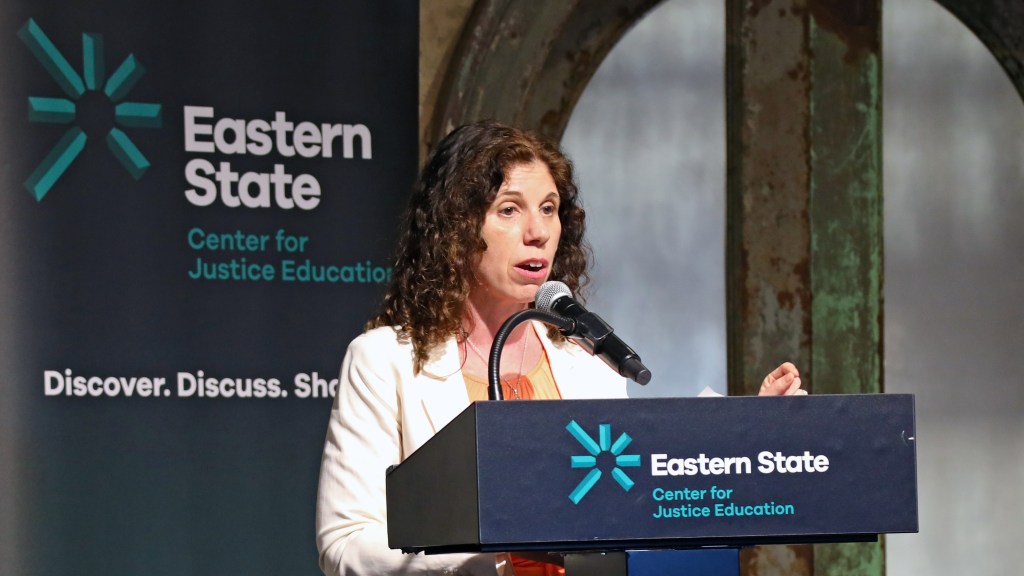
Dr. Kerry Sautner, who heads Eastern State Penitentiary Historic Site, said that while her organization aims to preserve America’s first penitentiary as a museum, it also works to inspire through storytelling. “It’s not just the stories of the past,” she said, “it’s the stories of the present.”
MAIYA WAHL, a junior majoring in journalism at Northwestern University majoring in journalism, is an intern at Retro Report.
