
Lesson Plan: Debating How Evolution Is Taught in Public Schools
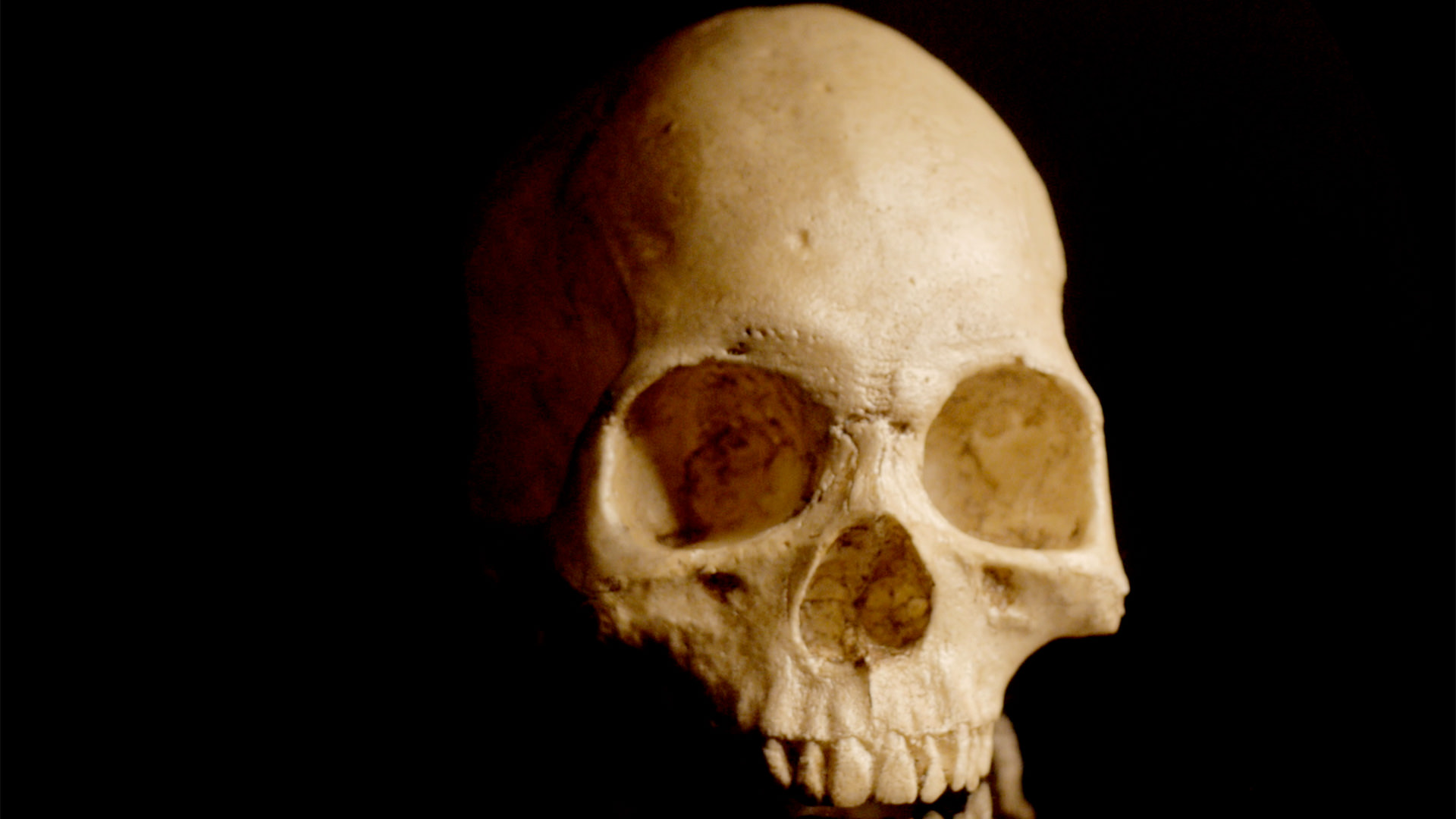
Public debates about science education have long shaped how evolution is taught in schools. This film examines how a Louisiana law changed classroom instruction, how a student responded, and how courts have interpreted the First Amendment in disputes over teaching evolution.
Subjects:
Biology, Life Science, Civics & Government
-
This lesson can be used before, during or after teaching about evolution by natural selection or as a standalone lesson to discuss the nature of science.
-
This lesson may have interdisciplinary connections in Civics & Government courses (First Amendment – Freedom of Religion)
Grade Level:
7-12
Lesson Duration:
-
1 class period (approximately 45-60 minutes)
-
Additional class period with extension activity
-
Essential Questions:
-
What makes a claim scientific?
-
How do scientists reach consensus?
-
How can we distinguish between scientific explanations and other types of claims?
-
Why is understanding scientific consensus important when evaluating claims about evolution?
Lesson Objectives:
Students will:
-
Explain the characteristics of scientific reasoning and how it differs from other types of claims.
-
Analyze real-world examples to determine whether they meet criteria for scientific claims.
-
Evaluate public statements or arguments related to evolution for scientific validity.
-
Reflect on how the news media and public discourse present non-scientific views.
Materials:
-
Retro Report video: “Raising Doubts About Evolution… in Science Class” (Transcript)
-
Student Activity handout
-
Poster paper or digital tools for group discussion
-
Projector or smart board for film and group discussion
Procedure:
-
Warm-Up (5 minutes) Distribute the Student Activity handout and direct students to the Think-Pair-Share section. Read the claim to the class and pose the question (written on board or screen): “How do you know if a claim is scientific?” Use the strategy to organize the classroom sharing. Students will discuss their responses with a partner before sharing what was discussed with the class (allow for any reasonable responses at this point). Record class responses on the board. (Think-Pair-Share Strategy | Facing History & Ourselves)
-
Note: The claim is meant to get students thinking and talking about evidence and sources. It is not scientifically supported, but gives the opportunity for a teacher to discuss what might be important (source, evidence, reasoning) when evaluating a claim.
-
-
Watch and Answer (15 minutes) Show the 11-minute Retro Report video. Have students review the comprehension questions on the Student Activity handout and record their answers as they watch. (Timestamps and possible answers in parenthesis.)
-
What is the stated educational rationale of the Louisiana Science Education Act, according to supporters of the law? (0:39: The LSEA is marketed as promoting critical thinking in science classrooms.)
-
What was the result of Tennessee v. John Thomas Scopes, commonly known as the Scopes trial? How did the Supreme Court change the legal landscape regarding evolution instruction by 1968? (3:34: Scopes was found guilty of teaching evolution in violation of local laws. By 1968, the Supreme Court struck down laws that prohibited the teaching of evolution.)
-
What did a federal judge rule about claims that intelligent design was “grounded in science”? (4:07: A federal judge rejected claims from supporters that intelligent design was grounded in science.)
-
According to Miller, what does the First Amendment protect against in public schools? What does it not protect against? (7:08: According to Miller, the First Amendment protects against the imposition of religious ideas in public schools, but it does not protect against anti-scientific ideas.)
-
-
Categorizing Quotes (10 minutes) Direct students to the Categorize section of the handout. In small groups, have students read the descriptions and quotes, then categorize each statement as Scientific, Non-Scientific, or Pseudoscience.
-
Circulate as they work and encourage students to provide justification for their categorizations.
-
Next, go through each quote as a class, noting agreement and disagreement. Encourage students to share their justifications with the group.
-
Discuss the terms non-scientific and pseudoscientific claims. Non-scientific claims address questions outside the methods of science, including beliefs, values or ethics, and are not typically evaluated through testing or empirical evidence. Pseudoscientific claims present themselves as scientific but do not follow scientific standards including testability, evidence and peer review. For each example, identify the type of reasoning used (evidence-based, belief-based, rhetorical, etc.) and evaluate what evidence, if any, is provided.
-
Whole-Class Debrief (10 minutes) Compare what makes a claim scientific by discussing four aspects of the Nature of Science: testability, evidence, tenability and peer review (references: Nature of Science | NSTA Position Statement; Intelligent Design: Is it scientific? | UC Berkeley Understanding Science). As you discuss each term, have students fill out notes in their Student Activity worksheet. Provide absent students with notes. Possible answer include:
-
Testability: Scientific hypotheses and theories must be capable of being proven wrong through observation or experiment. If a claim cannot be tested, it is outside the realm of science. Non-scientific claims are often vague, generalized or so flexible that no conceivable evidence could ever prove them wrong (e.g., constantly moving the goalposts or inventing ad-hoc excuses for failure).
-
Evidence: Scientific claims are supported by objective, verifiable evidence gathered through controlled experiments and systematic observation. Personal anecdotes or testimonials are not considered sufficient evidence. Pseudoscientific claims seek out evidence that supports its claims, and ignores, dismisses or excuses contradictory evidence. Pseudoscientific and non-scientific claims rely on personal stories, testimonials or isolated case studies.
-
Tenability: Science is provisional. Theories are constantly tested, and scientists are willing to revise or discard hypotheses and theories when new evidence contradicts them. Scientific knowledge is cumulative and shows progress over time. Non-scientific or pseudoscientific claims often remain unchanged for decades or centuries, showing little or no theoretical advancement or refinement in response to new data.
-
Peer Review: Scientific methods, data, and results are shared openly and subjected to scrutiny, critique, and replication by other experts in the field (peer review). Advocates of non-scientific and pseudoscientific claims often avoid submitting their work to established, peer-reviewed scientific journals, claiming censorship or a conspiracy by the scientific establishment. They may keep their methods secret or proprietary.
-
-
Reflection (5 minutes) Give students time to answer the questions in the reflection section of the Student Activity worksheet. Possible answers are given in parentheses:
-
According to the video, what do people mean when they say there is a controversy about evolution? How do scientists view evolution? (Controversy around evolution has roots in religious views and beliefs. Scientists view evolution as a well-established theory that is supported by a large body of evidence.)
-
Why do some groups argue that questioning the theory of evolution should be allowed in science class? What concerns do scientists raise about this approach? (People who suggest that there is controversy around evolution theory argue that alternative views should be considered in science classrooms to promote critical thinking. Scientists are concerned that raising doubts about evolution can introduce religious or non-scientific ideas into the science classroom and could undermine scientific understanding.)
-
After watching the video, do you think it is important to distinguish between scientific explanations and non-scientific beliefs in a science classroom? (Answers will vary. For example: “Science classes are meant to teach explanations about the natural world, not personal or religious beliefs,” or “If students don’t learn the difference, they may think all opinions are scientific, even when they are not.”)
-
Discuss the final reflection question as a class.
-
Extension Activities:
-
Apply the aspects of the nature of science to the theory of evolution through natural selection. Analyze whether it is testable, based on evidence, tentative, and peer-reviewed.
-
Explore current research on human evolution to develop an understanding of human ancestry, with an emphasis on the changing nature of scientific knowledge based on new discoveries.
-
For students who are beginning to learn about natural selection, explore the evolution of dogs to understand how selective breeding has influenced the genes and traits of various breeds. Another example of selective breeding is Brassica (wild mustard plant) evolving into cabbage, kohlrabi, Brussels sprouts, kale, broccoli and cauliflower.
About the Author:
Jeremy Wang is the Director of Science Instruction at St. Thomas More Catholic School in St. Paul, Minn. He earned a Ph.D. in Educational Psychology from the University of Minnesota.
Standards
Next Generation Science Standards
-
MS-LS4-1 Analyze and interpret data for patterns in the fossil record that document the existence, diversity, extinction, and change of life forms throughout the history of life on Earth under the assumption that natural laws operate today as in the past.
-
HS-LS4-1 Communicate scientific information that common ancestry and biological evolution are supported by multiple lines of empirical evidence.
College, Career, and Civic Life (C3) Framework for Social Studies
-
D3.1.9-12. Gather relevant information from multiple sources representing a wide range of views while using the origin, authority, structure, context, and corroborative value of the sources to guide the selection.
-
D4.1.9-12. Construct arguments using precise and knowledgeable claims, with evidence from multiple sources, while acknowledging counterclaims and evidentiary weaknesses.
Common Core Literacy Standards
-
RST-11.12.1 Cite specific textual evidence to support analysis of science and technical texts, attending to important distinctions the author makes and to any gaps or inconsistencies in the account.
-
WHST.9-12.9 Draw evidence from informational texts to support analysis, reflection, and research.
